-
by sayum
24 August 2026 3:22 PM







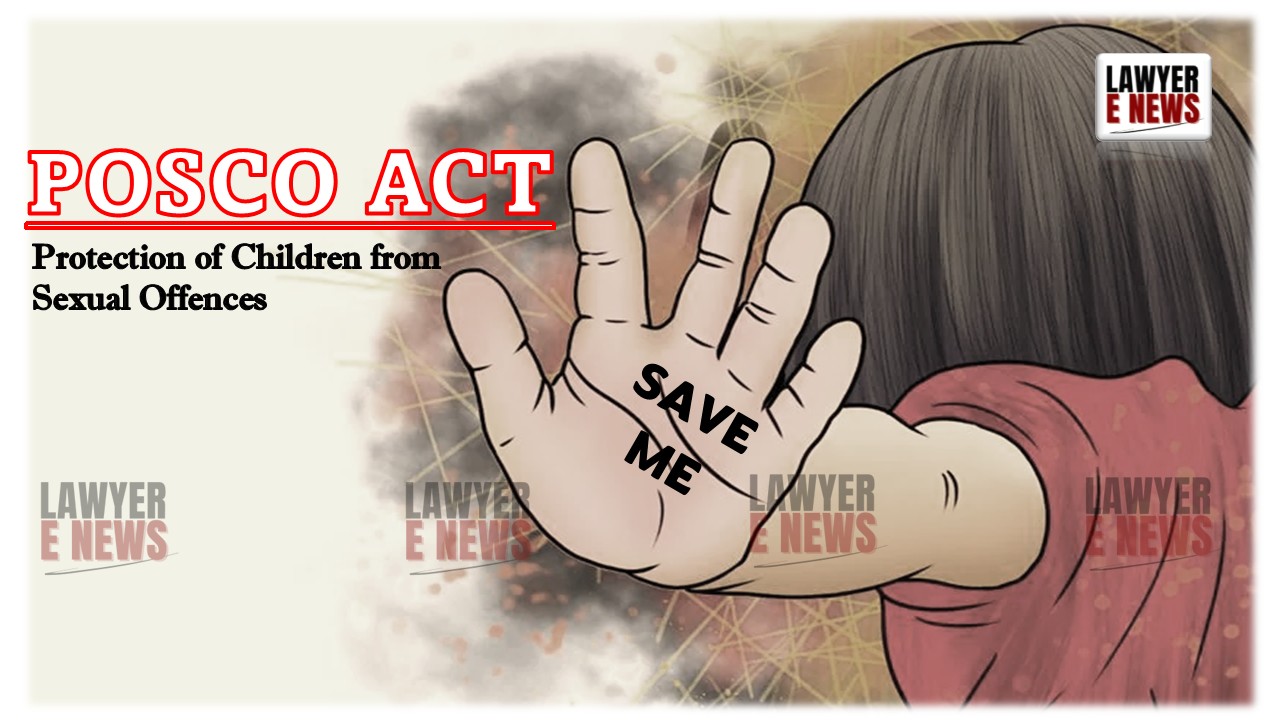
“Fair Trial Does Not Mean Endless Trauma for Child Victim”, Madhya Pradesh High Court (Indore Bench) dismissed a criminal appeal filed under Section 14A(2) of the Scheduled Castes and Scheduled Tribes (Prevention of Atrocities) Act, 1989, upholding a Special Court’s decision to forfeit the right of further cross-examination of a minor girl who was the victim in a POCSO trial.
Justice Gajendra Singh rejected the appellants’ plea that their right to cross-examine the child victim was unjustly curtailed, observing that the trial court had acted strictly in accordance with law, and the repeated adjournments sought by the defence amounted to abuse of process, especially in a sensitive case involving both child sexual offences and caste-based atrocities.
“The Trial Court Was Not Unjust – It Was Upholding the Law”: Court Notes Provisions of POCSO and SC/ST Acts Mandate Swift and Sensitive Trials
The appellants had approached the High Court challenging the order dated 25.06.2025 passed by the XXI Additional Sessions Judge (Special Judge under POCSO Act, Indore), whereby the Court closed the right to further cross-examination of the victim (PW-1), a Scheduled Caste girl studying in the 10th standard and aged below 16 years. The appellants, who do not belong to the Scheduled Caste or Tribe community, are facing charges under multiple provisions of the Indian Penal Code, POCSO Act, and SC/ST (POA) Act, 1989.
Rejecting the argument that the case was only three years old and hence could afford more adjournments, the Court observed:
“The argument that the case was ‘only three years old’ is contrary to Section 35 of the POCSO Act which mandates that the trial must be completed within one year of taking cognizance. Similarly, Section 14(3) of the SC/ST (POA) Act requires day-to-day trials and completion, as far as possible, within two months from filing of the charge sheet.”
Child Was Present on Multiple Occasions, But Defence Failed to Cross-Examine Despite Opportunities
Justice Gajendra Singh carefully recounted the chronology of events demonstrating how the defence failed to utilise multiple opportunities for cross-examination. The victim appeared before the Special Court on four separate occasions — 25.07.2023, 28.08.2024, 12.09.2024, and 17.02.2025 — but defence counsel sought repeated adjournments citing absence of senior counsel or personal reasons, including family health concerns.
Even when some cross-examination did occur on 17.02.2025 (paras 5 to 17) and again on 25.06.2025 (paras 18 to 31), the defence again sought an adjournment after lunch citing a lack of trust in the Presiding Judge and expressing intent to file for transfer of the case — despite being granted several chances to finish the examination.
The Court noted:
“Despite repeated presence of the child victim with her mother, the cross-examination remained incomplete due to adjournments sought for personal and procedural grounds. Ultimately, the trial court was compelled to close the cross-examination in order to protect the child from further harassment.”
“Right to Cross-Examination Must Yield to Child-Friendly Trial”: High Court Reaffirms Legislative Intent Under POCSO Act
Citing Section 33(5) of the POCSO Act, which mandates that the child should not be called repeatedly to testify, the High Court emphasised that child-friendly procedures override procedural latitude typically granted in ordinary criminal trials.
“Section 33(6) mandates the Court to prevent aggressive questioning and ensure dignity of the child at all times. Repeated adjournments in the guise of cross-examination run counter to these mandates.”
The Court noted that no questions had been submitted in writing to the Court as per Section 33(2) of the Act, which requires counsel to communicate their questions to the Court, which shall then pose them to the child. Thus, not only was the defence delaying the proceedings, but it was also in breach of the procedure prescribed under law.
Intersectionality of Victim Warranted Higher Sensitivity from the Court
In a significant observation, Justice Singh acknowledged the intersectional vulnerability of the child victim, noting:
“This is a case where the child (PW-1) was a victim of more than one intersectionality — she was a girl child below the age of 16 and belongs to a Scheduled Caste community. The law and the courts must respond with heightened sensitivity to such cases.”
Accordingly, the Court held that no violation of fair trial had occurred and that the trial court had, in fact, fulfilled its duty by preventing secondary victimisation.
Proposed Questions by Defence Found Irrelevant or Proveable Through Other Evidence
The Court further dismissed the argument that the accused were prejudiced by the inability to pose certain questions. Upon being directed by the High Court, the defence submitted 11 proposed questions — however, the Court held that these questions were not of such a nature that only the child victim could answer them. Most of the information could be gathered through documents or other witnesses.
“The nature of the questions does not reveal that the answer can be obtained only through that victim (PW-1) but can be proved even by submitting the relevant documents.”
Transfer of Case to Another Court Has No Bearing on Validity of Forfeiture Order
The appellants had also argued that since the Sessions Judge subsequently transferred the case to another Court, the earlier procedural order closing cross-examination should be reconsidered. The Court summarily rejected this contention, holding:
“Transfer of trial is irrelevant to the question of whether the earlier order was legal. The appellate court is not concerned with the Sessions Judge’s administrative orders but only with legality of the trial court’s action.”
Conclusion: Trial Court Was Within Its Jurisdiction and Acted According to Statutory Mandate
Dismissing the appeal, the Madhya Pradesh High Court concluded: “The trial court was performing its duties as per the special procedure. The impugned order does not suffer from any illegality.”
This judgment stands as a significant reaffirmation of the principles embedded in the Protection of Children from Sexual Offences (POCSO) Act, 2012, and the SC/ST (Prevention of Atrocities) Act, 1989, balancing the rights of the accused with the overriding need to ensure speedy, trauma-free justice for child victims, especially those from marginalised communities.
Date of Decision: 28.01.2026