-
by sayum
25 August 2026 9:55 AM







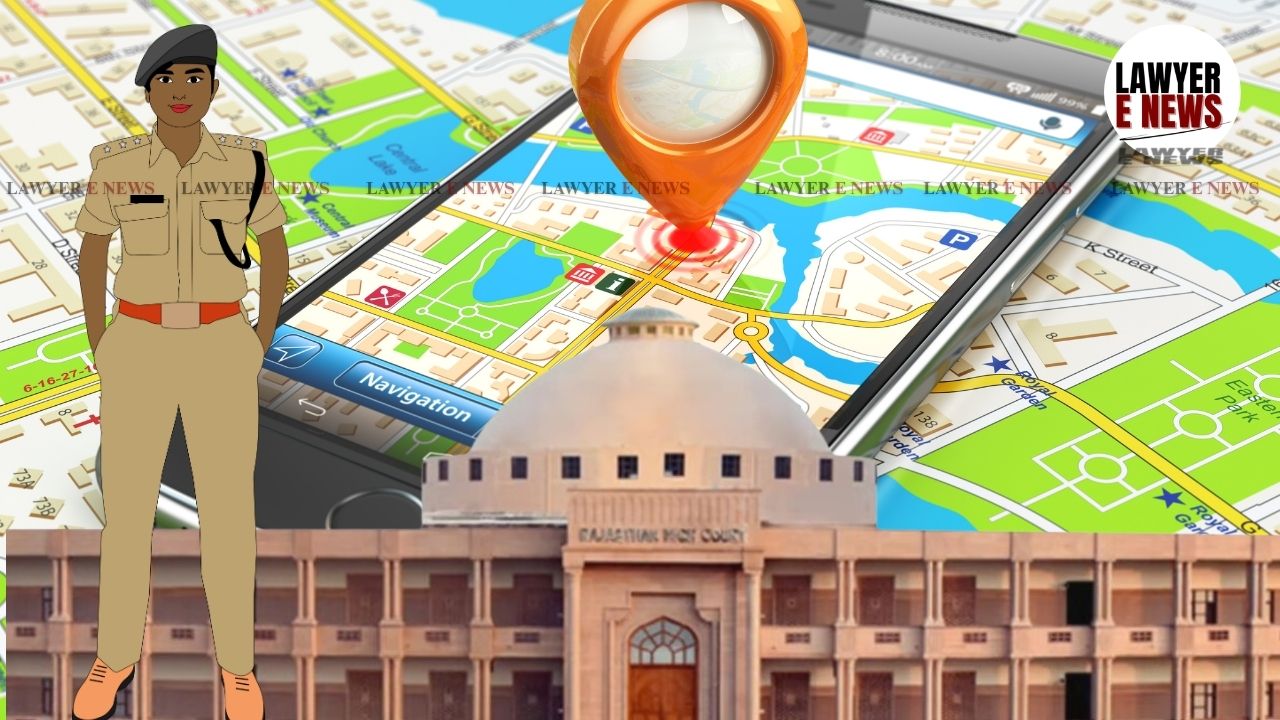
In a significant ruling reinforcing the right to a fair trial, the Rajasthan High Court allowed in part a criminal miscellaneous petition invoking Section 94 of the Bharatiya Nagarik Suraksha Sanhita, 2023 (BNSS). The Court held that an accused is entitled to seek the preservation and production of electronic records, such as Call Data Records (CDRs) and mobile tower location data of police officials, when such evidence is crucial to the defence, even if it marginally intrudes upon the privacy of state officials.
“Preserving CDR Data Is Necessary to Ensure a Fair Trial; Denial Would Amount to Miscarriage of Justice”
The judgment stems from a petition filed by Dr. Avinash Sharma, who is facing prosecution under Sections 8, 21, 22, and 29 of the NDPS Act, 1985, seeking to preserve and produce the CDR and tower location data of the SHO of Police Station Kotputli. He contended that this data would demonstrate the presence of police officials at his clinic prior to the officially recorded time of recovery of contraband, thereby supporting his claim of a false implication.
Justice Anoop Kumar Dhand observed that “requisitioning and preserving of the Call Data Record and tower location details at the earliest would be necessary, otherwise, the same would be lost forever.” The Court emphasized that when the presence of police officers at the crime scene is disputed by the accused, the right to secure electronic evidence under Section 94 of BNSS is critical to uphold the fairness of the trial.
The petitioner, a medical practitioner, was implicated in an NDPS case registered on 9th September 2025 under FIR No.441/2025. It was alleged that during a search of his clinic, contraband substances were recovered at around 11:20 PM on 08.09.2025. Dr. Sharma was reportedly arrested earlier at around 10:50 PM, and he claimed that the police had already entered his premises much earlier, at approximately 6:35 PM, suggesting that the evidence was planted and the case fabricated.
To substantiate this assertion, an application was filed before the Trial Court under Section 94 BNSS to direct the service provider to preserve the SHO’s CDR and tower location data from 3:00 PM on 8th September 2025 to 5:00 PM on 9th September 2025. However, the application was rejected by the Trial Court, leading to the present petition before the High Court.
The core legal question was whether the accused is entitled to summon electronic data relating to police officials under Section 94 of the BNSS, particularly when such data might intrude on their privacy, and whether such evidence would be admissible under Sections 65A and 65B of the Indian Evidence Act, 1872.
Referring to the Supreme Court’s judgment in Suresh Kumar vs. Union of India, 2014 SCC OnLine SC 1833, the High Court noted:
“The appellant has every right to summon whatever is relevant and admissible in his defence including electronic record relevant to finding out the location of the officers effecting the arrest…”
The Court drew attention to the constitutional imperative under Article 21, stating:
“The right of the accused under Article 21 of the Constitution of India to ensure a free and fair investigation/trial would prevail over the right to privacy of the police officials.”
However, it also clarified that this right is not unqualified, and that:
“Before any such order for production of Call Data Record/tower location details is passed, the accused is required to prove the necessity and desirability of such evidence…”
Balancing the right to privacy of the police officials and the right to fair trial of the accused, the Court found that limited intrusion into privacy was justified in the present case, especially since the petitioner was not seeking details of call recipients or contents, but only location data for a specific duration.
The legislative purpose behind Section 94 BNSS, the Court held, is:
“…to ensure that no cogent material or evidence, involved in the case, remains undiscovered in unearthing the true facts during investigation, enquiry, trial or other proceedings.”
Accordingly, the High Court partly allowed the petition, issuing the following directions:
“The details of the phone number of the incoming and outgoing calls made from the aforessaid mobile phone number shall be censored by the service provider/mobile company while furnishing the aforesaid details to the Trial Court.”
The Court concluded that such a direction strikes a balance between the two competing rights — the accused's right to a fair trial and the police official’s right to privacy — and that the ultimate aim of criminal justice must be the discovery of truth.
This decision by the Rajasthan High Court is a notable reaffirmation of procedural fairness and the rights of the accused to access critical electronic evidence in a criminal trial. It marks a clear interpretation of Section 94 of the BNSS, reinforcing that truth-finding in criminal justice must not be obstructed by mechanical denials on grounds of privacy, especially when minimal and necessary disclosures are sought.
By emphasizing that even state officials are not immune from scrutiny in criminal trials, the judgment ensures greater accountability in police conduct and reflects evolving judicial standards on electronic evidence and privacy in India’s criminal justice system.
Date of Decision: 06/11/2025