-
by sayum
21 October 2026 1:30 PM







"Clause 4 of the circular mandates that the name of a Revenue Village shall not be based on any person, religion, caste or sub-caste, and the same shall be proposed with the general consensus."
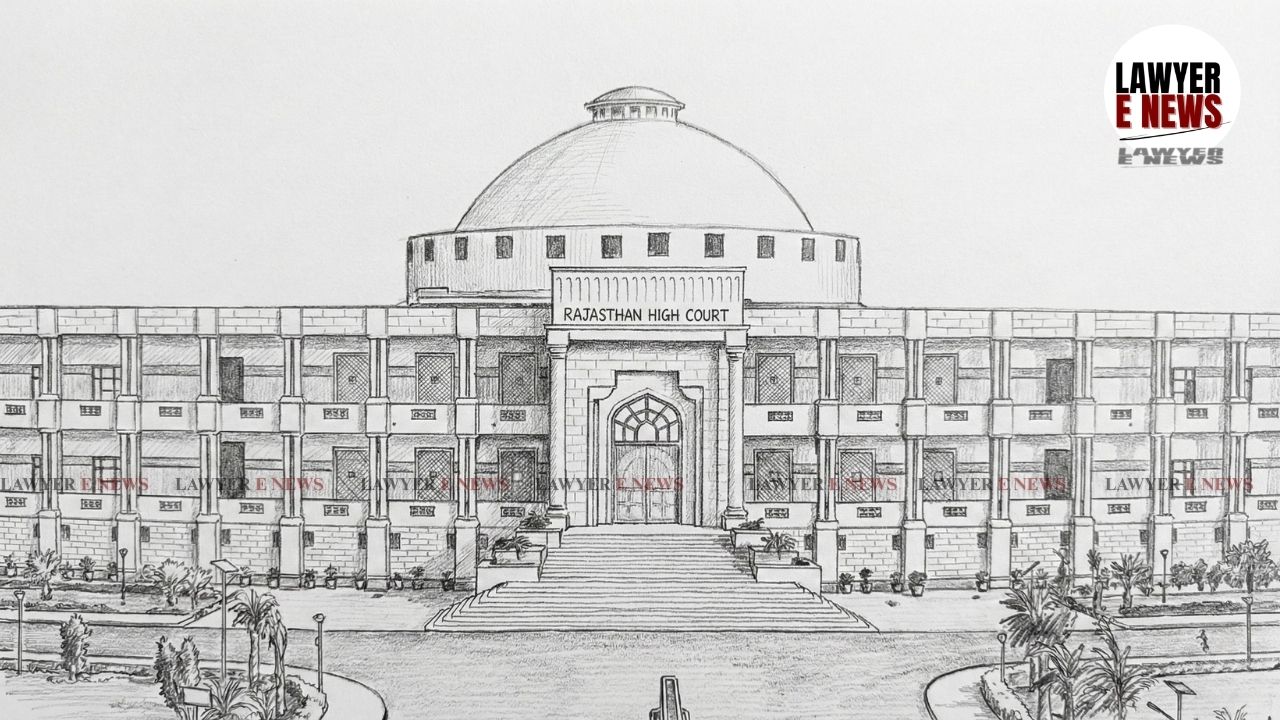
Rajasthan High Court, in a judgment dated 14 September 2026, held that while the State Government possesses the statutory authority to create or alter revenue villages under Section 16 of the Rajasthan Land Revenue Act, it is strictly bound by its own policy guidelines—specifically the Circular dated 20 August 2009—which prohibit naming villages after individuals, castes, sub-castes, or religions.
A division bench comprising Chief Justice Sanjay K. Agrawal and Justice Vinit Kumar Mathur observed that such policy directives, aimed at maintaining communal harmony, are binding under Article 14 of the Constitution of India and cannot be bypassed through arbitrary executive action.
The petition arose following the creation of a new revenue village carved out of village Dantal in Jaisalmer. The State initially proposed the name "Shri Chhotsa Nagar," which was challenged in a prior writ petition and subsequently cancelled by the High Court due to its association with a local individual. In a subsequent exercise, the authorities proposed "Chhota Jadam Nagar," which was later notified as "Jadam Nagar." The petitioner challenged this renaming, alleging that the name was still linked to a specific community and an individual, thereby violating established government circulars and the judicial mandate against caste-based or personality-centric nomenclature.
The primary legal issue before the court was whether the name "Jadam Nagar" violated the prohibition against using names based on persons, castes, or sub-castes as laid down in the Government’s 2009 circular. Furthermore, the court was called upon to determine whether the State had properly exercised its administrative discretion in selecting the name following the earlier judicial intervention.
Court Upholds Statutory Power Subject to Policy
The Court reaffirmed that Section 16 of the Rajasthan Land Revenue Act confers wide powers upon the State to create or abolish revenue villages. However, it clarified that this power is not absolute and must be exercised in conformity with executive policy. The Bench underscored that the 2009 circular was a deliberate policy choice designed to foster communal harmony and that any deviation from such policy without a valid, lawful amendment is arbitrary and constitutes a violation of Article 14.
Policy Mandates for Revenue Village Nomenclature
"Any action taken in derogation of such a policy, without amendment or valid justification, is arbitrary and violative of Article 14 of the Constitution of India."
The Court meticulously examined the impugned name, "Jadam Nagar," against the criteria set forth in the 2009 circular. While the petitioner contended that "Jadam" functioned as a sub-caste of the Rajput Bhati community and was an indirect reference to a former Sarpanch, the Court found no evidentiary basis to sustain this link. The Bench observed that the State had specifically modified the recommendation from "Chhotsa Jadam Nagar" to "Jadam Nagar" to dissociate the name from the individual previously identified.
No Violation of Circular Found
The Court concluded that the naming of "Jadam Nagar" did not, on its face or through substantiated evidence, constitute a violation of the prohibition against person, caste, or religious naming. Finding that the State had acted in accordance with the spirit of the previous judicial directions and the administrative guidelines, the bench held that there was no illegality in the notification. Consequently, the challenge was dismissed, and the government’s decision was upheld as a valid exercise of administrative authority.
The High Court dismissed the writ petition, finding that the State Government had complied with the requirements of the circular dated 20 August 2009 and the precedents set in Bhika Ram & Anr. vs. State of Rajasthan. The decision reinforces that while the judiciary will strike down notifications that violate communal or caste-neutrality policies, it will not interfere when the nomenclature is found to be compliant with objective policy standards and devoid of prohibited associations.
Date of Decision: 14 September 2026