-
by sayum
27 July 2026 3:39 PM







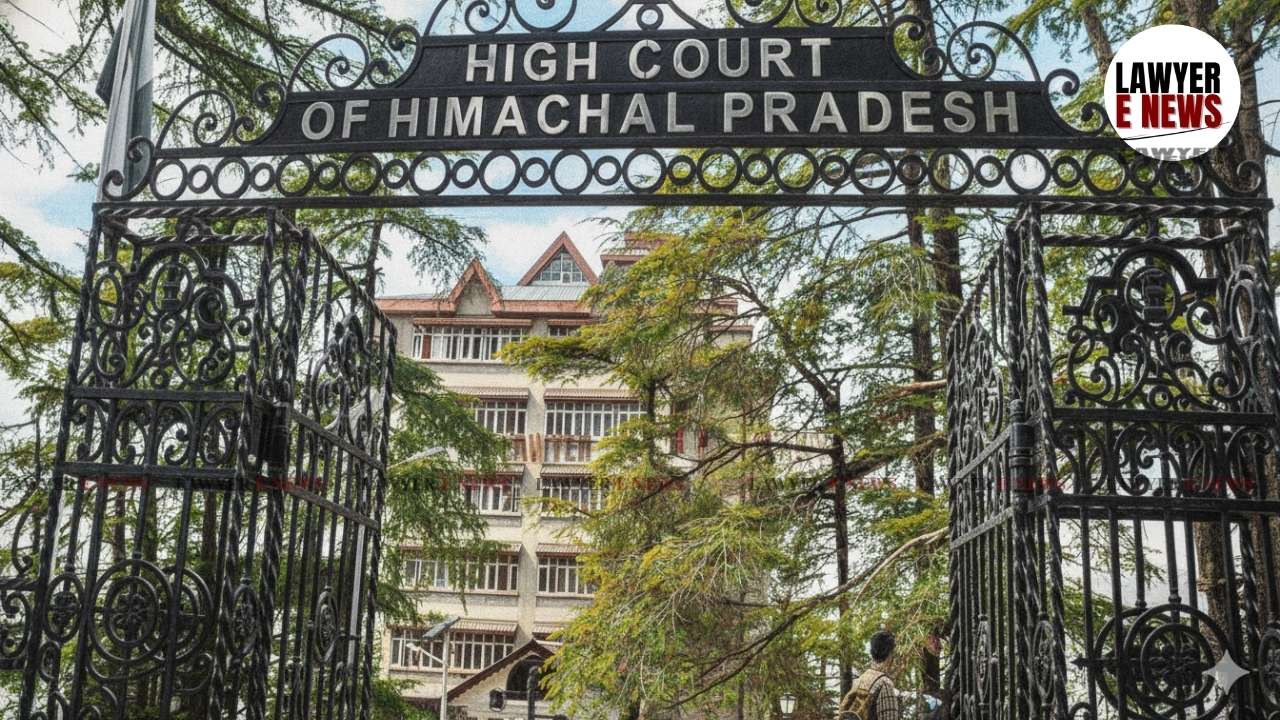
"A finding of fact recorded by the learned Courts below can only be said to be perverse, which has been arrived at without consideration of material evidence or such finding is based on no evidence or misreading of evidence or is grossly erroneous," Himachal Pradesh High Court, in a significant judgment, has clarified that revenue entries altered in violation of mandatory procedural instructions—specifically those requiring notice to affected parties—carry no legal force and rebut the presumption of correctness.
A bench of Justice Rakesh Kainthla observed that while High Courts are generally restrained from interfering with findings of fact in a second appeal under Section 100 of the CPC, such interference is mandatory if the lower court's findings are "perverse" or ignore material evidence.
The matter arose from a civil suit filed by the plaintiff (Lachhmi Devi) seeking a declaration of ownership and possession of land in Village Anjhi, Mandi. The plaintiff claimed she was inducted as a tenant by the original owners and became the owner by operation of the H.P. Tenancy and Land Reforms Act. The defendants, however, contested this, claiming their predecessor, Vidya Parkash, had purchased the land through an oral sale in 1963 and was recorded as a non-occupancy tenant. While the Trial Court dismissed the suit, the First Appellate Court reversed the decision, leading the defendants to approach the High Court in a second appeal.
The primary question before the court was whether the High Court is sustainable in interfering with findings of fact under Section 100 CPC if those findings are based on a misreading of evidence. The court was also called upon to determine the validity of revenue entries changed without following the procedure laid down in the Himachal Pradesh Land Records Manual and the evidentiary value of admissions made in affidavits.
Scope Of Jurisdiction Under Section 100 CPC
The Court began by analyzing the limitations of a second appeal, noting that after the 1976 amendment to the CPC, the scope of Section 100 has been drastically curtailed. The bench emphasized that the High Court cannot interfere with the concurrent findings of fact unless a "substantial question of law" is involved. It noted that a search for truth must be reconciled with the doctrine of finality, and a second appeal is not a "third trial on facts."
Court Explains When Findings Become 'Perverse'
However, the Court highlighted that the general rule of non-interference is not absolute. It observed that the High Court is justified in upsetting findings of fact if the courts below have ignored material evidence, acted on no evidence, or drawn wrong inferences from proved facts by applying the law erroneously. The Court noted that "perversity" includes findings based on surmises, misreading of the record, or where the core issue remains undecided.
Mandatory Procedure For Altering Revenue Entries
A central pillar of the judgment focused on the Himachal Pradesh Land Records Manual. The Court scrutinized Instruction 9.8, which mandates that a Patwari must notify persons likely to be adversely affected by a change in revenue entries. The Court observed that any change made "behind the back of the tenants, without any order from any competent authority," is incompetent in the eyes of the law and must be ignored.
Presumption Of Correctness Of Revenue Records Is Rebuttable
The bench held that while Section 44 of the Punjab Land Revenue Act attaches a presumption of truth to revenue entries, this presumption is rebuttable. In the present case, since the entries in favor of the defendants' predecessor were made without any mutation order or notice to the existing owners, the Court held that the presumption stood legally rebutted. It remarked that "entries made in violation of the said instructions shall be treated as null and void."
Admissions In Affidavits Constitute Substantive Evidence
The Court further addressed the evidentiary weight of an affidavit filed by one of the defendants (Ram Krishan), which admitted the plaintiff's tenancy. The appellants argued this could not be used as the person was not cross-examined. Rejecting this, the Court held that under Sections 17, 21, and 58 of the Indian Evidence Act, an admission by a party is substantive evidence by itself. The bench noted that "admissions are the best proof of the facts admitted" and remain admissible even if the party does not appear in the witness box.
Court Rejects Plea Of Oral Sale Due To Lack Of Proof
Regarding the defendants' claim of ownership via an oral sale to Vidya Parkash, the Court found a total lack of supporting evidence. It noted that no report (Rapat) was made to the Patwari regarding the sale, and the defendants failed to produce any witness to the transaction. The Court held that the First Appellate Court was justified in rejecting the plea of oral sale, as the burden of proof lay heavily on the party asserting such a transaction.
Concluding that the First Appellate Court had rightly appreciated the evidence and that the revenue entries favoring the defendants were procedurally flawed, the High Court found no perversity in the impugned judgment. Consequently, the second appeal was dismissed, and the decree in favor of the plaintiff was upheld.
Date of Decision: 22nd June 2026