-
by sayum
21 October 2026 5:27 PM







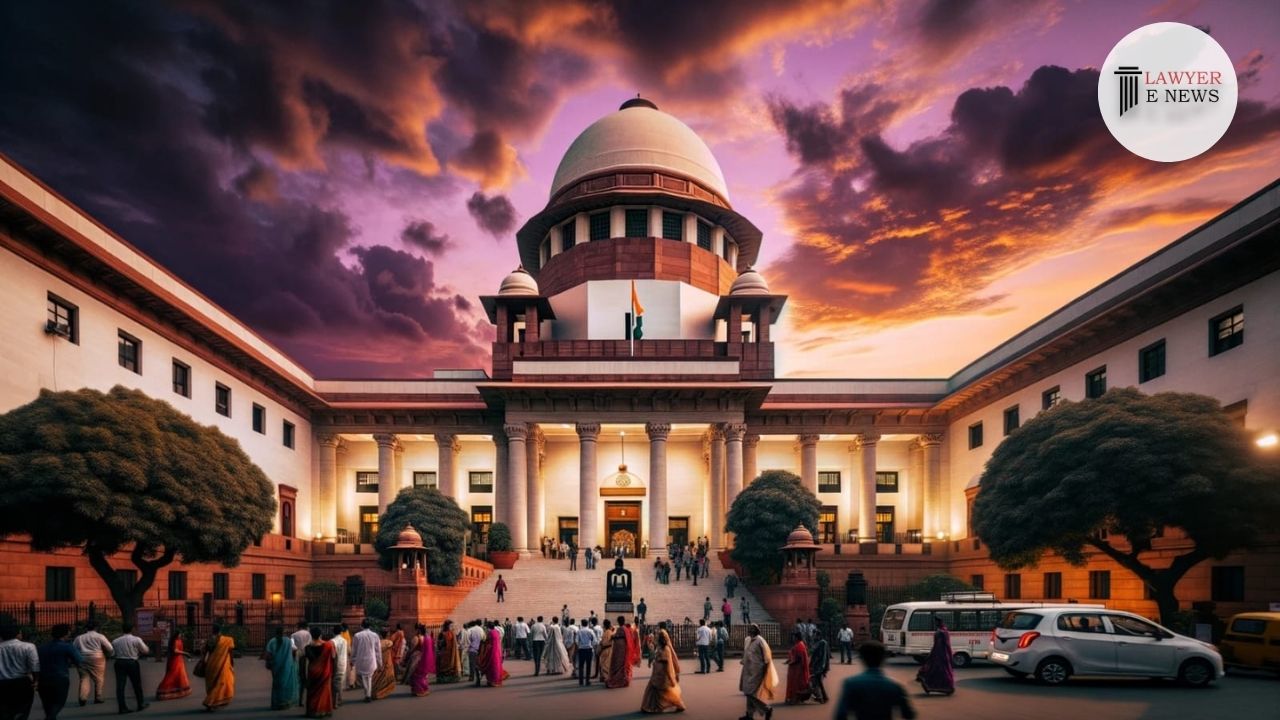
Monday, the Delhi High Court rejected a petition seeking to disqualify jailed legislators from the recently concluded presidential elections [Satvir Singh v Union of India and Anr].
The court ruled that Article 71(1) of the Constitution and the Presidential and Vice-Presidential Elections Act, 1952 provide unequivocally that the only remedy in relation to a Presidential election is an election petition filed after the result has been declared, and that the Supreme Court has exclusive jurisdiction to hear such cases.
According to the Court, only the Supreme Court has the authority to investigate and rule on any questions or disputes regarding the election of the President or Vice-President of India.
Justice Sanjeev Narula added that the petition's filing on the eve of the presidential election made it "extremely suspect."
"The present writ petition is also unmaintainable because the only recourse for a Presidential election is an election petition filed after the result has been announced. Section 14(2) of the 1952 Act also gives the Supreme Court exclusive jurisdiction to hear such cases "Please review the Court's order.
The petition was filed by Satvir Singh, a 70-year-old carpenter, who demanded that the Union government and Election Commission of India remove from the electoral college those Members of Parliament (MP) and Members of Legislative Assemblies (MLA) who have been incarcerated, and that they not be permitted to participate in the presidential elections.
Singh informed the court that he had submitted a rejected nomination form for president.
The Court stated that it cannot discern the petitioner's standing to contest the election of the President.
Justice Narula added that he is unable to identify any provision that disqualifies incarcerated MPs or MLAs from voting in presidential or vice-presidential elections, but since the petition cannot be heard, he will not express an opinion on the matter.
"Furthermore, Petitioner has not provided a single instance in which an imprisoned or incarcerated member was permitted to vote or otherwise act as a member of Parliament or State Legislature, nor has such a member been arrayed as a party," the judge stated.
While Singh appeared in person, Siddhant Kumar represented the ECI.
Chetan Sharma, the Additional Solicitor General, and Waize Ali Noor, an advocate, represented the Union of India.
D.D:18-07-2022
Satvir Singh Versus Union of India and Anr