-
by sayum
27 August 2026 3:32 PM







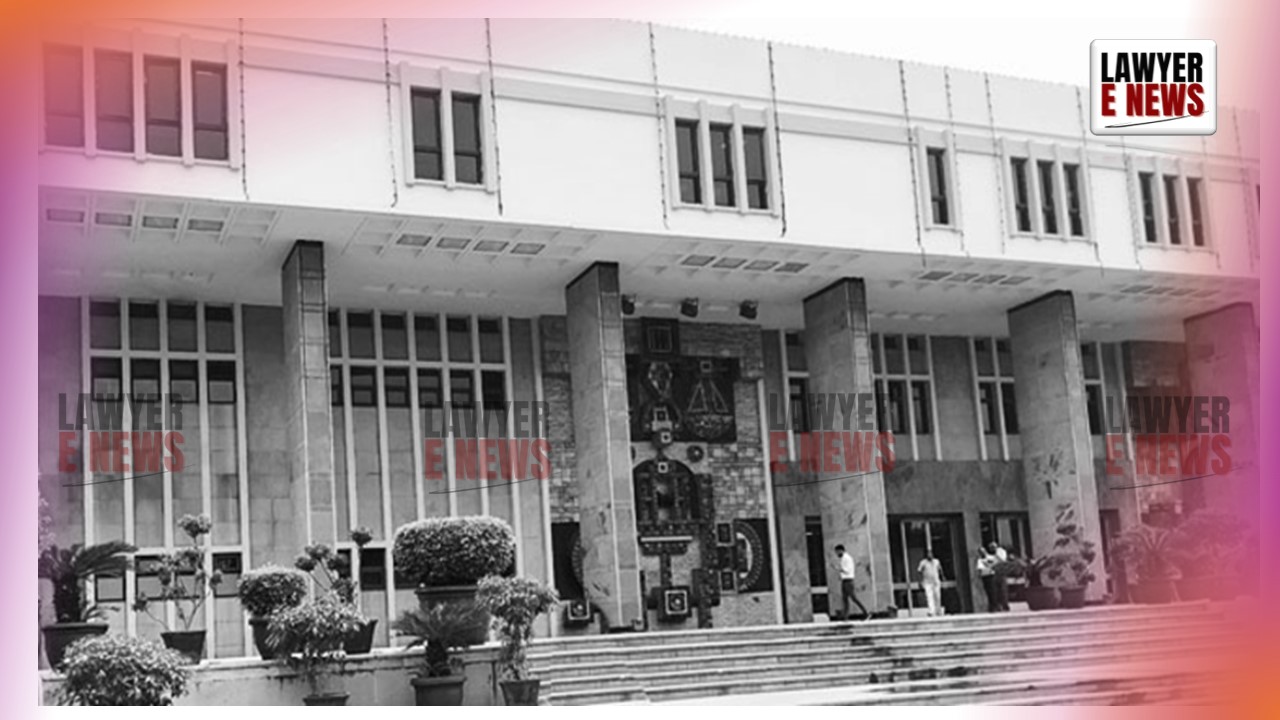
"Registration of the Will raises a presumption that the testator was in a sound state of mind and capable of knowing the consequences of what he was doing... there is nothing to suggest that the testator was not in a sound state of mind to execute the Will," Delhi High Court, in a significant ruling, held that a registered Will executed in a hospital setting carries a strong presumption of genuineness, and the mere fact that a testator was suffering from a serious ailment is insufficient to prove a lack of testamentary capacity.
A bench of Justice Amit Bansal observed that when a Sub-Registrar visits a hospital to register a Will, it signifies the testator’s ability to understand their actions. The Court emphasized that the burden lies heavily on the challenger to establish unsoundness of mind through cogent evidence.
The case arose from a partition suit filed by a grandson against his uncles regarding the estate of his late grandfather, Shri J.P. Tewari. The plaintiff claimed that the properties were ancestral Joint Hindu Family assets and that the 1980 Will propounded by the defendants was forged. The defendants relied on the registered Will, which had been executed while the testator was admitted to Jessa Ram Hospital for renal failure shortly before his death.
The primary legal questions before the court were whether the suit properties retained the character of Joint Hindu Family property and whether the registered Will dated February 13, 1980, was validly executed in a hospital environment. The court was also called upon to determine the admissibility of a certified copy of a Will under the Indian Succession Act, 1925, when the original document is lost.
Court Clarifies Requirements To Prove Joint Hindu Family Status Post-1956
The Court noted that following the enactment of the Hindu Succession Act, 1956, the traditional automatic right in ancestral property has undergone a fundamental change. Inheritance of property from paternal ancestors is now treated as self-acquired in the hands of the successor unless a Joint Hindu Family (HUF) existed prior to 1956 and continued thereafter. The bench held that any claim of HUF status must be supported by specific pleadings and documentation.
Justice Amit Bansal observed that for a property to be treated as HUF after 1956, the plaintiff must establish the exact date and manner in which the property was thrown into a common hotchpotch. The Court found that the plaintiff had only made "bald averments" without providing particulars of the alleged ancestral nucleus or the creation of the HUF. Consequently, the properties were treated as the self-acquired assets of the grandfather.
"The plaint has to contain positive averments and a reference to proper documentation with regard to the creation and existence of an HUF."
Registered Will In Hospital Setting Enjoys Presumption Of Validity
Turning to the validity of the Will, the Court emphasized that there is a legal presumption of genuineness attached to registered documents. It noted that the Sub-Registrar had made an endorsement on the Will stating it was registered "At hospital, due to illness." This indicated that the official had verified the testator's presence and capacity at the site of medical care.
The Court held that the mere fact that the testator was suffering from renal failure did not automatically render him incapable of disposing of his property. The bench remarked that the plaintiff failed to lead any medical evidence to show that the illness made the testator mentally incompetent. It was noted that the testator was capable of understanding and speaking, even if his physical ability to write was diminished by age and disease.
"The registration of the Will raises a presumption that the testator was in a sound state of mind and capable of knowing the consequences of what he was doing."
Admissibility Of Certified Copies Of Wills Under Indian Succession Act
The defendants had produced a certified copy of the Will, explaining that the original had been lost. The Court referred to Section 237 of the Indian Succession Act, 1925, and relevant precedents to affirm that a certified copy is admissible when the loss of the original is established. The bench held that a duplicate registered with the Sub-Registrar serves as a mirror copy of the original.
The judgment clarified that such a document carries the same evidentiary value and legal force as the original. The Court found that the duplicate registered with the authorities has the same effect in law and cannot be disregarded simply because it is not the primary original document. The plaintiff had failed to provide any evidence to challenge the validity of the certified copy produced from the Registrar's records.
"The duplicate copy registered with the Sub-Registrar is in effect a mirror copy of the original document and has the same effect in law as the original document in its operation."
Proving Will When Attesting Witnesses Are Deceased
Regarding the statutory requirements of the Evidence Act, the Court addressed the situation where all attesting witnesses to a Will have passed away. Under Section 69 of the Evidence Act, if no attesting witness can be found, the handwriting of at least one witness must be proved. In this case, the son of one of the attesting witnesses identified his father's signatures on the document.
The Court accepted this testimony as sufficient to satisfy the legal requirements for proving the Will. It noted that the testimony remained unrebutted and there was no reason to disbelieve the identification of the signatures. The Court thus concluded that the defendants had successfully discharged their burden as propounders of the Will despite the death of the original witnesses.
Exclusion Of Spouse From Will Not A Suspicious Circumstance
The plaintiff argued that the Will was unnatural because the testator had excluded his wife and bequeathed properties only to his sons. However, the Court held that a testator has complete freedom to dispose of assets as they wish. The bench observed that the exclusion of a spouse is not inherently a suspicious circumstance, as the testator may have believed the sons would care for their mother.
The Court found that the grandfather had distributed his properties among all three of his sons, including the plaintiff’s father. This balanced distribution further negated the allegation that the Will was forged or executed under undue influence. The Court reiterated that testamentary freedom is a significant right that should not be lightly interfered with by the judiciary.
The High Court dismissed the suit, holding that the plaintiff failed to establish any right to partition. The Court concluded that the registered Will was validly executed and that the property would devolve according to the testator's wishes rather than by intestate succession. The ruling reinforces the high threshold required to challenge a registered Will executed in a medical setting.
Date of Decision: 24 April 2026