-
by sayum
27 July 2026 3:39 PM







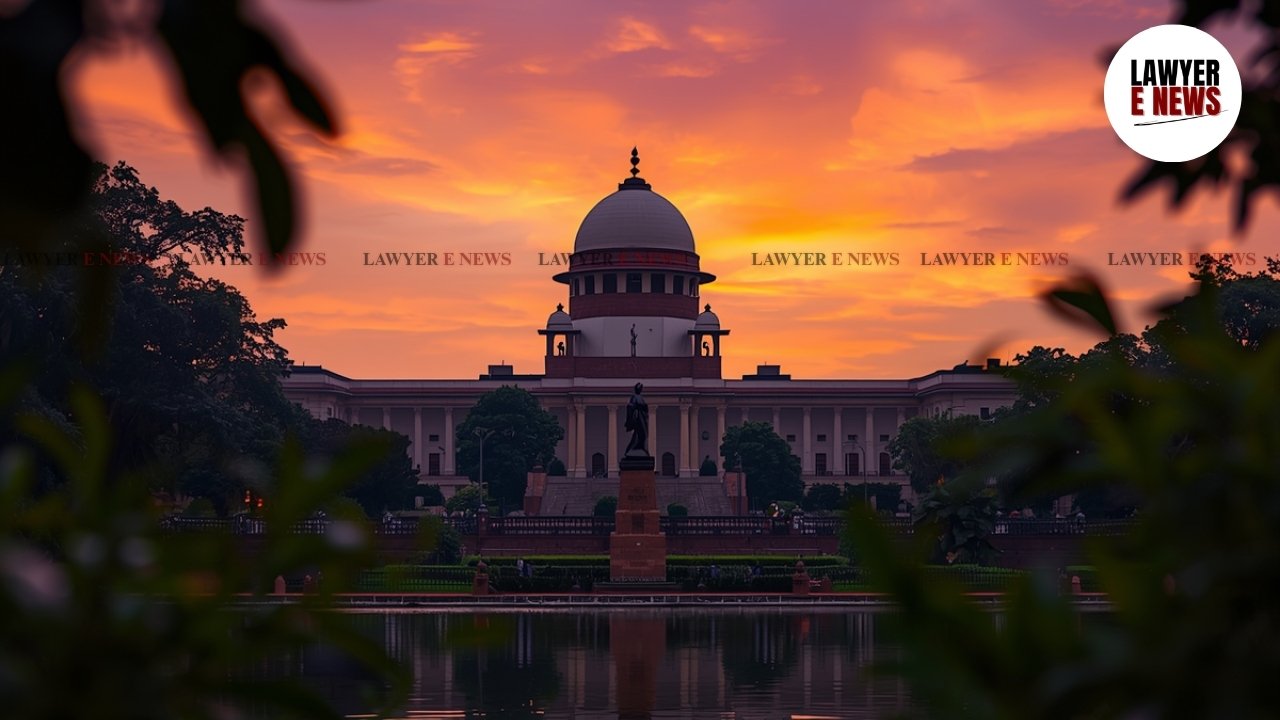
"It was in public interest that the marks of candidates be revealed so as to put a quietus to the said aspect... the Court on being satisfied that public interest required disclosure of marks of the candidates individually, we do not find any reason to interfere." Supreme Court, in a significant ruling, has held that transparency in public recruitment is paramount, affirming that the marks of candidates who fall outside the "zone of consideration" must be disclosed in the public interest.
A bench of Justices J.K. Maheshwari and Atul S. Chandurkar observed that such transparency is necessary to ensure fairness and to "put a quietus" to long-standing litigations surrounding selection exercises.
The case originated from the recruitment of 113 Motor Vehicle Inspectors-Grade II by the Tamil Nadu Public Service Commission (TNPSC) pursuant to a 2018 notification. The selection process was marred by multiple rounds of litigation regarding the validity of workshop experience certificates and the 'Persons Studied in Tamil Medium' (PSTM) quota. The Madras High Court eventually ordered a fresh selection process, a direction that was challenged by several aggrieved candidates and the TNPSC before the apex court.
The primary question before the Court was whether the High Court was justified in directing a fresh recruitment exercise and ordering the disclosure of marks for candidates not in the zone of consideration. The Court was also called upon to determine if certificates issued by the Head of an Institution were sufficient to satisfy the PSTM quota requirements without further verification from the Directorate of Technical Education.
Court Finds Arbitrary Discretion in Granting Workshop Approvals
The Supreme Court noted that the Division Bench of the High Court found the state’s process for granting retrospective approval to workshops was arbitrary. Prior to 2012-13, the Director had approved workshops with retrospective effect, but this practice was discontinued without a clear policy or justification, leading to the rejection of several candidates' experience certificates.
The bench agreed with the High Court that this lack of a uniform policy resulted in a discriminatory environment for candidates who had no control over when their workshops received renewal certificates. The Court observed that candidates should not be prejudiced by the pendency of a renewal application if the workshop was otherwise attending to government vehicles and was listed as approved on official websites.
No Vested Right Created by Mere Placement in a Selection List
Addressing the grievances of candidates who were already placed in the revised select list dated April 28, 2021, the Court held that they could not claim a vested right to appointment. The bench emphasized that the High Court’s direction for a fresh exercise aimed to provide a level playing field for all meritorious candidates who had been unfairly excluded.
"No vested right could be claimed merely by placement in the revised select list, especially when the right of participation in the fresh selection process was not being taken away."
The Court highlighted that a fresh process would result in a larger pool of meritorious candidates being available for selection, which is ultimately in the public interest. The bench found no justifiable legal ground to interfere with the conclusion that a flawed selection process must be corrected to ensure parity among all aspirants.
Head of Institution Certificate Sufficient for PSTM Quota
On the issue of the PSTM quota, the TNPSC had argued that it possessed the power to independently verify if an institution truly applied Tamil as the medium of instruction. However, the Court upheld the findings of the lower courts that a certificate issued by the Head of the Institution where the candidate studied was sufficient evidence of their eligibility.
The Court noted that since the candidates had written their examinations in the Tamil language and the 2018 notification did not prescribe any additional verification from the Directorate of Technical Education, the TNPSC’s stand was unsustainable. The bench affirmed that such certificates must be necessarily acted upon to grant candidates the benefit of the quota.
Public Interest Overrides Privacy in Disclosure of Marks
A major point of contention was the High Court's direction to the TNPSC to reveal the marks of candidates who did not fall within the zone of consideration. The TNPSC relied on the precedent in Joint Directors and Central Public Information Officer vs. T.R. Rajesh to argue against such disclosure, but the Supreme Court clarified that courts are entitled to issue such directions if public interest demands it.
"The Division Bench was of the view that the process of recruitment having been engaged in litigation for more than five years, it was in public interest that the marks of candidates be revealed so as to put a quietus to the said aspect."
The Court expressed satisfaction that after five years of legal battles, individual disclosure of marks was a necessary step toward transparency. The bench clarified that while candidates are entitled to know their marks, they would not be entitled to copies of their answer sheets, maintaining a balance between transparency and administrative confidentiality.
Final Directions and Conclusion
The Supreme Court concluded by directing the TNPSC to complete the recruitment exercise at the earliest, following the time schedule stipulated by the High Court. It noted that since the workshop experience of the appellants had already been re-verified by the Motor Vehicles Maintenance Department and found sufficient, they must be considered for inclusion in the final select list based on merit.
By dismissing the challenges to the High Court judgment, the Supreme Court reinforced that the integrity of the selection process and public transparency are superior to the individual claims of candidates placed in an interim or flawed list. The appeals were disposed of with the direction that all eligible candidates be allowed to compete fairly in the renewed selection exercise.
Date of Decision: June 15, 2026