-
by sayum
25 August 2026 12:32 PM







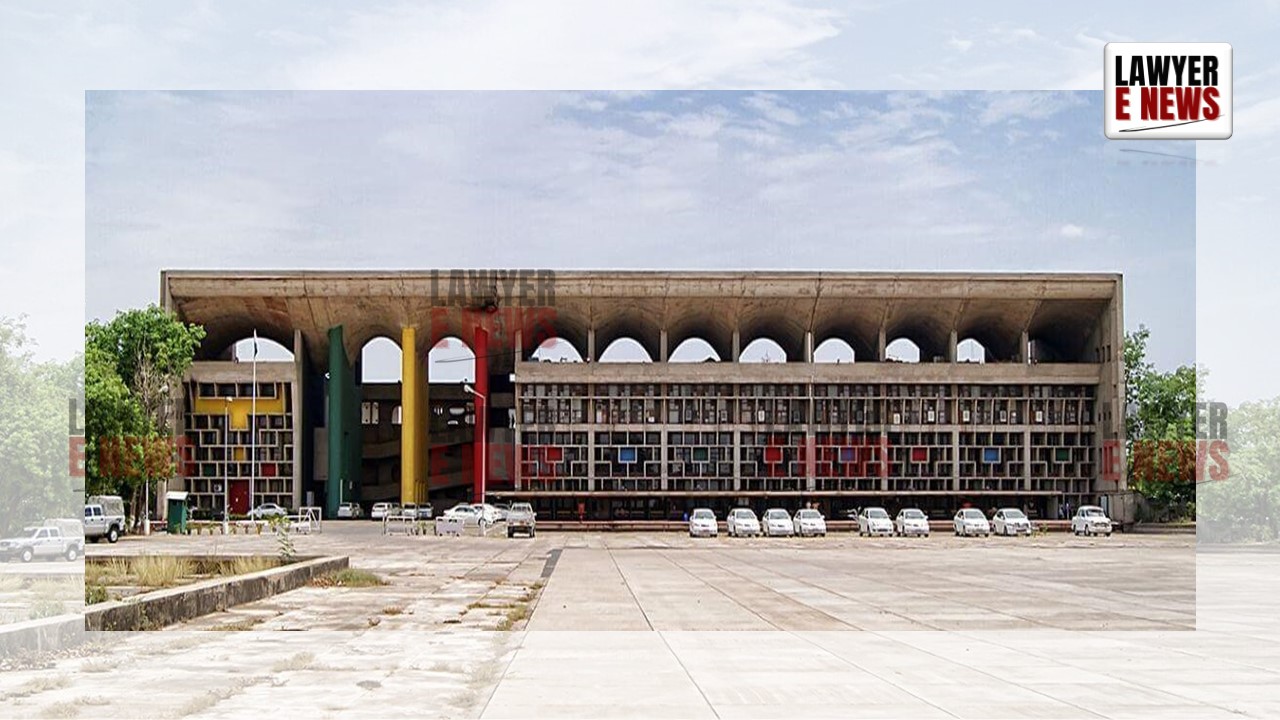
Punjab and Haryana High Court Rejects Petition to Recall Witness for Further Cross-Examination After Change of Counsel. On October 14, 2024, the Punjab and Haryana High Court in Kuldip Singh and Another v. Kamaldeep Singh (CR-5779-2024), dismissed a civil revision petition under Article 227 of the Constitution. The petitioners sought to set aside the order of the Rent Controller, Ludhiana, which had rejected their application to recall the respondent for further cross-examination. Justice Vikas Bahl upheld the lower court's decision, stating that inefficiency or omission by previous counsel does not justify recalling a witness, and the petitioners had ample opportunity to cross-examine the respondent during the previous proceedings.
The case originated from an eviction petition filed by Kamaldeep Singh (respondent-landlord) under Section 13 of the East Punjab Urban Rent Restriction Act, 1949. The landlord sought the eviction of the petitioners (tenants) on grounds of personal necessity. The petitioners had cross-examined the landlord's testimony but later changed their legal counsel and filed an application to recall the landlord for further cross-examination. The petitioners argued that their previous counsel had not effectively questioned the landlord and sought additional cross-examination under Order 18 Rule 17 of the Code of Civil Procedure, 1908 (CPC).
The Rent Controller dismissed the application, observing that the petitioners had sufficient opportunity to cross-examine the landlord previously, and that the application appeared to be a delay tactic. Aggrieved by the order, the petitioners approached the High Court under Article 227.
Whether a change of counsel or alleged inefficiency by previous counsel justifies recalling a witness for further cross-examination.
Whether the powers of recall under Order 18 Rule 17 CPC can be invoked by a party to re-examine a witness after an opportunity for cross-examination has been exhausted.
Court’s Observations:
Justice Vikas Bahl analyzed the facts of the case, including the petitioners' previous cross-examination of the landlord and the reasons cited for recalling the witness. The Court made the following key observations:
The Court rejected the argument that the recall of a witness is justified solely due to dissatisfaction with previous cross-examination by counsel.
"Inefficiency or omission by the previous counsel does not constitute a valid reason for allowing further cross-examination of a witness," the Court emphasized [Para 4].
The Court reiterated that the powers under Order 18 Rule 17 CPC are discretionary and intended for the convenience of the Court, not for litigants to re-open or fill gaps in their case. The provision allows the Court to recall witnesses for clarification, but it cannot be invoked by parties to re-examine witnesses merely due to a change of counsel.
"Order 18 Rule 17 CPC cannot be invoked by a private party... this provision is meant only for the convenience of the Court," the Court held, citing precedent [Para 7].
The Court noted that the petitioners' application was filed eight months after the initial cross-examination, suggesting that the application was primarily aimed at delaying the eviction proceedings. The Court underscored that the eviction petition had been pending since 2019, and such delays undermined the purpose of the eviction proceedings, particularly when personal necessity was one of the grounds for eviction.
"The application has been moved only to delay the proceedings," the Court remarked [Para 10].
The High Court dismissed the civil revision petition, upholding the Rent Controller’s order that rejected the petitioners' application to recall the witness. The Court found that the petitioners had ample opportunity to cross-examine the landlord, and the application was not maintainable under Order 18 Rule 17 CPC. The Court also emphasized that allowing the recall application would lead to unnecessary delays in the eviction process.
"This revision petition is accordingly dismissed," the Court concluded [Para 11].
This judgment reinforces the principle that a change of counsel or dissatisfaction with previous cross-examination does not justify recalling a witness under Order 18 Rule 17 CPC. The Court's discretion to recall witnesses is intended for the Court's convenience, not for litigants to re-litigate their case or fill gaps. The decision further highlights the Court's concern over delay tactics in eviction proceedings, especially when personal necessity is claimed.
Date of Decision: October 14, 2024
Kuldip Singh and Another v. Kamaldeep Singh