-
by sayum
28 October 2026 12:11 PM








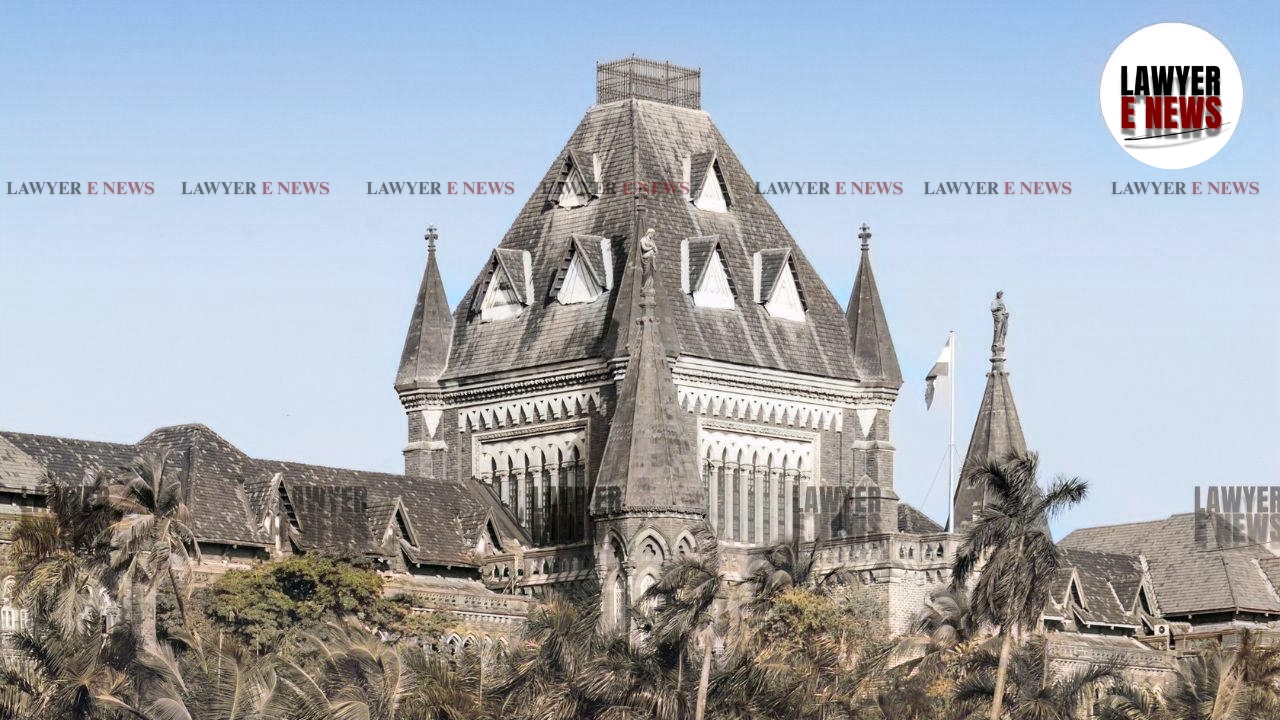
"Further, the mandatory procedure of Jamatalashi report as contemplated under the Rules of 2003 was not followed. Additionally, the DRM report was submitted after an inordinate delay of four years." Bombay High Court has ruled that the Railway Administration cannot resist a statutory compensation claim under Section 124A of the Railways Act, 1989 by alleging passenger negligence and standing near train doors when it fails to comply with the mandatory requirement of preparing a Jamatalashi report under the Railway Passengers (Manner of Investigation of Untoward Incident) Rules, 2003.
Setting aside an order of the Railway Claims Tribunal that had rejected compensation for a fatal fall, Justice Aarti Sathe observed that absent contemporaneous independent evidence, an uncorroborated Divisional Railway Manager report prepared after an inordinate delay of four years cannot substantiate a defence of negligence or disentitle the legal heirs of a deceased passenger from statutory relief.
The appellants' son suffered fatal skull injuries on September 1, 2015, after falling from an overcrowded local train between Kurla and Chunabhatti stations while commuting from Belapur to Chhatrapati Shivaji Maharaj Terminus. Although an inquest panchanama recovered his wallet containing a valid railway ticket for his onward journey from Kurla to Belapur, the return ticket for the Belapur–CSMT leg could not be found on his person. The Railway Claims Tribunal dismissed the parents' compensation application on March 5, 2020, holding that the non-recovery of the return ticket disproved his status as a bona fide passenger, even while concurrently finding that the victim had died in an untoward incident.
The primary question before the court was whether the non-preparation of a mandatory Jamatalashi report under the 2003 Rules and a delayed DRM report preclude the Railways from setting up a defence of negligence under Section 124A exceptions. The court was also called upon to determine whether the absence of a return journey ticket on the deceased negatives their status as a bona fide passenger.
Inherent Contradiction In Tribunal's Approach To Untoward Incidents
Justice Aarti Sathe identified a fundamental contradiction in the Tribunal’s impugned order, which conceded on the basis of the police report, inquest panchanama, and DRM report that the deceased had succumbed to fatal injuries in an untoward incident of falling from a train, yet simultaneously denied compensation on the sole premise that a return travel ticket was missing. The bench held that such a contradictory finding went to the very root of the dispute, reiterating that a beneficial statute cannot be frustrated by pedantic technicalities when an untoward incident stands established on record.
"This contradiction, to my mind, goes to the very root of the matter considering that on one hand the Tribunal has accepted that the deceased did die on account of an untoward incident of falling from the train, but held him to be not a bona fide passenger as the Railway ticket for one way journey was not found on his body."
Failure To Follow Mandatory Jamatalashi Procedure Under 2003 Rules Fatal To Railway's Defence
Examining the procedural statutory requirements, the High Court emphasized that under Rule 7 of the Railway Passengers (Manner of Investigation of Untoward Incident) Rules, 2003, the investigating machinery is under a mandatory duty to prepare a Jamatalashi report. This includes visiting the site of the occurrence, examining the victim's belongings, and questioning persons who handled the body. The court noted that the Railways completely bypassed this statutory process and instead sought to raise a belated DRM report after four years, which deprived their defence of any evidentiary foundation.
"Further, the mandatory procedure of Jamatalashi report as contemplated under the Rules of 2003 was not followed. Additionally, the DRM report was submitted after an inordinate delay of four years."
Absence Of Eyewitness Corroboration Invalidates Plea Of Passenger Negligence
Addressing the Railways' contention that the deceased was standing near the door and acted with criminal negligence, the bench held that such a defence cannot stand without corroborative witness testimony. The court observed that the DRM report alone, submitted four years post-incident without supporting eyewitness statements, could not establish that the deceased had deliberately exposed himself to danger or breached safe travel norms.
"Besides the aforesaid DRM report, there were no eyewitnesses which were brought on record to suggest that the deceased was in fact standing at the door of the running train which was impermissible and his death was caused primarily due to his negligence. I am, therefore, inclined to reject the submission made by learned counsel for the Respondent-Railways that the death of the deceased was on account of his own negligence and that the deceased was travelling at the door which was impermissible."
Application Of Rina Devi Principles On Initial Burden And Ticket Non-Recovery
The High Court placed extensive reliance on the Supreme Court's landmark judgment in Union of India v. Rina Devi, noting that the mere absence of a railway ticket on the victim's person does not negate their bona fide passenger status. The bench observed that the claimants had adequately discharged their initial onus by placing an affidavit of relevant facts on record and showing the recovery of a valid ticket for the prior leg of the journey, shifting the burden onto the Railways to disprove bona fides.
"However, mere absence of ticket with such injured or deceased will not negative the claim that he was a bona fide passenger. Initial burden will be on the claimant which can be discharged by filing an affidavit of the relevant facts and burden will then shift on the Railways and the issue can be decided on the facts shown or the attending circumstances."
Beneficial Interpretation Of Section 124A And Enhanced Compensation Computation
Reaffirming that Section 124A of the Railways Act is welfare legislation requiring liberal construction in favour of claimants, the court held that the Railways had failed to bring the case within any of the statutory exceptions. Applying the compensation principles from Rina Devi and the Railway Accidents and Untoward Incidents (Compensation) Amendment Rules, 2016, the court compared the revised statutory compensation of Rs. 8,00,000/- with the pre-amendment sum of Rs. 4,00,000/- plus 9% interest per annum from the date of the accident, awarding the higher sum of Rs. 8,00,438.36/-.
"Further, it is well settled that the Railways Act is a beneficial piece of legislation and hence it should receive a liberal interpretation and whenever there are two views possible, a construction in favour of the beneficiary of the legislation should be preferred and the real intent of the legislation ought to be sought."
The High Court quashed the Tribunal's dismissal and awarded Rs. 8,00,438.36/- in equal shares to the deceased's parents, directing Central Railway to disburse the amount within eight weeks. The decision cements the legal proposition that the Railways cannot defeat untoward incident claims by alleging passenger negligence without completing the mandatory Jamatalashi inquiry and adducing prompt, independent corroboration.
Date of Decision: 16th October 2026