-
by sayum
24 August 2026 11:13 AM







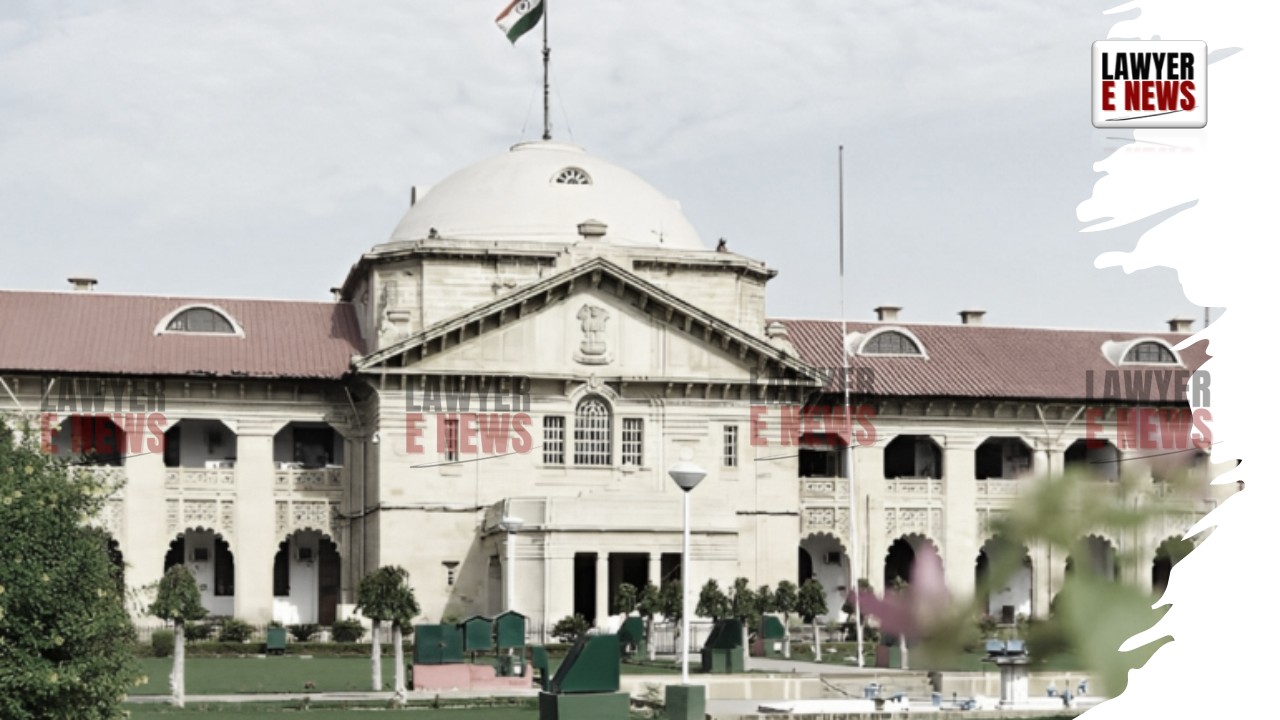
“Twenty-One Years Later, Justice Prevails – Removal Order Reversed, Matter Remanded for Reconsideration of Punishment”, In a judgment that underscores the balance between discipline and compassion in public service, the Allahabad High Court set aside the removal from service of a PAC Constable, Ramesh Chandra Singh, for unauthorized absence of 160 days in 1999. While acknowledging the seriousness of absenteeism in the police force, Justice Indrajeet Shukla held that the punishment of removal was disproportionate, especially in light of the petitioner’s subsequent 20 years of blemish-free service, promotion to Head Constable, and attainment of superannuation.
The Court remanded the matter to the disciplinary authority to impose any punishment other than dismissal or removal, and directed expeditious payment of retiral dues.
“A Tale of Absence, Illness and a Collapsed House”: Facts That Sparked the Disciplinary Storm
The case dates back to 1999, when Ramesh Chandra Singh, then a constable with the 25th Battalion of the PAC, proceeded on two days of leave starting 12 May 1999. He was supposed to return on 15 May, but remained absent until 20 October 1999 — a total of 160 days. His defence? Illness due to typhoid and a house that had collapsed in a storm.
He submitted medical certificates and even produced the village pradhan to support the claim. A departmental inquiry was initiated, which found the explanation unsatisfactory. The inquiry officer noted that the medical records were inconsistent, did not cover the entire period of absence, and there was no evidence of hospitalization. Based on this, he recommended removal from service.
That recommendation, however, came back to haunt the disciplinary process itself.
“Recommendation Must Be Separate – Not an Unwritten Sentence in the Inquiry Report”
The Court found that the Inquiry Officer’s recommendation of punishment was included within the inquiry report, in violation of Appendix I to Rule 14(1) of the U.P. Police Officers of Subordinate Ranks (Punishment & Appeal) Rules, 1991.
Justice Shukla remarked: “If the law requires a thing to be done in a particular manner, it must be done in that manner alone. The recommendation of punishment must be made separately. A composite report renders the process legally defective.”
“Judicial Review is Not a Re-Appraisal of Facts” – Limited Interference Upheld, But Relief Granted on Proportionality
The High Court reiterated the limited scope of judicial review in disciplinary matters, quoting precedents like Railways v. Rajendra Kumar Dubey (2021) 14 SCC 735 and Chennai Metropolitan Water Supply v. T.T. Murali Babu (2014) 4 SCC 108, to stress that courts cannot sit as appellate authorities over departmental inquiries.
Yet, it held that intervention is justified where the punishment is grossly disproportionate, especially considering the petitioner’s long, unblemished service after reinstatement, his promotion to Head Constable in 2016, and the fact that he had retired on 31 July 2024 with 36 years of service (excluding the 4 years he was out due to removal order).
“The misconduct occurred in 1999. For the next two decades, the petitioner served faithfully, was promoted, and retired. In such peculiar facts, this Court finds it fit to intervene on the limited ground of proportionality,” the Court observed.
“When Past Conduct Is Background, Not Basis – No Violation of Double Jeopardy”
Addressing the petitioner’s argument that the punishment relied on past misconduct not part of the chargesheet, the Court clarified: “The past record was referred to, but it was not the foundation of the punishment. The removal was based solely on the charge of 160 days’ unauthorized absence.”
In doing so, it distinguished the case from Mohd. Yusuf Khan v. State of U.P. and followed State of Punjab v. Ex. C. Satpal Singh (2025 AIR SC 4011).
“Unauthorized Absence Isn’t Always Willful – But You Must Prove the Compulsion”
The Court engaged in a detailed discussion of Krushna Kant B. Parmar v. Union of India (2012) 3 SCC 178, which holds that unauthorized absence doesn’t amount to misconduct unless it is willful. However, it endorsed the later judgment in T.T. Murali Babu, which clarified that:
“This is not an absolute rule — if the employee fails to show compelling circumstances for the absence, the presumption of willfulness stands.”
In this case, the Court found the absence of evidence for hospitalization or consistent medical care, and contradictory explanations (illness vs. house collapse), to justify the disciplinary findings.
“Regulations 381 and 382 Not Mandatory, But Not Toothless Either”
The Court acknowledged that Regulations 381 and 382 of the U.P. Police Regulations, which govern intimation of illness and obtaining medical leave, are directory and not having statutory force. However, it held that even substantial compliance was absent in this case.
“Even after receiving a fitness certificate on 27.07.1999, the petitioner did not return to duty until 20.10.1999. This further weakened his case,” the Court noted.
“Salary Forfeiture Order Was Redundant – Double Punishment Not Permitted”
The petitioner had also challenged a separate order dated 17.04.2000, forfeiting salary for the same period of absence. The Court held:
“Once removal from service was ordered, passing a separate order treating the same period as ‘dies non’ (no work, no pay) was unnecessary and improper.”
However, since the removal order was being set aside, the salary issue must be revisited, and the Court directed the authority to pass fresh orders on the same after hearing the petitioner.
“Not an Absolute Clean Chit – Just a Second Chance After Retirement”
Importantly, the Court did not exonerate the petitioner. It upheld the disciplinary findings and the validity of the inquiry. The relief was limited to the disproportionate nature of the punishment, given subsequent developments.
“The Court cannot rewrite the punishment, but it can direct reconsideration where warranted by long service and changed circumstances,” said Justice Shukla, citing Union of India v. Datta Linga Toshatwad.
“Final Relief: Punishment Set Aside, Authority to Reconsider Penalty Other Than Dismissal”
Key directions issued by the Court:
“The impugned orders of removal, appellate and revisional orders are set aside. The matter is remanded to the disciplinary authority to impose any punishment except dismissal or removal from service.”
“A fresh order regarding salary for the period of unauthorized absence shall also be passed after hearing the petitioner.”
“All post-retiral dues shall be recalculated and released within two months.”
Date of Decision: 20 January 2026