-
by sayum
25 August 2026 12:32 PM







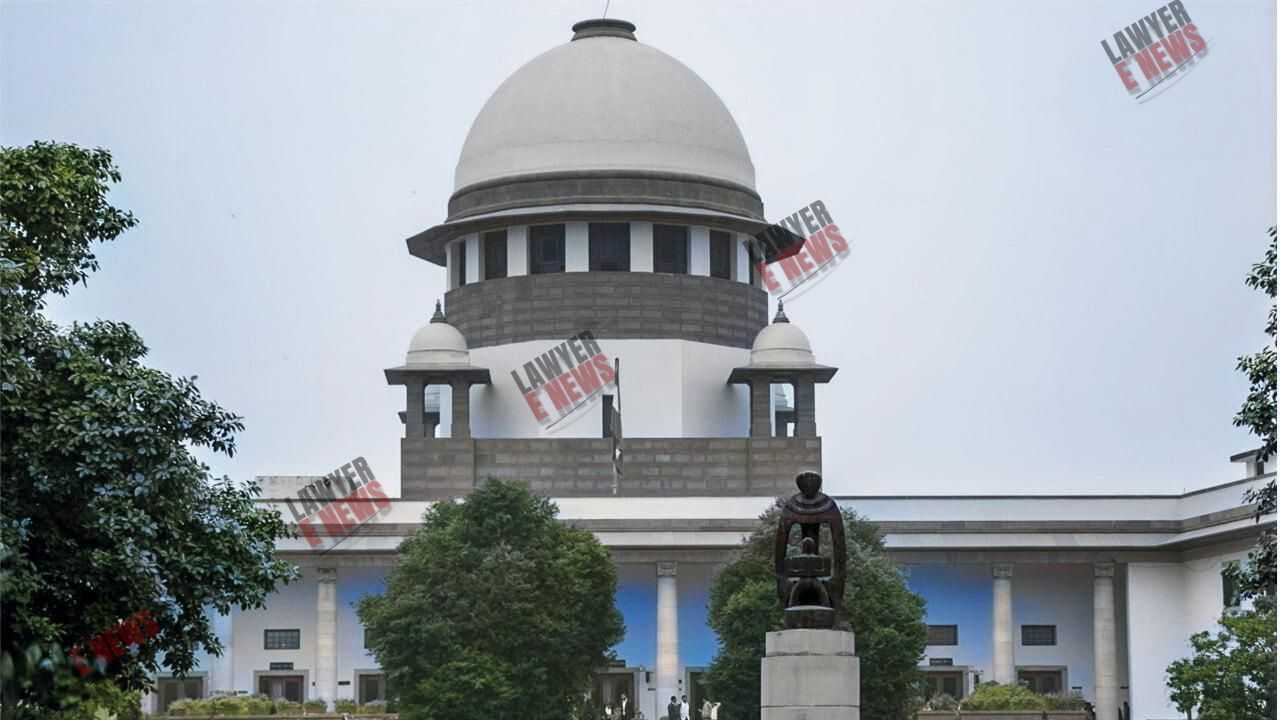
“Mere Long Silence Cannot Be Construed as Compliance; Burden of Proof Lies on the Decree-Holder” – In a significant ruling on November 11, 2025, the Supreme Court of India, through a Bench of Justice Prashant Kumar Mishra and Justice Vipul M. Pancholi, dismissed the appeal filed by members of the Kapadam sect seeking execution of a 1933 compromise decree governing rotation of idols and pooja responsibilities between two sects of the Kuruba community in Anantapur District, Andhra Pradesh.
The decree, recorded in O.S. No.15 of 1933, had settled the rights and responsibilities relating to worship of Lord Sangalappa Swamy, including rotational custody of idols every six months, pooja duties every three months, and a scheme for joint trusteeship. However, the apex court refused to permit its execution, noting the complete lack of evidence of its implementation for over six decades.
The Court made it clear that execution of a decree cannot rest on assumptions or historical sentiment, ruling that “findings based on assumption without proof are legally unsustainable”.
The Legacy of a Forgotten Decree: Two Villages, One Deity, and a 92-Year-Old Agreement
The dispute, rich in cultural and legal history, stemmed from a long-standing conflict between two subsects of the Kuruba community—the Kapadam families of Gungulakunta village and the Kamatam families of Yerrayapalli village—over the right to worship and possess the idols of Lord Sangalappa Swamy, a deity revered by both.
A suit filed in 1927 by the Kamatam family had failed, but the appellate court permitted the filing of a representative suit under Section 92 of the Civil Procedure Code, for better administration of the temple. Accordingly, a fresh suit was filed in 1931 and culminated in a compromise decree dated 01.11.1933.
The decree envisaged:
But the Supreme Court noted that “the scheme under the compromise decree was never operationalised”, leading to the central legal issue: Could such a dormant decree be enforced seven decades later without proof of breach or compliance?
“Presumptions Cannot Take the Place of Proof”: Supreme Court Slams Executing Court’s Reasoning
The execution petition (E.P. No. 59 of 2000) was filed by the Kapadam group after alleging that the Kamatam group had failed to rotate the idols as agreed. The Executing Court, relying largely on assumptions and absence of prior disputes, directed return of idols to the appellants. However, the High Court reversed this in 2012, and the Supreme Court has now affirmed that reversal.
The Bench categorically held:
“There was no convincing evidence before the Executing Court to establish that the respondents were in possession of the idols or had violated the compromise decree dated 01.11.1933.”
Rejecting the assumption that silence over the decades implied ongoing rotation of the idols, the Court ruled that:
“Such inference, based merely on the absence of earlier dispute, is impermissible.”
The Supreme Court criticised the reliance on vague testimony by PW-1 (Kapadam Sangalappa), who failed to provide any proof of idol exchange, payment of ₹2,000, or appointment of trustees. The witness even admitted in cross-examination that he was unaware whether the ₹2,000 had ever been paid, and that no accounts had been maintained for decades.
The Court declared:
“It is trite law that in execution petition, the primary onus lies on the decree-holder to show that the judgment debtor has willfully disobeyed the conditions of the decree.”
“No Rotation, No Trustees, No Accounts”: Court Finds Decree Dormant and Non-Executable
The apex court stressed that compliance with the Clause (2) of the compromise decree—appointment of trustees and maintenance of accounts—had not been shown at all. The appellants had produced no material to suggest that even the most basic structural mechanisms under the decree had ever been put into practice.
“When any fact is especially within the knowledge of any person, the burden of proving that fact is upon him and no one else.”
On the point of possession, the Court accepted the respondents’ case that the appellants had continued exclusive possession of the idols, especially since there was no evidence of ever having handed them over, and no proof that the respondents had paid the required amount to trigger their participation under the decree.
Thus, the Court observed:
“The compromise decree was never acted upon and the articles always remained with the appellants upon failure of the respondents to pay Rs.2,000/-.”
This position was bolstered by the appellants’ own witness, who could not even identify which pooja articles were original and which were prepared later, undermining any claim of shared custody or rotation.
“Sentiment Cannot Override Law”: Supreme Court Upholds High Court’s Factual Findings
Reiterating settled legal principles, the Bench stated:
“The burden of proving violation of the decree rests squarely on the decree-holders. In the absence of cogent proof of such violation, the execution cannot be sustained.”
The Court found no error in the High Court’s interference with the Executing Court’s finding, noting that where a lower court’s conclusions are based on conjecture or unsupported assumptions, higher courts are justified in stepping in.
Ultimately, the Court refused to revive what it saw as a non-operational, dormant decree, remarking that no execution can proceed in the absence of foundational facts.
In a verdict balancing historical faith and legal rigor, the Supreme Court has drawn a clear line between religious sentiment and legal enforceability. A compromise, no matter how sacred, cannot survive without active implementation and compliance.
The Court concluded:
“The Executing Court fell into an error in allowing the execution of the compromise decree dated 01.11.1933 on mere presumption without any proof, and the High Court rightly set aside the Executing Court’s order.”
The appeals were dismissed, and the nearly century-old litigation stands closed—on the basis that justice must rest on evidence, not nostalgia.
Date of Decision: November 11, 2025