At the Stage of Framing Charge, Presumption Suffices; Suicide Note and Grave Suspicion Enough: Allahabad High Court Refuses to Quash Charge Under Section 306 IPC 173 CrPC | Framing of Charge Marks End of Investigation—Complainant Cannot Reopen Probe Merely by Citing Police Lapses: Bombay High Court Recovery Alone Cannot Prove Guilt: Andhra Pradesh High Court Acquits Accused in Murder Case Photos, Videos Must Go: Supreme Court Binds Warring Spouses to Clean Up Social Media in Matrimonial Settlement Standard for Bail Under Section 319 CrPC Is Higher Than Framing of Charge, But Short of Conviction: Supreme Court Grants Bail to Accused Summoned Mid-Trial State Cannot Arbitrarily Deny Subsidies to 'New Industrial Units' by Retrospectively Applying Expansion Caps: Supreme Court Companies Act | Offence Under Section 448 Is Covered Under Section 447: Supreme Court Bars Private Complaint Without SFIO Nod “See-To-It” Obligation Is Not A Guarantee Under Indian Law: Supreme Court Clarifies Scope Of Section 126 ICA In IBC Disputes Mere Employment of Litigant’s Relatives in Police or Court Doesn't Prove Judicial Bias: Supreme Court Sets Aside Transfer of Criminal Case Reserved Candidate Availing Relaxed Standards in Prelims Cannot Migrate to General Quota for Cadre Allocation: Supreme Court Mere Vesting Does Not Mean Possession: Supreme Court Rules ULC Proceedings Abated For Failure To Serve Mandatory Notice To Actual Occupants Contempt of Courts Act | Natural Justice in Administrative Action: Supreme Court Directs West Bengal Govt to Re-Adjudicate Teachers' Arrears Claims Live-In Relationship with Married Man Not a ‘Relationship in the Nature of Marriage’ Under Domestic Violence Act: Bombay High Court Applies Supreme Court Guidelines Income Tax Act | Substitution of Shares held as Stock-in-Trade upon Amalgamation constitutes Taxable Business Income if Commercially Realisable: Supreme Court Judges Cannot Enact Their Own Protocols During Bail Hearings: Supreme Court Sets Aside Sweeping Age Determination Directions In POCSO If There Is Knowledge That Injury Is Likely To Cause Death, But No Intention Falls Under Section 304 Part II:  Supreme Court High Court Ignored POCSO’s Statutory Rigour, Committed Grave Error in Granting Bail: Supreme Court Cancels Bail of Gang-Rape Accused Section 22 HSA | Co-Heirs Have Statutory Right of Pre-Emption Even in Urban Property: Punjab & Haryana High Court 138 NI Act | Issuance of Separate Cheques Gives Rise to Independent Causes of Action, Even if Drawn for Same Underlying Transaction: Supreme Court

Possession Not Mandatory for SARFAESI Act: Delhi High Court

07 May 2024 8:19 AM

By: Admin


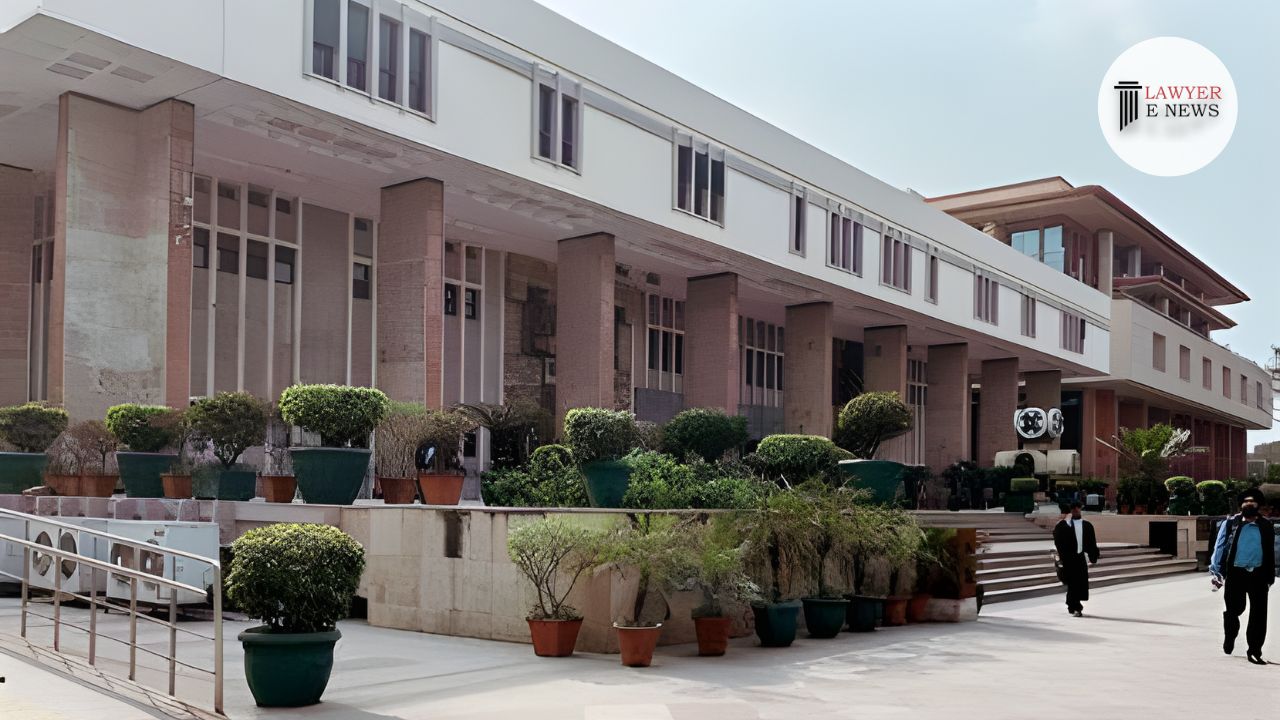
Delhi High Court has delivered a landmark judgment, clarifying the applicability of the Securitisation and Reconstruction of Financial Assets and Enforcement of Securities Interest Act, 2002 (SARFAESI Act) in cases where physical possession of mortgaged property is not immediately taken. The judgment, dated December 11, 2023, issued by the bench comprising HON'BLE MR. JUSTICE VIBHU BAKHRU and HON'BLE MR. JUSTICE AMIT MAHAJAN, carries significant implications for borrowers and financial institutions.

The case in question, titled Rekha Verma v. Oriental Bank of Commerce, centered around a Securitisation Application (SA No.144/2014) related to property located in Lajpat Nagar, New Delhi. The petitioner, Rekha Verma, had filed a writ petition challenging an order by the Debts Recovery Appellate Tribunal (DRAT), which had rejected her appeal against the decision of the Debts Recovery Tribunal (DRT).

The pivotal legal point in the judgment revolved around whether the SARFAESI Act could be invoked without the immediate physical possession of the mortgaged property. The DRAT's decision had relied on the Supreme Court's earlier judgment in Standard Chartered Bank v. Noble Kumar and Ors. (2013), which held that the possession of the secured asset was a prerequisite for invoking Section 17 of the SARFAESI Act.

However, the Delhi High Court's ruling cited a subsequent case, Hindon Forge Private Limited and Anr. v. State of Uttar Pradesh (2019), which clarified that it was not mandatory for the secured creditor to take physical possession of the mortgaged property before seeking recourse under Section 17(1) of the SARFAESI Act. The court emphasized that resistance from the borrower could lead to the involvement of the Magistrate as provided under Section 14 of the Act.

In a significant observation, the court stated, "The observation made in para 36.1.(i), which is strongly relied upon by the Full Bench of the High Court, to arrive at the conclusion that actual physical possession must first be taken before the remedy under Section 17(1) can be availed of by the borrower, does not flow from this decision at all."

As a result of this legal clarification, the Delhi High Court allowed Rekha Verma's writ petition, setting aside the impugned order and restoring her appeal before the DRAT for reconsideration.

Date of Decision: 11 December 2023

REKHA VERMA  VS PUNJAB NATIONAL BANK

 

Latest Legal News