-
by sayum
30 October 2026 12:40 PM








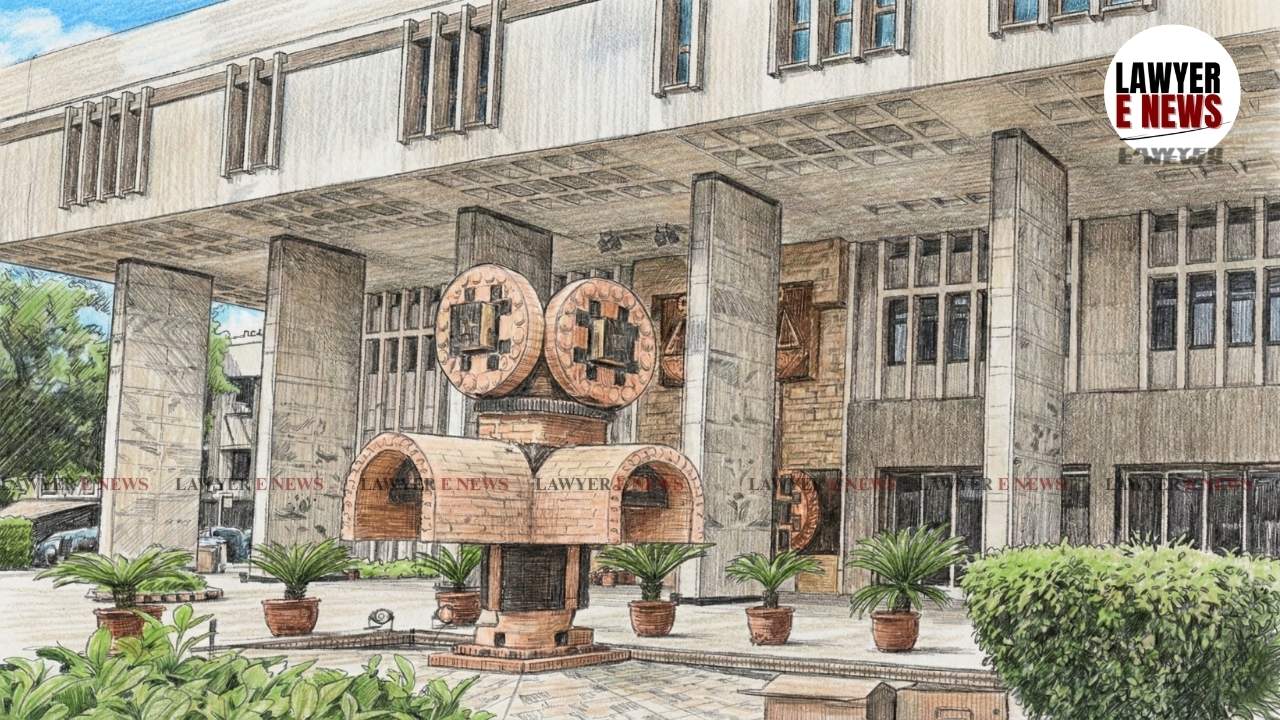
"Dissatisfaction with past administrative decisions cannot amount to any personal or pecuniary interest in the outcome of the inquiry... If such grievances were held sufficient to disqualify the Executive Authority, the Internal Committee of a workplace could seldom be constituted, and the statutory scheme would be rendered unworkable." Clarifying the legal threshold for disqualifying disciplinary authorities on grounds of bias, the Delhi High Court on October 27, 2026, held that a complainant's dissatisfaction with prior administrative actions of an Executive Authority does not demonstrate real likelihood of bias under Section 4 of the PoSH Act and Regulation 4 of the UGC Regulations, 2015.
Justice Dr. Swarana Kanta Sharma observed that permitting vague allegations of bias to unseat statutory authorities from nominating Internal Committee members would render the statutory machinery of the PoSH Act completely unworkable.
The petitioners, two Associate Professors at Kalindi College, University of Delhi, had lodged a joint complaint alleging sexual harassment, intimidation, and derogatory remarks made by colleagues in a staff meeting and WhatsApp group. After an earlier inquiry report was quashed by the Vice-Chancellor on grounds of procedural irregularities and the participation of an interested member, the College Principal constituted a fresh Internal Committee. The petitioners challenged this reconstitution, claiming the Principal was biased, that one nominated member attended the staff meeting in question, and that another was administratively subordinate to the Principal.
Whether the constitution of a fresh Internal Committee by the Executive Authority stands vitiated on the doctrine of bias merely due to past administrative decisions. Whether ordinary administrative subordination of a nominated non-teaching employee or mere attendance at a general staff meeting disqualifies committee members under Regulation 4 of the UGC Regulations, 2015.
Statutory Scheme Vests Fact-Finding Autonomy Strictly In Internal Committee
The High Court observed that Section 4 of the PoSH Act, read alongside Regulation 4 of the UGC Regulations, 2015, designates the Internal Committee as a self-contained, autonomous mechanism for inquiring into sexual harassment complaints at the workplace. The Court underscored that once the legislature designates the Internal Committee as the inquiry authority, no parallel fact-finding body can be introduced outside the statutory scheme.
Appellate Authority Cannot Usurp First-Instance Fact-Finding Functions
Rejecting the challenge to the Vice-Chancellor's speaking order, the Court held that upon finding that the previous inquiry was vitiated by the participation of an interested member and the lack of an external member, the appellate authority had rightly directed a de novo inquiry. The Bench explained that the Vice-Chancellor could not have assumed the primary fact-finding role, as doing so would offend the statutory framework.
Absence Of Personal Hearing Does Not Vitiate Order Without Demonstrable Prejudice
Addressing the grievance regarding lack of an oral hearing before the Vice-Chancellor, the Bench held that the mere absence of a personal hearing does not ipso facto invalidate an administrative or quasi-judicial decision. The Court reiterated that there must be demonstrable, real prejudice caused to the party, noting that the Vice-Chancellor had extensively considered the written representations and granted the exact substantive reliefs sought by the petitioners.
Real Likelihood Of Bias Must Be Proved Beyond Mere Apprehension
Scrutinizing the allegations of bias leveled against the Principal, the Court relied on settled precedents to emphasize that a fanciful apprehension in the complainant’s mind cannot vitiate administrative actions. The Bench highlighted that the Principal was neither a respondent to the sexual harassment complaint nor had any personal or pecuniary interest in shielding the accused faculty members.
Administrative Subordination Does Not Disqualify Non-Teaching Committee Members
The Court dismissed the challenge against the inclusion of a Senior Personal Assistant to the Principal, ruling that Regulation 4(1)(b) of the UGC Regulations expressly mandates the nomination of non-teaching employees by the Executive Authority. The Bench held that because non-teaching staff work under the administrative control of the head of the institution in the ordinary course of employment, treating administrative subordination as a disqualification would render the statutory mandate entirely nugatory.
Mere Presence At General Staff Meeting Insufficient To Infer Disqualification
The Court similarly held that the mere presence of a nominated faculty member at a general Staff Association meeting does not render her connected or interested in the complaint. In the absence of specific allegations attributing remarks, participation in contentious exchanges, or witness status to her, holding otherwise would absurdly disqualify the entire college faculty from serving on the inquiry committee.
Dismissing the writ petition, the High Court upheld the constitution of the new Internal Committee and directed it to conduct the inquiry strictly in accordance with the PoSH Act, the UGC Regulations, and principles of natural justice, concluding the proceedings within ninety days under Section 11(4) of the PoSH Act.
Date of Decision: October 27, 2026