
-
by sayum
26 August 2026 1:49 PM







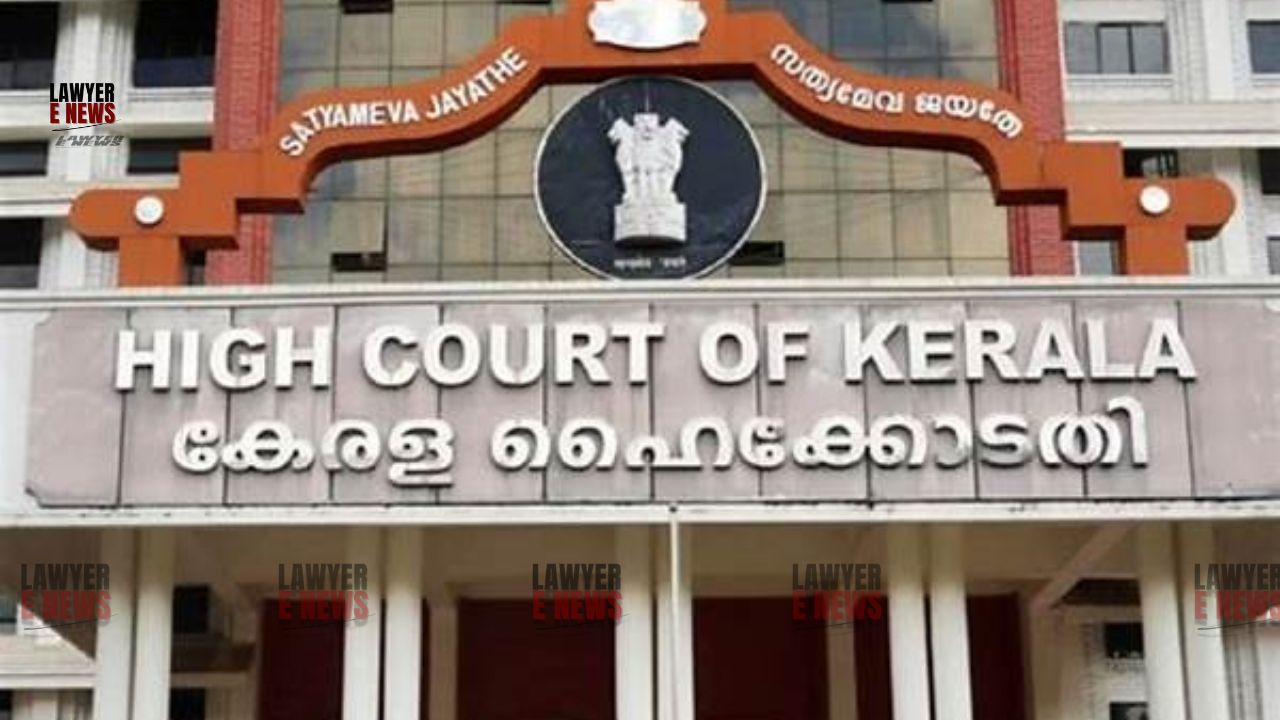
“When the FIR itself contains a pre-packaged list of 16 accused with full parentage, suspicion of prior consultation and political targeting cannot be brushed aside” – Kerala High Court
In a striking judgment that dismantles the foundation of a politically sensitive murder case, the Kerala High Court on February 9, 2026, acquitted nine individuals convicted for the murder of CPI(M) local leader Dileepan, citing deep concerns about FIR manipulation, deliberate false implication, and partisan investigation. The Division Bench comprising Dr. Justice A.K. Jayasankaran Nambiar and Justice Jobin Sebastian, in a 100+ page detailed ruling in Criminal Appeal Nos. 399 & 409 of 2019, held that the FIR was tainted by prior deliberation and political input, and that the entire prosecution narrative stood on a “pre-scripted foundation” bereft of independent corroboration.
The Court ruled that the inclusion of all 16 accused with their names and parentage at the FIR stage was highly suspicious, particularly as the first informant (PW1), who also claimed to be an injured eyewitness, later admitted in court that six of the names were not known to him and were supplied by others at the hospital.
“The detailed narration of names and parentage in FIR reflects not memory but a political script”
The High Court observed that while FIRs may name certain accused if the witness was genuinely present, the granular and complete detailing of all 16 names and their fathers’ names raised “a grave doubt of over-preparation”:
“In Ext.P1 statement, the names of all assailants, more particularly all the 16 accused, were clearly mentioned along with their respective parentage. From the very inception, the defence consistently contended that the names of assailants were incorporated in the FIR on the basis of a list allegedly supplied by the leaders of CPI(M), a political party to which PW1 and PW2, as well as the deceased, belonged.”
The Court cited PW1’s own admission that he supplied some names based on what others told him at the hospital and found this to be a crucial dent in the reliability of the FIR, especially when those ‘others’ were never identified or examined.
“Preliminary Consultation Before Filing FIR Can Vitiate Entire Investigation in Politically Motivated Cases”
The Bench held that when serious political rivalries are involved, FIRs cannot be taken at face value if the process of filing is clouded by consultation, scripting, or party pressure. Citing the Supreme Court’s warning in such contexts, the Court noted:
“In cases arising out of political rivalry, the possibility of false implication of opponents cannot be ruled out… and the prosecution evidence must be of unimpeachable quality.”
The prosecution’s case was that the accused—members of the National Development Front (NDF)—murdered Dileepan in retaliation for the prior killing of one Sainudheen, an NDF worker. However, the High Court found that all witnesses examined were CPI(M) members or sympathizers, and that the investigation bore the marks of partisanship throughout, especially in how the FIR was shaped.
No Independent Witness, Politically Controlled Evidence, FIR Naming All Accused — Court Tears Into Investigation
While stressing that a faulty investigation alone cannot lead to acquittal, the Court ruled that when the base evidence is itself doubtful, such lapses become substantive failures:
“We are not oblivious to the settled legal principle that mere lapses or defects in investigation do not constitute a ground for acquittal. However, such lapses can be ignored only when there exists clear and convincing evidence… In this case, there is no such convincing or trustworthy evidence.”
The prosecution’s case rested almost entirely on PW1 and PW2, who claimed to be injured eyewitnesses—but whose injuries were later discredited as trivial, possibly self-inflicted, and certified at a politically affiliated hospital after a long delay.
Additionally, the prosecution was faulted for listing all 16 accused in the FIR based on “prior consultation” at the hospital, a fact that undermined the credibility of the first information and the subsequent investigation.
Court Cautions Against Political Influence in Criminal Process
By setting aside the convictions and ordering the immediate release of the accused, the Kerala High Court has issued a powerful warning against politicised criminal prosecutions, especially when FIRs appear tailored to suit a political narrative.
In the world of criminal law, the FIR is expected to be the spontaneous and honest reaction of a witness, not a political manifesto masquerading as an accusation. This judgment reminds all stakeholders — police, prosecutors, and courts — that when the foundation itself is compromised, justice cannot rest on it.
Date of Decision: 09/02/2026





