-
by sayum
28 October 2026 3:34 PM








"The settled principle applicable to a suit for permanent injunction is that the plaintiff must establish his own lawful possession and cannot succeed merely by pointing to deficiencies in the defendants' case."
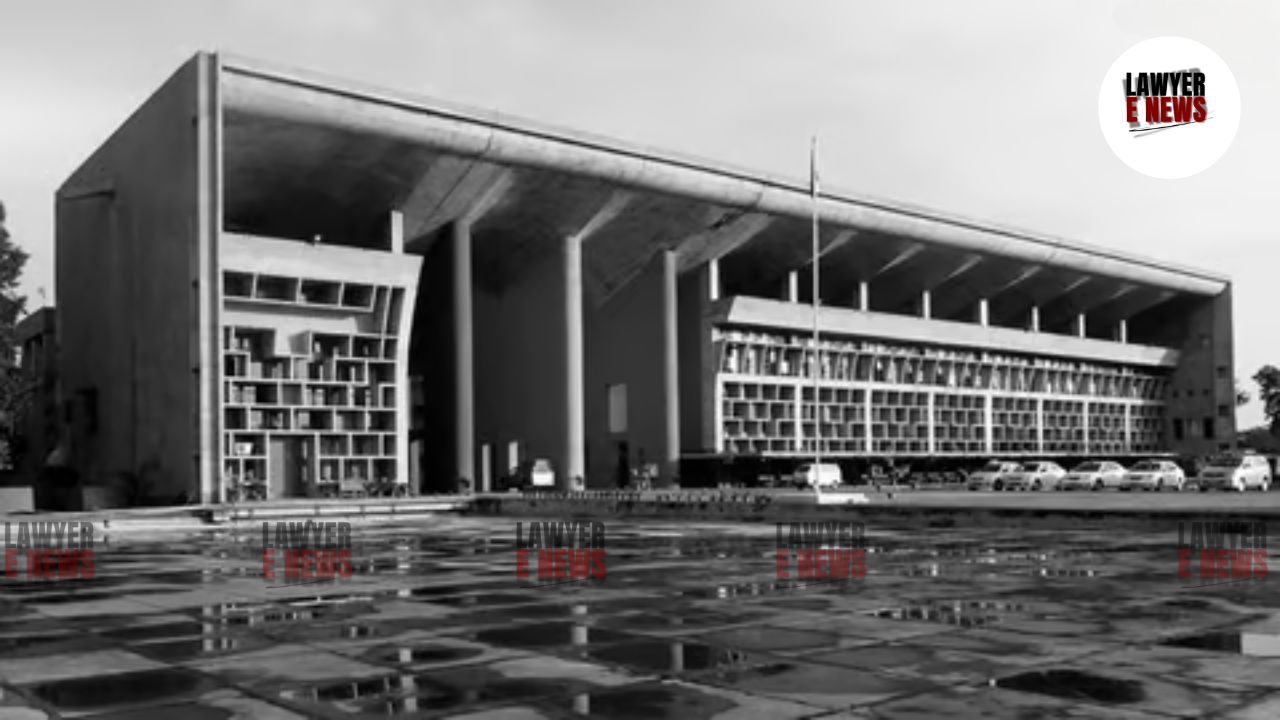
The Punjab and Haryana High Court has held that in a suit for permanent injunction, the plaintiff must independently establish lawful possession and cannot claim relief by merely pointing to weaknesses or deficiencies in the defendant's case. While dismissing a regular second appeal filed against concurrent dismissals of an injunction suit, Justice Deepak Gupta reaffirmed that the jurisdiction under Section 100 of the Code of Civil Procedure, 1908 (CPC) is confined to substantial questions of law and cannot be converted into "a third round of appreciation of evidence merely because another view of the evidence may be possible."
The dispute arose out of a suit for permanent injunction filed by the appellants claiming possession over a 120-square-yard residential property in the Lal Dora of Village Palra, Sonipat, purportedly mortgaged to their predecessor by one Nandu in 2005. The respondents contested the suit, asserting their ancestral possession and denying Nandu's title or interest. Both the Trial Court and the First Appellate Court dismissed the suit concurrently, holding that the plaintiffs failed to prove either Nandu's entitlement or their own lawful possession over the premises.
The primary question before the High Court was whether concurrent findings of fact regarding possession in an injunction suit can be disturbed under Section 100 CPC in the absence of perversity. The court was also called upon to examine whether an unregistered mortgage deed can be relied upon under the proviso to Section 49 of the Registration Act, 1908 to establish actual possession.
Second Appeal Cannot Be Converted Into Third Round Of Evidence Appreciation
Examining the statutory contour of appellate review, the High Court emphasized that regular second appeals cannot be utilized to re-agitate pure questions of fact. The bench noted that the statutory threshold mandates the existence of a substantial question of law before the court can intervene with concurrent findings.
The court reiterated that interference with concurrent findings of fact is justified only under exceptional conditions, such as when the conclusions are perverse, based on no evidence, or arrived at by ignoring material evidence or applying erroneous legal principles.
"The question whether the plaintiffs were in possession of the suit property on the date of the institution of the suit is essentially a question of fact. Both the Courts below have recorded a concurrent finding against the plaintiffs. Those findings are not based upon absence of evidence; rather, they arise from a detailed consideration of the evidence led by the plaintiffs themselves," the court observed.
Plaintiffs Failed To Establish Valid Source Of Possession
The bench scrutinized the evidentiary foundation of the appellants' claim, noting that their own witnesses dismantled the alleged source of possession. Testimonies of the village Lambardar and the former Sarpanch revealed that Nandu was an outsider from Uttar Pradesh who neither purchased the plot nor obtained it through any allotment by the Gram Panchayat.
The First Appellate Court rightly noted that the appellants failed to prove that Nandu had any proprietary standing or lawful possession to deliver to their predecessor. Furthermore, the appellants did not produce independent documentary proof, such as electricity bills, house tax receipts, or ration cards, to substantiate possession between 2005 and 2012 or thereafter.
Collateral Purpose Under Section 49 Registration Act Cannot Prove The Substantive Right
Addressing the appellants' contention that the unregistered mortgage deed ought to have been received in evidence for a collateral purpose, Justice Gupta clarified the strict limits imposed by the proviso to Section 49 of the Registration Act, 1908.
The bench held that collateral transactions cannot be conflated with proving the very terms and legal rights that the statute mandates must be evidenced through a registered instrument.
"The proviso to Section 49 of the Registration Act 1908, permits an unregistered document to be received in evidence for a collateral transaction, but a collateral purpose cannot be used to establish the very transaction, or right which the law requires to be evidenced by a registered instrument."
Injunction Requires Independent Proof Of Possession Without Relying On Flaws In Defence
Turning to the appellants' reliance on an alleged admission by the respondents regarding the Lal Dora location, the bench held that such statements cannot be read in isolation when the same witness expressly denied Nandu's ownership. The court highlighted the elementary principle governing injunction actions, holding that a claimant cannot succeed on the back of an opponent's perceived vulnerability.
"The settled principle applicable to a suit for permanent injunction is that the plaintiff must establish his own lawful possession and cannot succeed merely by pointing to deficiencies in the defendants' case," the bench observed.
Finding no perversity or disregard of material evidence by the courts below, the High Court concluded that the appeal was merely an impermissible bid for fresh factual re-appreciation, warranting summary dismissal.
Dismissing the regular second appeal in limine, the High Court held that concurrent findings on possession cannot be disrupted under Section 100 CPC without demonstrating legal perversity. The decision reinforces that plaintiffs in injunction suits must affirmatively establish their own lawful possession and cannot rely upon unregistered documents or weaknesses in the defence to secure equitable relief.
Date of Decision: 23 September 2026