-
by sayum
09 October 2026 12:19 PM








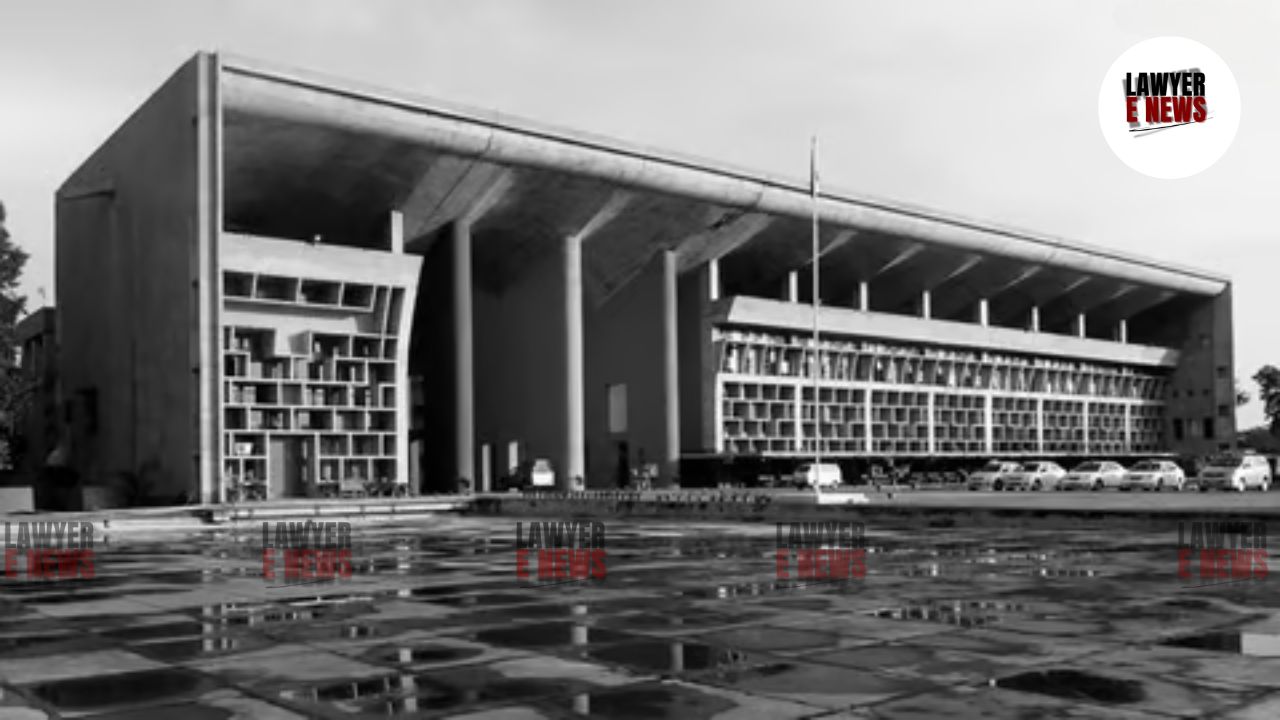
"The plaintiffs were required, in the first instance, to establish their own title and thereafter to establish that the property allegedly encroached upon by defendant No.2 was in fact the very property claimed by them." Punjab and Haryana High Court, in a judgment, held that a plaintiff in a suit for declaration of title and possession carries the primary burden to establish both their ownership over the suit property and the exact identity of the area allegedly encroached upon.
Dismissing a second appeal, Justice Deepak Gupta observed that the court cannot interfere with concurrent findings of fact under Section 100 of the Code of Civil Procedure (CPC) merely because a different view of the evidence is possible.
Failure to Prove Title
The appellants-plaintiffs had sought a declaration of ownership as successors of one Har Swaroop, claiming that the respondents had encroached upon their land. However, the trial court and the first appellate court found that the plaintiffs failed to produce any document demonstrating that their predecessor, Har Swaroop, ever held title to the disputed Khasra number. Furthermore, revenue records relied upon by the plaintiffs themselves listed the Municipal Committee as the owner of the subject land.
Essential Burden of Proof
The Court emphasized that the initial burden of proof rests squarely on the plaintiff, and this burden is not discharged simply by asserting succession. Even if the cross-examination of the defendant's witnesses appears lacking, it does not relieve the plaintiff of the fundamental requirement to provide concrete evidence of title. The bench noted that an omission in cross-examination cannot compensate for a total failure to prove the essential ingredients of the case.
Identity of Property and Demarcation
A pivotal aspect of the dispute was the identification of the alleged encroachment site where a nursing home was located. The Court highlighted that the plaintiffs failed to produce a demarcation report to counter an official verification report issued by the Tehsildar, which confirmed that the hospital was not situated on the land claimed by the appellants. Without a valid, proven site plan or demarcation report, the claim regarding the identity of the encroached property remained unsubstantiated.
The Court reiterated the narrow scope of jurisdiction under Section 100 CPC, noting that it is not a third appellate forum. Interference with concurrent findings of fact is strictly reserved for cases where findings are perverse, based on no evidence, or arrived at by ignoring material evidence. Citing the Supreme Court’s rulings in Santosh Hazari v. Purushottam Tiwari and Hero Vinoth (Minor) v. Seshammal, the bench clarified that a substantial question of law must be debatable and material, rather than a mere request for re-appreciation of evidence.
The appellate court had also noted the significant delay in challenging the existence of the hospital, which had been operational for over two decades. Finding no perversity in the lower courts' appreciation of the oral and documentary evidence, the High Court concluded that no substantial question of law arose in the matter. Consequently, the concurrent judgments of the trial court and the first appellate court were affirmed, and the appeal was dismissed.
Date of Decision: 11 September 2026