-
by sayum
24 August 2026 3:22 PM







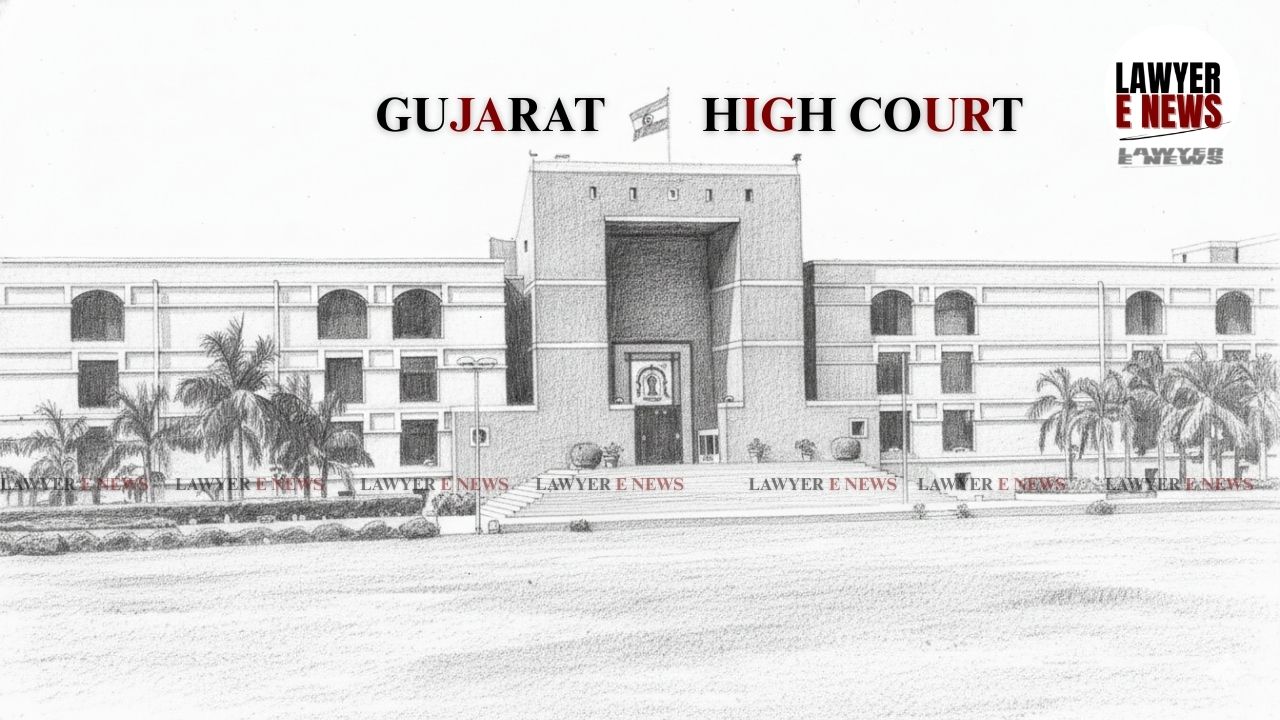
“Victim Cannot Be Left Uncompensated Merely Because Owner Breached Policy Terms – Tribunal Has Statutory Power to Direct Insurer to Pay First and Recover Later”, In a landmark judgment reinforcing the social welfare fabric of the Motor Vehicles Act, Justice Hasmukh D. Suthar of the Gujarat High Court, on December 2, 2025, dismissed a batch of appeals filed by United India Insurance Company Ltd., challenging the “pay and recover” direction issued by the Motor Accident Claims Tribunal (Main), Amreli.
The core legal dispute centered on whether an insurer, when faced with a clear breach of insurance policy, namely carriage of gratuitous passengers in a goods vehicle (Tata-407) and lack of valid driving licence, can be completely exonerated from liability, or whether the Tribunal has statutory competence to direct the insurer to pay compensation to the victims and recover it from the owner and driver.
The High Court upheld the doctrine of “pay and recover” and ruled that even in cases involving policy violations, the insurer must first satisfy the award and then recover the amount from the insured, invoking the Supreme Court’s binding precedents in National Insurance Co. Ltd. v. Swaran Singh, Manuara Khatun, Shamanna, and Sadhna Tomar.
Tribunal Has Statutory Power to Issue “Pay and Recover” Directions – Article 142 Powers Not Required
Justice Suthar expressly rejected the appellant-insurer’s argument that the Tribunal had no jurisdiction to pass “pay and recover” orders and that such directions fall exclusively within the ambit of Article 142 powers of the Supreme Court. The Court clarified that the power to direct payment by the insurer to victims, even in cases of proven breach, flows directly from Sections 147, 149(1), 149(4), 149(5), and 174 of the Motor Vehicles Act.
“An insurance policy is a statutory contract entered into between the insurer and the insured for the benefit of third parties,” the Court noted, citing Swaran Singh (2004) 3 SCC 297, and emphasized that the insurer’s initial liability to pay cannot be evaded on technical defences when third-party rights are involved.
Quoting paragraph 102(x) from Swaran Singh, the Court reaffirmed:
“Where on adjudication... the Tribunal arrives at a conclusion that the insurer has satisfactorily proved its defence... the Tribunal can direct that the insurer is liable to be reimbursed by the insured... The award is enforceable and the money found due to the insurer from the insured will be recoverable... as arrears of land revenue.”
Gratuitous Passengers in Goods Vehicles: Insurer Still Liable to Pay Third Parties First
The case arose from a tragic accident on 20.02.2015, where several claimants, including minors, were travelling in a Tata-407 Tempo, a goods vehicle, to visit Chotila Mataji temple. While returning, the vehicle collided with a tree due to the rash driving of the driver, leading to the death of four persons and serious injuries to three others, including permanent disabilities.
The Insurance Company argued that:
However, the High Court found these arguments unsustainable in law. Relying on a series of Supreme Court precedents, including Shamanna v. Oriental Insurance Co. Ltd., Rambabu Tiwari, Sadhna Tomar, and Manuara Khatun, the Court held that even in cases of breach, if third-party rights are involved, the insurer cannot be fully exonerated.
“Even if breach established, doctrine of ‘pay and recover’ applies in third-party cases – Tribunal correct in directing insurer to pay first,” the Court ruled.
“Doctrine of Stare Decisis Demands We Follow Swaran Singh Line” – Asha Rani Does Not Override Later Precedents
The Court also addressed the appellant's heavy reliance on earlier decisions like New India Assurance Co. v. Asha Rani and Baljeet Kaur, which had earlier taken a stricter view on the non-liability of insurers for gratuitous passengers.
Justice Suthar, however, observed:
“Where coequal Benches of the Supreme Court differ, High Courts must follow the decision that lays down the law more elaborately, accurately, and in alignment with statutory intent. The Shamanna and Swaran Singh line of cases represents the more evolved view.”
He quoted with approval the principle stated in Smt. Kalabai Choubey v. Rajabahadur Yadav, AIR 2002 MP 8, that:
“Even where there is a direct conflict between decisions of co-equal Benches, the High Court must prefer the one that states the law more accurately and in conformity with the statutory scheme.”
Accordingly, earlier authorities cited by the insurer that did not consider the later binding precedents were held to be non-applicable.
Recovery Rights of Insurer Protected – May Seek Attachment of Vehicle, File Before Executing Court
Addressing concerns about the insurer’s recovery rights, the Court invoked Oriental Insurance Co. Ltd. v. Nanjappan (2004) 13 SCC 224, stating that the insurer may initiate recovery proceedings before the Executing Court without filing a separate civil suit.
“The Tribunal shall issue appropriate directions to protect the insurer’s interest. The offending vehicle may be attached as part of recovery. Assistance of the Regional Transport Authority may also be sought,” the Court clarified.
The Court, in fact, directed the insurer to take active steps post-payment:
“The Insurance Company may take appropriate steps against the owner for furnishing security of the amount paid. The vehicle may be attached if necessary.”
“Pay and Recover” Not a Constitutional Innovation but a Legislative Design
In a critical legal reaffirmation, the Court refused to see “pay and recover” as a discretionary, extra-statutory relief, and rather located its roots firmly within the scheme of Sections 147 to 149 of the MV Act.
“Pay and recover reconciles justice to the victim with fairness to the insurer. It ensures that the victim is not left uncompensated due to contractual breaches between the insured and insurer,” observed the Court.
It further emphasized that the Motor Vehicles Act is a social welfare legislation, and its beneficial construction must aim to protect the rights of the accident victims — not technicalities favoring insurers.
Ultimately, the Court dismissed all First Appeals at the admission stage, upholding the Tribunal’s award.
“The appellant–Insurance Company is directed to deposit the entire amount of compensation with accrued interest within four weeks. Upon deposit, the Tribunal shall disburse the amount to the claimants after due verification,” the Court ordered.
Pending civil applications were also disposed of as infructuous.
Date of Decision: December 2, 2025