-
by kapil
16 October 2026 4:47 PM







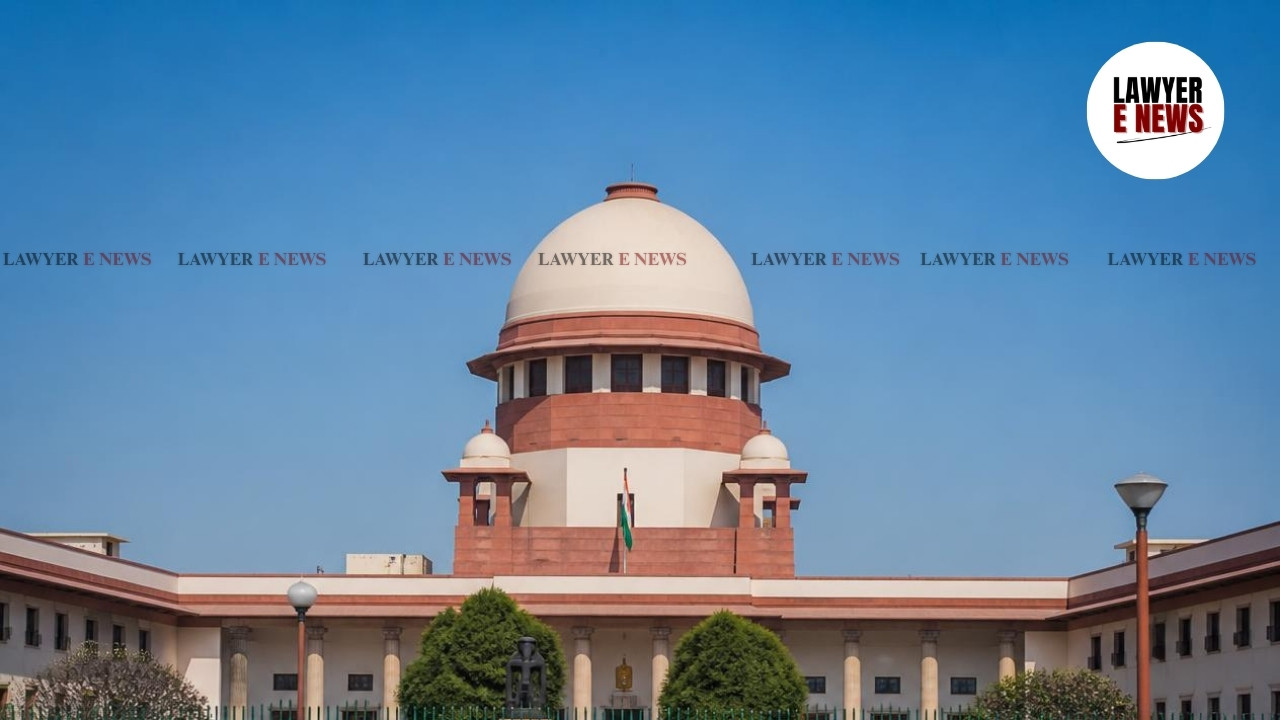
"A deposit is not synonymous with payment. A sum put beyond the debtor's own reach neither extinguishes his liability nor places it in the creditor's hands." Supreme Court of India, in a significant ruling dated September 18, 2026, held that a deposit made by an award-debtor to secure a stay of enforcement under Section 34 of the Arbitration and Conciliation Act, 1996, does not ipso facto operate as a discharge of liability under Order XXI Rule 1 of the Code of Civil Procedure, 1908, unless the amount is made unconditionally available for withdrawal by the decree-holder.
A bench comprising Justice Pamidighantam Sri Narasimha and Justice Alok Aradhe observed that the lack of a normative legal framework regarding such deposits creates persistent uncertainty, stating, "Resolving that uncertainty, in the specific context of enforcement of an arbitral award, is at the heart of this appeal."
The appellant, National Seeds Corporation Ltd., challenged a High Court order directing it to pay 12% interest per annum on an awarded sum. The dispute arose following an arbitral award against the appellant, who had deposited 50% of the principal sum in the High Court Registry to obtain a stay under Section 34 of the 1996 Act. The respondent, National Agro Seed Corporation (India), contended that the deposit, being conditional and resisted by the appellant at every stage of the execution proceedings, did not constitute a "payment" that would cease the accrual of interest.
The court was called upon to determine whether an award-debtor is liable to pay interest on an amount deposited in court during the pendency of a challenge, and whether such a deposit satisfies the requirements of Order XXI Rule 1 of the Code of Civil Procedure, 1908. Specifically, the court had to address whether the appellant's compliance with an interim stay order, without issuing a notice of such deposit to the decree-holder, effectively halted the liability for interest.
Interpretation of Order XXI Rule 1 CPC - Court Emphasizes Unconditional Withdrawal
The bench clarified that for a deposit to satisfy a decree or award and effectively stop the running of interest, it must be made in strict accordance with the modes prescribed under Order XXI Rule 1 of the Code. The real effect of such a deposit must be to place the money at the absolute disposal of the decree-holder. If the decree-holder is required to furnish security or face conditions before withdrawing the funds, the deposit does not amount to a satisfaction of the debt, and interest continues to accrue on the principal amount.
No Cessation of Interest Without Notice
The court reiterated that the legal fiction created by Section 36 of the 1996 Act treats an arbitral award as a decree for the limited purpose of enforcement. However, this does not override the fundamental requirement that a judgment-debtor must serve notice to the decree-holder regarding the deposit. In the absence of such notice, or where the debtor actively resists the withdrawal, the benefit of the cessation of interest liability under Order XXI Rule 1 is not available.
Failure to Deposit Full Amount
The court further distinguished the present case from previous precedents where the entire decretal amount had been deposited. Because the appellant only deposited a portion of the sum as a condition for a stay, and consistently opposed the respondent's requests for withdrawal, the "payment" never reached the status of satisfaction. The bench noted that the deposit was essentially a tool for securing a stay rather than a voluntary discharge of the award.
Standardisation as a Necessity - Addressing Asymmetry in Judicial Deposits
The court expressed deep concern over the persistent "asymmetry" in the methods used by various courts and tribunals to handle deposits. The lack of a uniform normative framework has resulted in fragmented practices, forcing litigants into unnecessary rounds of litigation even after the primary dispute is resolved. The judgment underscored that this disparity undermines the time value of money and places an undue burden on the judiciary.
Call for Legislative Intervention
"There is neither a statutory prescription nor a rule/regulation to be followed. At the same time, instead of evolving consistent principles, courts/tribunals have passed orders on a case-to-case basis leading to a great amount of disparity and inconsistency," the bench observed. Consequently, the court requested the Law Commission of India to examine the issue and formulate suitable legislation, potentially drawing from international models like the Court Registry Investment System (CRIS) in the United States and the consolidated mechanisms in Canada.
Final Directions and Dismissal
Finding no grounds to interfere with the impugned High Court order, the Supreme Court affirmed the liability of the appellant to pay interest until the date the amount was unconditionally released for withdrawal. The Registry was directed to transmit the judgment to the Law Commission of India, the Reserve Bank of India, and the relevant Union Ministries to facilitate the development of a standardized regulatory framework for judicial deposits.
Date of Decision: 18 September 2026