-
by sayum
09 October 2026 12:19 PM







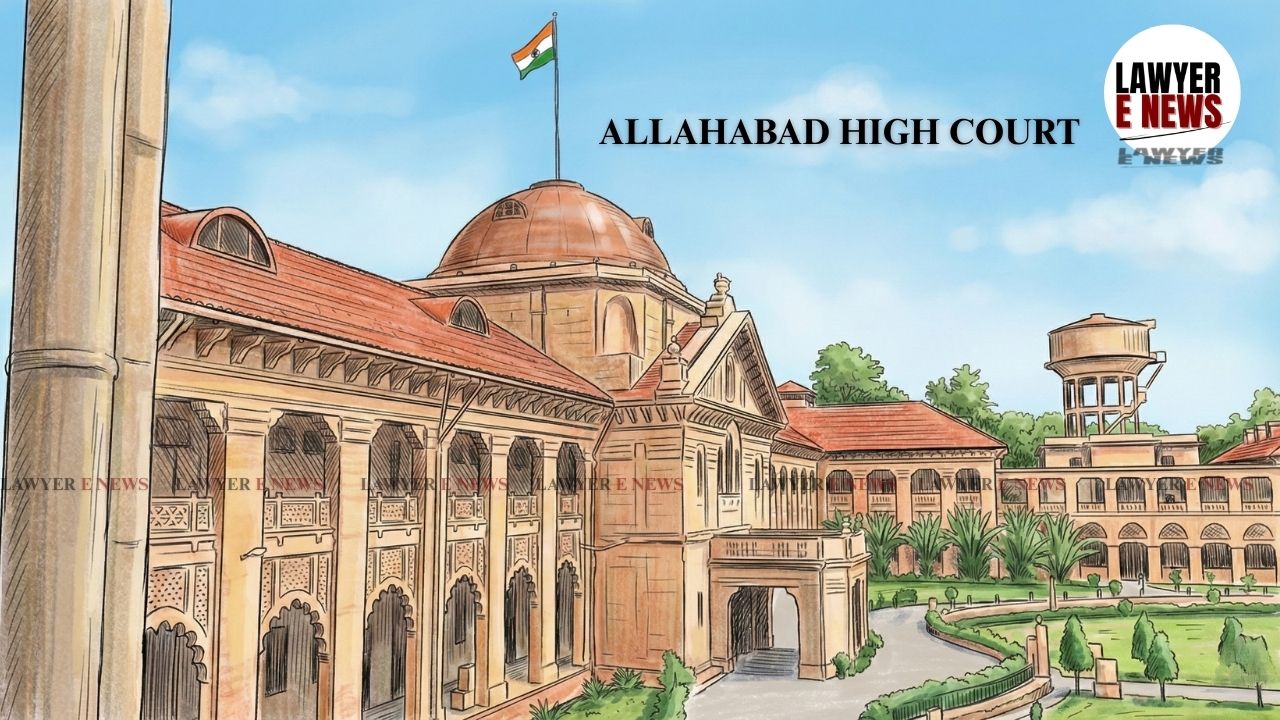
"The requirement of obtaining leave under Order VII Rule 14(3) CPC does not constitute an absolute prohibition against the subsequent production of a document. The discretion so conferred, therefore, has to be exercised judicially, upon consideration of the circumstances which occasioned the delayed production, the relevance of the document and the prejudice, if any, likely to be caused to the opposite party." Allahabad High Court
The Allahabad High Court, in a significant ruling dated September 15, 2026, held that the closure of evidence and the commencement of final arguments do not create an absolute bar against the production of additional documents under Order VII Rule 14(3) of the Code of Civil Procedure (CPC).
A bench of Hon’ble Dr. Justice Yogendra Kumar Srivastava observed that procedural law is a handmaid of justice intended to facilitate, rather than defeat, the adjudication of disputes on their merits.
The petitioners, who had instituted a suit for eviction and recovery of rent against the respondent, sought to introduce a crucial tax assessment document from the Municipal Corporation, Kanpur, during the stage of final arguments. The Trial Court had rejected the application, citing that the evidence of both parties had concluded and that the Court was under a mandate to dispose of the suit expeditiously. The petitioners challenged this order, arguing that the document, obtained via a government portal only after the evidence had closed, was vital to determining the applicability of the U.P. Urban Buildings (Regulation of Letting, Rent and Eviction) Act, 1972.
The primary question before the court was whether the Trial Court was justified in declining permission under Order VII Rule 14(3) CPC solely because the evidence of both parties had concluded and the suit had reached the stage of arguments. The court was also called upon to determine whether the subsequent production of a document, intended to substantiate an existing plea, could be denied despite the petitioners' claim of its prior unavailability.
Court’s Observations and Discretionary Test
The Court emphasized that the discretion vested under Order VII Rule 14(3) CPC is not automatic or mechanical but must be exercised based on a three-fold test. The court must evaluate if the omission to file the document earlier was bona fide, whether the document is relevant for effective adjudication, and whether its late introduction would cause irreparable prejudice to the defendant.
Court Explains Scope Of Section 151 CPC
The bench clarified that while Section 151 CPC grants inherent powers to the court, it cannot be invoked to bypass the express provisions of Order VII Rule 14(3) CPC. Instead, the court’s inherent powers should be exercised to balance the interests of justice by protecting the opposite party against potential prejudice.
"The mere fact that the proceedings have reached the stage of final arguments, however, does not by itself convert the discretion expressly conferred by Order VII Rule 14(3) CPC into an absolute prohibition against receiving the document."
Reconciling Expedition With Fairness
The Court noted that while directions for the "expeditious disposal" of a suit are binding, they do not authorize a court to dispense with procedural fairness. The objective of such directions is not to rush the proceedings at the cost of excluding vital evidence. If a document is genuinely unavailable at an earlier stage and relates to an existing plea, the court must admit it, provided the prejudice to the other side can be mitigated through safeguards like allowing further cross-examination or rebuttal evidence.
Court Outlines Balancing Criteria
The Court held that judges must look beyond the stage of the suit and weigh factors such as the diligence of the applicant, the materiality of the document to the controversy, and the feasibility of curing any resulting prejudice through procedural directions.
"Where a document is shown to have been genuinely unavailable at the earlier stage, is materially relevant to an issue already arising in the suit, and the prejudice likely to be caused to the opposite party can adequately be addressed by appropriate procedural safeguards, the mere belatedness of the application should not, by itself, result in exclusion of the document."
The High Court set aside the impugned order and allowed the petitioners to produce the documents, subject to proof and admissibility. To prevent procedural injustice, the Court directed the Trial Court to afford the respondents a fair opportunity to inspect the documents, contest their validity, and, if necessary, recall witnesses for cross-examination. The Court specifically clarified that its decision did not reflect any opinion on the evidentiary value or the final outcome of the suit regarding the date of construction.
Date of Decision: 15 September 2026