-
by sayum
14 October 2026 10:05 AM







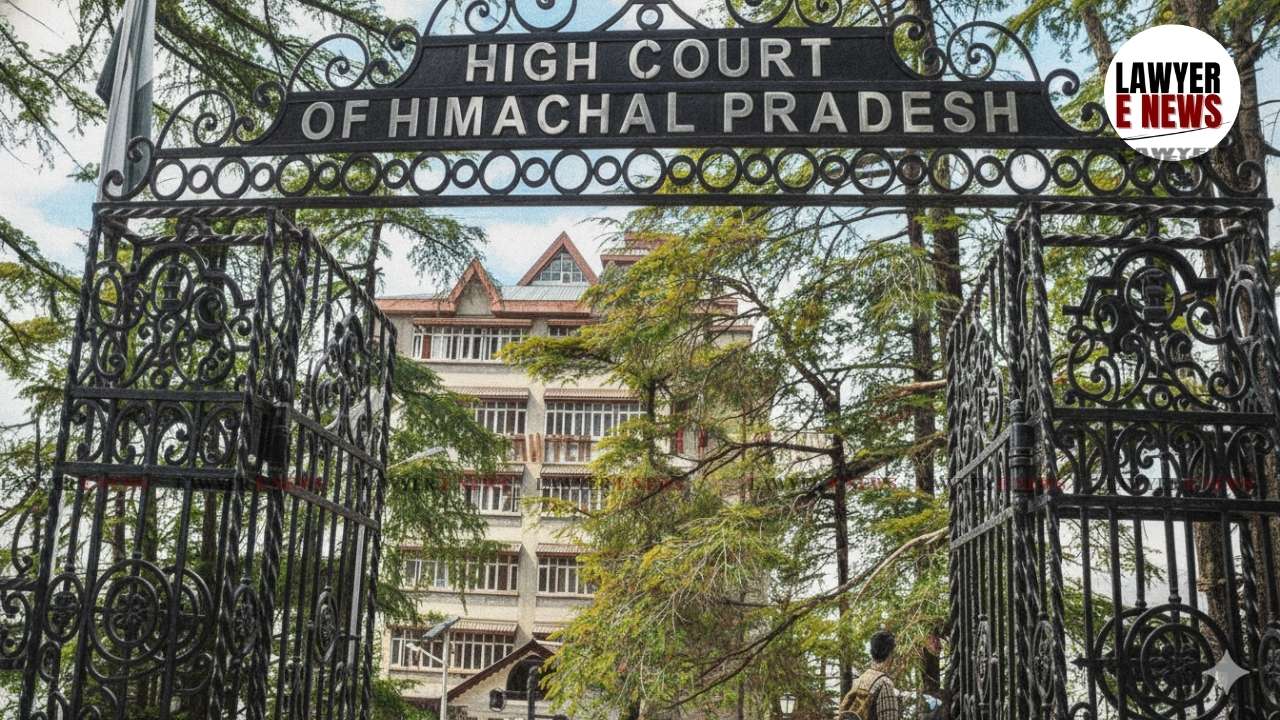
"Not much reliance can be placed on the report of Tehsildar, as to take action against the J.D., for violation of the judgment and decree, under Order 21 Rule 32 CPC, evidence of some expert is required." Himachal Pradesh High Court, in a ruling dated October 5, 2026, held that in proceedings for the execution of a decree for permanent injunction under Order 21 Rule 32 of the Civil Procedure Code, a report from a revenue official such as a Tehsildar is insufficient to establish a violation of the decree.
A bench of Justice Virender Singh observed that to hold a Judgment Debtor (JD) liable for disobeying a decree through unauthorized construction, the court must rely upon the testimony of an expert witness capable of determining the age of the construction to confirm it was raised after the decree was passed.
The matter arose from a civil suit concerning property in Tehsil Kasauli, District Solan, where both the plaintiff and the defendants were granted a decree of permanent prohibitory injunction by the trial court in 2015, restraining either party from raising construction on the suit land until legal partition. Upon the decree attaining finality, the decree holders filed an execution petition under Order 21 Rule 32 CPC, alleging that the petitioner had violated the injunction by raising new construction. The executing court previously ordered the attachment of property against the JD, leading to the current challenge before the High Court.
The primary legal issue before the Court was whether a report from a Local Commissioner (Tehsildar) suffices to prove a violation of an injunction decree involving new construction. Furthermore, the Court had to determine if the executing court's summary reliance on such a report met the threshold of evidence required under Order 21 Rule 32 CPC for punishing a violator of a court decree.
Court Mandates Expert Evidence
The Court observed that when a decree for permanent injunction becomes final, the executing court acts as the forum to ensure compliance and, if necessary, penalize the violator. However, such punitive action requires rigorous proof that the act of disobedience—in this case, the unauthorized construction—actually occurred subsequent to the passing of the decree.
Need For Scientific Verification
The bench emphasized that a general inspection report by a local revenue officer lacks the technical or scientific depth required to ascertain the temporal aspect of a structure. Without determining the "age" of the construction, it is impossible to conclude definitively that the JD breached the specific injunction granted in 2015.
"Consequently, not much reliance can be placed on the report of Tehsildar, as to take action against the J.D., for violation of the judgment and decree, under Order 21 Rule 32 CPC, evidence of some expert is required."
Remand And Procedural Directions
The High Court set aside the impugned order of the executing court and remanded the matter back for a fresh determination. The executing court is directed to appoint an expert, such as an engineer or professional surveyor, to visit the site and provide a report specifically addressing the age of the construction found on the suit land.
Expedited Disposal Ordered
Given that the underlying decree dates back to 2015, the Court underscored the need for judicial efficiency in execution proceedings. The High Court directed the executing court to conclude the proceedings within a period of four months from the date of the parties' appearance before it, which is fixed for October 26, 2026.
Date of Decision: 05 October 2026