-
by sayum
25 August 2026 11:12 PM







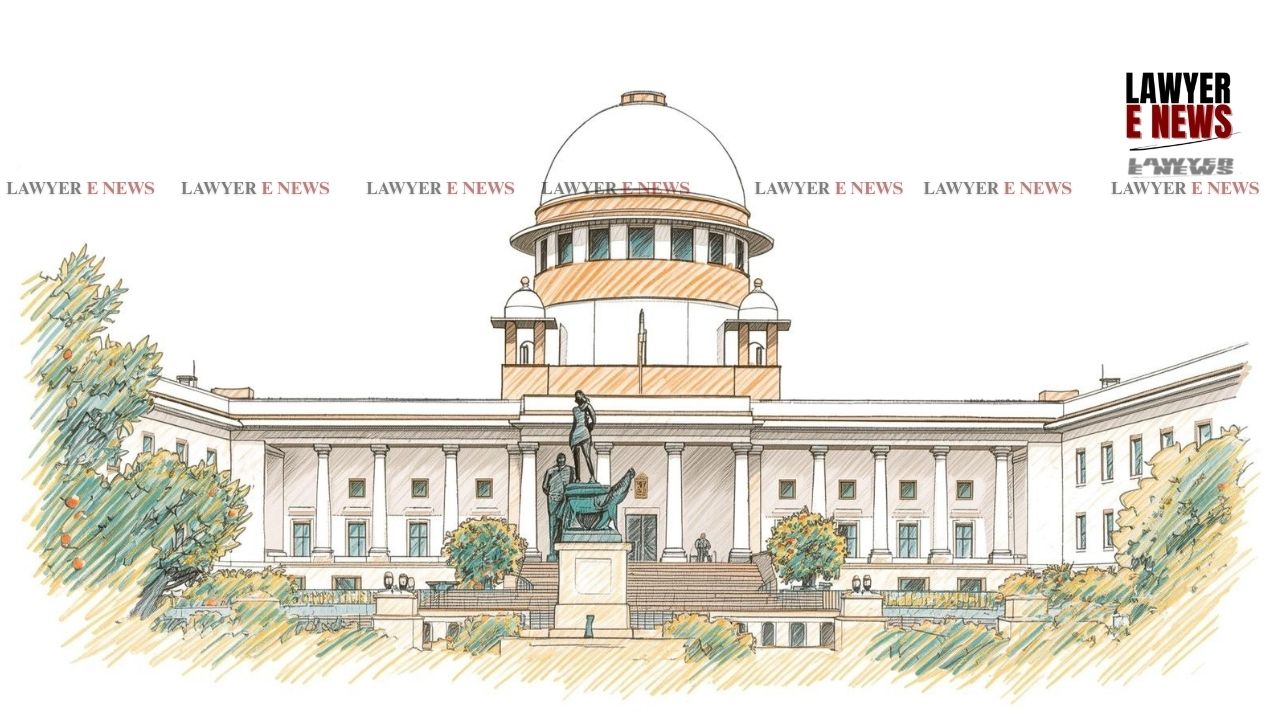
“Victim’s Right to Appeal Under Section 372 CrPC Is Prospective—No Right to Challenge Pre-2009 Acquittal” — On 6 November 2025, a Full Bench of the Supreme Court of India comprising Justices Vikram Nath, Sanjay Karol, and Sandeep Mehta delivered a highly consequential ruling in the criminal appeals arising out of the State of Chhattisgarh v. Amit Aishwarya Jogi (Criminal Appeal No. 1927 of 2014 and connected matters), affirming the principles laid down in Lalu Prasad Yadav v. State of Bihar, (2010) 5 SCC 1.
The Court upheld the bar on the State Government’s competence to file an appeal under Section 378 CrPC where the investigation was conducted by the Central Bureau of Investigation (CBI) under the Delhi Special Police Establishment Act, 1946, or any other Central enactment. The appeals filed by the State of Chhattisgarh and the victim (de-facto complainant) were dismissed as not maintainable, while the CBI’s delayed appeal was allowed, and the matter remitted to the High Court for adjudication on merits.
“Section 378(2) CrPC is an Exception—State Has No Authority to Appeal When Case Is Investigated by CBI” — Supreme Court Reiterates Statutory Bar
Upholding the Lalu Prasad Yadav precedent, the Supreme Court emphatically ruled:
“The legislature has maintained a mutually exclusive division in the matter of appeal from an order of acquittal inasmuch as the competent authority to appeal from an order of acquittal in two types of cases referred to in subsection (2) is the Central Government and the authority of the State Government in relation to such cases has been excluded.” [Para 19]
The Bench rejected the State’s argument that its initial investigation and registration of FIR conferred upon it a right to appeal even after the case was transferred to the CBI. Observing that Section 378(1) CrPC opens with the words “save as otherwise provided in sub-section (2)”, the Court clarified:
“These words have no other meaning in the context but to qualify the operation of sub-section (1) and take out of its purview two types of cases referred to in sub-section (2).” [Para 18]
Thus, the State’s appeal against the acquittal of Amit Jogi—accused in the politically sensitive 2003 murder of Ramavatar Jaggi, a leader of the National Congress Party—was held to be incompetent.
“Mixed Investigations Do Not Revive State’s Right to Appeal” — Court Declines to Reconsider Lalu Prasad but Leaves Door Ajar for Future Review
The Court acknowledged the State’s submission that the FIR was initially registered and chargesheet filed by the State Police, before the CBI took over. It referred to Para 37 of Lalu Prasad Yadav, where the earlier Bench suggested a theoretical scenario where the State could retain appeal rights despite CBI intervention. However, the present Bench refused to disturb the settled position, noting:
“We do not see any reason to enter into the controversy nor are we persuaded to take a different view… The distinguishing feature is that the CBI has also filed an application seeking leave to appeal.” [Para 24]
Nonetheless, the Court left the question open for future judicial review:
“The question whether the State Government can independently file an appeal in a case initially registered and partly investigated by it, and later transferred to the CBI at its behest, may be examined in a suitable case.” [Para 25]
“Victim’s Right to Appeal Under Proviso to Section 372 CrPC Does Not Apply Retrospectively” — De-facto Complainant’s Appeal Dismissed
The appeal filed by Satish Jaggi, son of the deceased Ramavatar Jaggi, under the proviso to Section 372 CrPC was also dismissed. The Court held that the right of appeal granted to a victim under this provision is prospective, applicable only to acquittals rendered after 31 December 2009, the date on which the proviso was inserted.
Quoting from Mallikarjun Kodagali v. State of Karnataka, (2019) 2 SCC 752, the Court reiterated:
“The significant date is the date of the order of acquittal passed by the trial court. If that happens after 31-12-2009 the victim has a right to challenge the acquittal, through an appeal.” [Para 28]
Since the acquittal of Amit Jogi occurred on 31 May 2007, the appeal filed by the de-facto complainant was held to be statutorily barred.
“High Court Erred in Dismissing CBI’s Appeal on Grounds of Delay—Matter Must Be Heard on Merits”
In a significant development, the Supreme Court condoned the 1373-day delay in the CBI’s application seeking leave to appeal against Amit Jogi’s acquittal. The Court emphasised the gravity of the charges, and the fact that the appeal was still “alive” due to the pendency of State and victim appeals at the time.
“In a case of such a sensitive nature, the High Court should have adopted a pragmatic and liberal approach… the challenge to the judgment of acquittal should not be thrown out on mere technicalities.” [Para 30–31]
The Court clarified that it was not expressing any view on the merits of the case, and directed the High Court to consider the CBI’s leave application afresh:
“It shall be open to the High Court to examine the merits of the matter while considering the CBI’s prayer for grant of leave to appeal, uninfluenced by any observation made in this order.” [Para 32]
In an unusual move, the Bench also directed that Amit Jogi be heard during the High Court’s hearing on CBI’s application, given the exceptional delay:
“Although, at the stage of grant of leave to appeal, the acquitted accused is ordinarily not required to be heard, we consider it expedient… to permit the respondent-Amit Jogi an opportunity of hearing.” [Para 34]
Criminal Appeal No. 1927 of 2014 (State of Chhattisgarh): Dismissed
Criminal Appeals @ SLP(Crl.) Nos. 7331/2011 & 1438/2012 (de-facto complainant): Dismissed
Criminal Appeal @ SLP(Crl.) No. 3037/2012 (CBI): Allowed
CBI’s delay in filing appeal condoned; matter remitted to High Court for decision on merits
The verdict has critical implications for criminal jurisprudence in India:
Reaffirms exclusive authority of the Central Government to appeal in CBI-investigated cases under Section 378(2) CrPC
Settles the debate on non-retrospective application of the victim’s right to appeal under Section 372 CrPC
Emphasises a liberal approach to delay in sensitive criminal matters, favouring adjudication on merits over technicalities
This decision will particularly influence appeals in politically sensitive and CBI-handled cases, by clarifying who has the standing to challenge acquittals—a question often mired in political and procedural complexities.
Date of Decision: 6 November 2025