-
by sayum
25 August 2026 6:19 AM







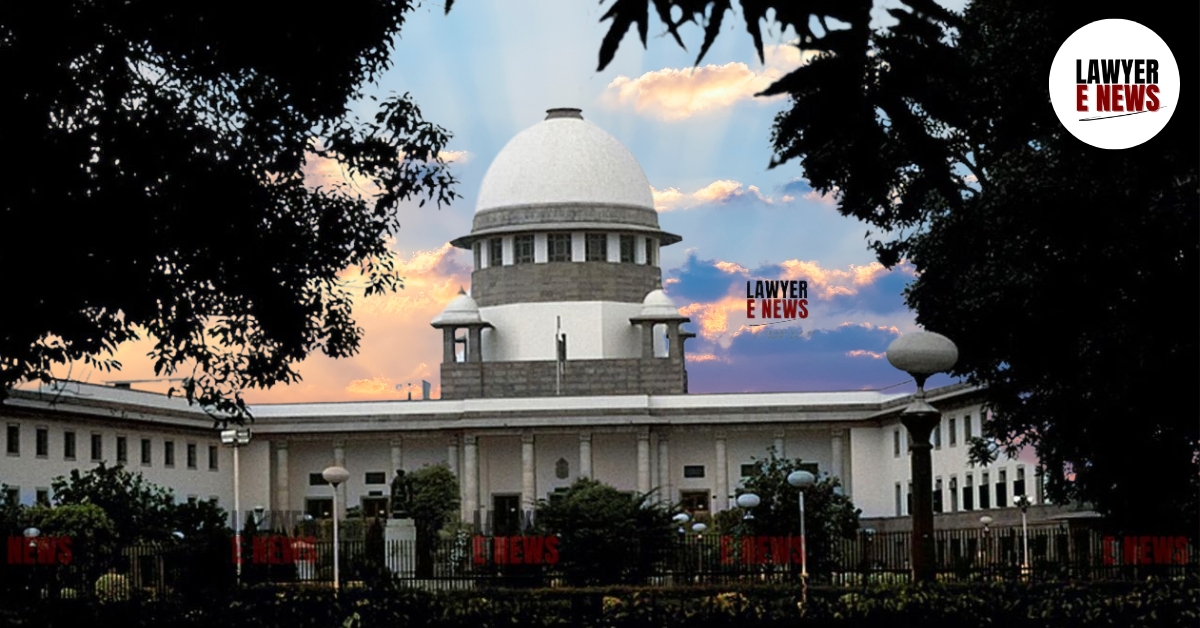
"Ambition is a ladder, the last rung of which is always elusive... Based on which, seniority cannot be fixed," says Constitution Bench, rejecting preferential treatment for Promotee Judges. In a path-breaking decision with far-reaching consequences for judicial service jurisprudence, the Supreme Court of India, Today, on 19th November 2025, delivered a Constitution Bench ruling in All India Judges Association v. Union of India, resolving the protracted and contentious issue of inter se seniority among District Judges recruited through three distinct channels: Regular Promotees (RPs), Limited Departmental Competitive Examination (LDCE), and Direct Recruits (DRs).
Deciding Interlocutory Application No. 230675 of 2025 in the long-pending Writ Petition (Civil) No. 1022 of 1989, the Court ruled emphatically that once an officer enters the Higher Judicial Service (HJS), their source of recruitment becomes irrelevant, thereby extinguishing the 'birthmark' of origin.
Calling for nationwide uniformity, the Court laid down a binding 4-point annual roster system, invoked constitutional authority under Articles 32, 141, and 142, and directed all States to amend their judicial service rules within three months.
“Service in Lower Judiciary Cannot Be a Passport to Preferential Seniority in the Higher Judicial Service”
The case arose from persistent grievances of judicial officers promoted from the lower rungs, who claimed that Direct Recruits (usually from the Bar), due to their relatively young age and direct entry into HJS, advanced faster in career and reached higher positions, leaving Regular Promotees and LDCE recruits lagging despite decades of service.
These claims were countered by multiple High Courts, State Governments, and representatives of DRs, who asserted that seniority in HJS must be based on merit and date of entry into the cadre, not on prior experience as Civil Judges.
Rejecting the plea for additional seniority years, quotas, or separate seniority lists, the Supreme Court held:
“The length and performance as a Civil Judge does not constitute an intelligible differentia to classify incumbents in the common cadre of District Judge.”
“Fixation in Selection Grade and Super Time Scale is based on merit-cum-seniority within the Higher Judicial Service alone. The experience in the lower judiciary has no bearing after promotion or direct entry into HJS.”
“Once in HJS, Officers Lose the ‘Genetic Adornment’ or the ‘Genetic Blemish’ of their Source of Entry”
In its sharply worded judgment, the Court criticised the idea of “birthmark-based” service entitlement, stating that classification based on the mode of entry violates the equality principle under Articles 14 and 16 of the Constitution.
“On the entry into a common cadre from different sources (RP, LDCE and DR) and assignment of seniority as per the annual roster, the incumbents lose their ‘birthmark’ of the source from which they are recruited.”
Drawing support from precedents such as Roshan Lal Tandon v. Union of India and Triloki Nath Khosa, the Court ruled that seniority must be determined solely within the HJS, and that past judicial experience, however rich, cannot entitle a judge to preferential treatment over those selected directly on merit.
“Ambition Is a Ladder... But Not a Ground for Seniority” – Court Dismisses ‘Heartburn’ Argument of Promotees
Responding to the contention of “heartburn” among judicial officers who took years to reach the HJS, the Court observed:
“Ambition is a ladder, the last rung of which is always elusive to the one pursuing it… Based on which, seniority cannot be fixed.”
The Bench acknowledged that RPs may take longer to enter the HJS, but that the judiciary already provides accelerated routes for career progression. Judges from the lower judiciary can now compete through LDCE or even direct recruitment, following the Court’s decisions in Rejanish K.V. and Sixth AIJA.
“The mere inability of certain officers to succeed in competitive examinations cannot furnish a valid basis for seeking preferential treatment within the HJS merely on account of a sense of grievance.”
The Court categorically rejected the suggestion to give bonus seniority for past experience in the lower judiciary, holding:
“Such preferences would be counterproductive and would result in sacrificing merit, while dampening the spirit of those who avail opportunities of accelerated promotion.”
“Uniform 4-Point Annual Roster Is Now the Law” – Two RPs, One LDCE, One DR per Year in Repeat Sequence
After analysing data from multiple States and exposing the inconsistency in service rules across the country, the Court ruled that a standardised roster is essential for preserving equality and institutional integrity. It therefore mandated that:
“Seniority of officers within the HJS shall be determined through an annual 4-point roster, filled by all officers appointed in the particular year in the repeating sequence of 2 RPs, 1 LDCE, and 1 DR.”
This annual roster will apply to all new appointments irrespective of the exact date of appointment, as long as recruitment processes conclude within the year or the following year without overlapping appointments from the next cycle.
The Court further clarified that if vacancies from LDCE or DR remain unfilled, they may be temporarily filled by RPs, but these RPs cannot claim the diverted source’s seniority slot, and must occupy the next RP roster point.
“Such a diversion does not grant the roster position of LDCEs or DRs to these RPs.”
“Statistical Disparities Cannot Guide Constitutional Policy” – Court Discards Data Arguments as Unreliable
The Amicus had presented comparative data showing disproportionate DR representation in higher positions, but the Court held that statistics were inconsistent, State-specific, and too fluid over the decades to justify any constitutional reengineering.
“Data disparities coupled with anticipated changes from Sixth AIJA and Rejanish K.V. make today a wholly inopportune moment to bring in any weightage to RPs in the HJS.”
The Court further noted that the constitutional mandate is to build an efficient, merit-based judiciary, not to satisfy individual grievances.
“Individual career aspirations are a normal incidence of service... they cannot guide the shape of rules of seniority.”
"High Courts Retain Superintendence, But Must Amend Rules to Reflect Supreme Court Guidelines"
While recognising the High Courts’ primacy in managing judicial service under Articles 233–235, the Constitution Bench held that national uniformity in seniority rules is essential, and that the Supreme Court is fully empowered under Articles 32, 141, and 142 to enforce such uniformity in the interest of judicial independence and consistency.
“These guidelines do not foreclose the powers of the High Court; instead, they establish a homogenous framework within which each High Court can exercise superintendence over judicial services.”
Accordingly, the Court directed all States and Union Territories to:
“Undertake appropriate amendments in their respective statutory rules, in consultation with the High Court, to bring them in consonance with the guidelines laid down in this judgment, within a period of three months.”
“Judges do not have an easy job. They repeatedly do what the rest of us seek to avoid; make decisions.”
In closing, the Court reaffirmed the integrity and merit-based structure of the Higher Judicial Service, stating that career progressions must be earned within the cadre, and not borrowed from past service or diluted through quotas and artificial classifications.
“What we seek to lay down are general and mandatory guidelines... These directions are not intended to adjudicate or resolve any existing seniority dispute.”
“They are to be prospective in operation and shall not reopen already settled seniority arrangements.”
Date of Decision: 19 November 2025