-
by sayum
14 November 2026 12:13 PM







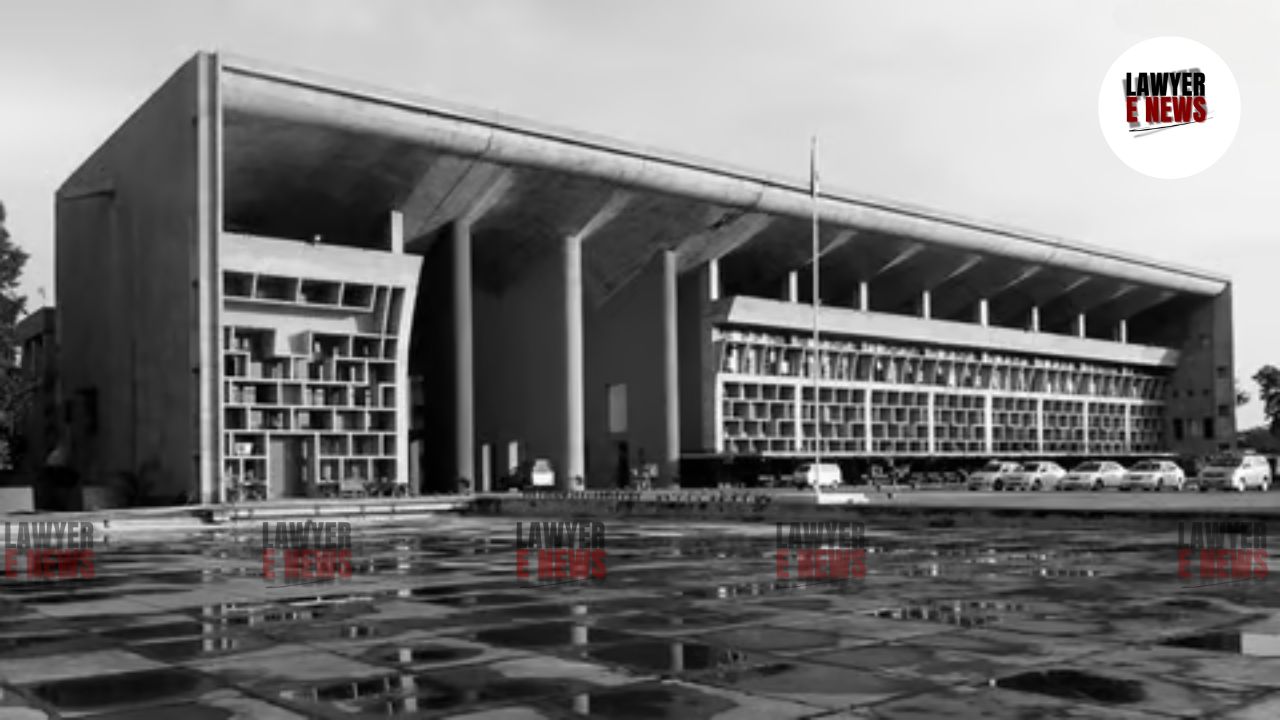
CHANDIGARH: The Punjab and Haryana High Court on October 30, 2026, held that once a trial court accepts a belated written statement on record without objection and adjourns the commercial suit for replication, it cannot subsequently invoke its inherent powers under Section 151 of the Code of Civil Procedure, 1908 (CPC) to recall that order and strike off the defendant's defence. Justice Harpreet Kaur Jeewan observed that while Order 8 Rule 1 CPC strictly curtails the timeline for filing pleadings in commercial disputes, the inherent powers of a court cannot be exercised to review or unsettle its own concluded proceedings in the absence of fraud, patent lack of jurisdiction, or procedural mistake.
The litigation stemmed from a commercial suit for recovery instituted by the respondent on May 9, 2024. After ex parte proceedings against the petitioner were set aside and an application for production of documents was allowed, the petitioner filed his written statement on July 14, 2025, which was accepted on record by the trial court and the matter was posted for replication. However, upon a subsequent application filed by the respondent alleging non-compliance with the mandatory 120-day limitation period under the Commercial Courts Act, 2015, the trial court passed an order on April 8, 2026, striking off the petitioner's defence and directing the written statement to be taken off the record.
Whether a trial court, having formally accepted a written statement on record without objection and adjourned a commercial suit for replication, can subsequently exercise inherent powers under Section 151 CPC to recall its order and strike off the defence on grounds of delay under Order 8 Rule 1 CPC?
Whether the statutory forfeiture of the right to file a written statement beyond 120 days in commercial suits permits a court to sit in appeal over its own earlier order accepting the pleadings?
Rigid commercial timelines under Order 8 Rule 1 CPC cannot be conflated with the trial court's jurisdiction to recall concluded orders.
The High Court acknowledged the settled legal position governing commercial disputes under Section 8 of the Commercial Courts Act, 2015 and the amended provisions of Order 5 Rule 1(1) and Order 8 Rule 1 CPC. Referring to the Supreme Court rulings in SCG Contracts (India) Pvt. Ltd. v. KS Chamankar Infrastructure Pvt. Ltd. and A.K. Ghosh And Company v. Biman Bose, the bench noted that a defendant forfeits the right to file a written statement beyond the maximum outer limit of 120 days from the service of summons.
Acceptance of pleadings without opposition creates procedural finality that prevents sudden reversal under Section 151 CPC.
The bench underscored that the factual matrix before it was materially distinguishable from cases where a belated pleading was rejected at the threshold. On July 14, 2025, the trial court had accepted the written statement on record, the respondent had accepted its copy without protest, and the suit was posted for replication. By subsequently entertaining an application to strike off the defence, the trial court had impermissibly recalled its earlier order without satisfying the rigorous parameters governing inherent review jurisdiction.
Inherent powers cannot be used to unsettle decided issues or operate as a substitute for statutory remedies.
Examining the ambit of inherent powers, the Court referred to landmark rulings including Budhia Swain v. Gopinath Deb, Ram Prakash Agarwal v. Gopi Krishan, and My Palace Mutually Aided Coop. Society v. B. Mahesh. The bench reiterated that an order may be recalled under Section 151 CPC only if the proceedings suffered from patent lack of inherent jurisdiction, if the order was obtained by fraud or collusion, or if the court committed an obvious mistake that prejudiced a litigant.
Trial courts cannot sit in appeal over their own interlocutory directions once rights have crystallised between parties.
The High Court emphasized that inherent powers under Section 151 CPC are procedural in character and cannot be deployed to override statutory prohibitions or bypass established appellate and revisional remedies. The bench pointed out that the trial court failed to record any finding that the case fell within the recognized exceptions warranting recall, thereby committing a jurisdictional error by unsettling what stood concluded between the parties.
Setting aside the impugned order, the High Court held that the trial court exceeded its jurisdiction by recalling its earlier order of acceptance and directed that the petitioner's written statement be restored to the record.
Date of Decision: October 30, 2026