
-
by sayum
26 August 2026 1:49 PM







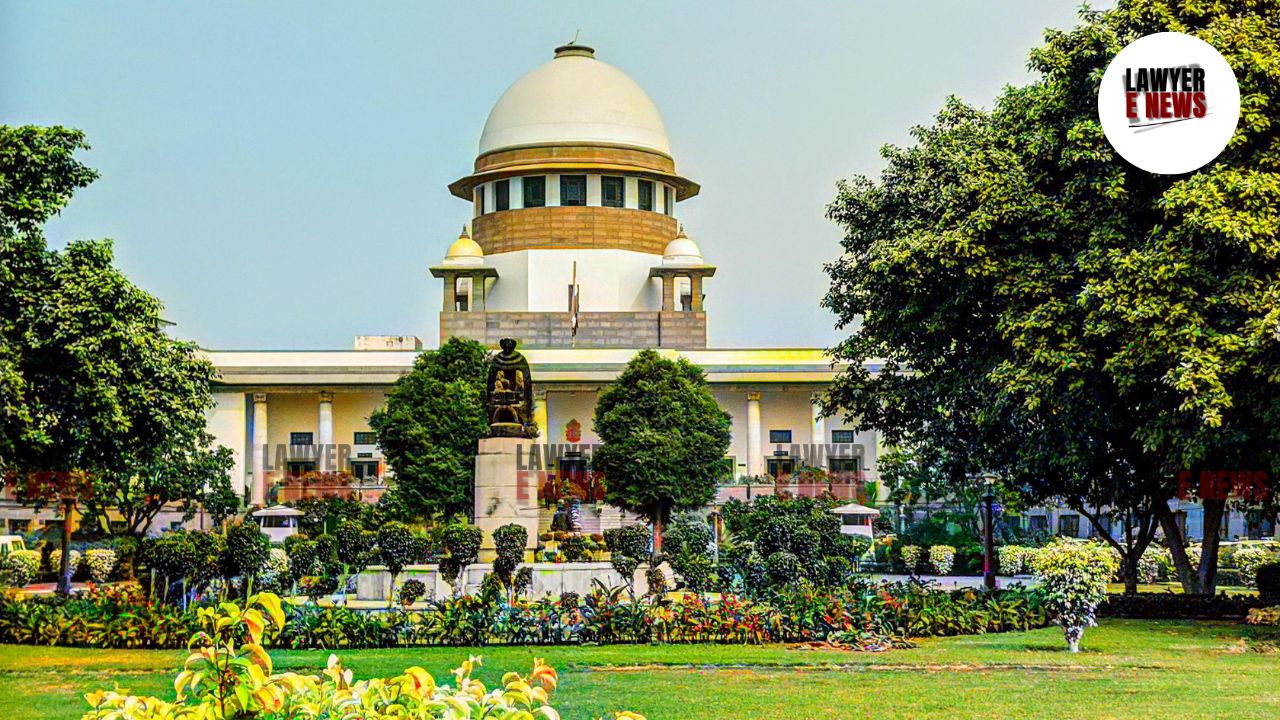
“Interpretation Must Favour the Employee—Gratuity Limit Automatically Follows Government of Assam’s Notification Under Regulation 107” - Supreme Court of India, in a reportable judgment delivered by Justices J.K. Maheshwari and Vijay Bishnoi, dismissed an appeal filed by Assam Financial Corporation Limited (AFC) and upheld the entitlement of its retired employees to gratuity up to ₹15 lakhs, as notified by the Government of Assam. Arising from the judgment of the Gauhati High Court dated 25.07.2023, which had affirmed the right of AFC employees to receive enhanced gratuity as per state government norms.
The Court held that Regulation 107 of the AFC Staff Regulations (2007), which expressly provides that gratuity is payable as per AFC’s formula “or as notified by the Government of Assam from time to time”, creates a binding link to the government’s notified ceiling—even in the absence of formal Board approval by the Corporation.
“Once the regulation itself makes provision to grant gratuity in terms of the formula or the government’s notification, interpretation of the regulation must be made in favour of the employees.”
“It Would Be Absolutely Inequitable for Employees to Suffer Due to AFC’s Lethargy”
The Supreme Court found it inequitable that AFC employees who retired between 2018–2019 were paid gratuity only up to ₹7 lakhs, despite the Government of Assam increasing the limit to ₹15 lakhs in 2017. The AFC had cited a 2012 internal office order setting the ceiling at ₹7 lakhs and argued that unless its Board approved a new limit, the government’s notification was not automatically binding.
The Court rejected this contention, finding that Regulation 107, in force since 2007, clearly incorporated a dynamic linkage with the Government’s gratuity ceiling.
“The import of Regulation 107 is such that the higher limit for gratuity set by the State Government shall apply to AFC—even if the Board of Directors did not adopt it at that time.”
Noting that the Board deferred the decision to enhance gratuity in 2022 despite repeated requests and audit recommendations, the Court observed:
“The AFC chose not to bring about parity in ceiling for payment of gratuity while the Government of Assam kept enhancing it. To now deny the higher benefit to retirees is to punish them for the Corporation’s own inaction.”
“The Regulation Itself Incorporates the Government Ceiling—No Need for Independent Adoption”
At the core of the judgment was the interpretation of Clause 107 of the 2007 Staff Regulations, which provided gratuity calculations subject to a limit of ₹3.5 lakhs, later enhanced to ₹7 lakhs in 2012, or “as notified by the Government of Assam from time to time.”
The Court concluded that this wording made the Government's notification self-applicable, without requiring separate adoption or ratification by AFC:
“The ceiling prescribed by the State Government being higher than that of AFC’s, the regulation must be interpreted in such a way that the benefit of the higher limit is granted to employees of AFC.”
The Court emphasized the benevolent nature of gratuity provisions, which are intended to protect employee rights post-retirement. It directed that all calculations must be recomputed on the ₹15 lakh ceiling and paid within six months.
“Statutory Question Left Open—Right of Employees Flows Directly from Regulation, Not Necessarily the Gratuity Act”
While the High Court had granted relief also under the Payment of Gratuity Act, 1972, the Supreme Court declined to rule on whether the Act applies directly to AFC. The Court observed that since Regulation 107 already incorporates the State’s gratuity ceiling, the employees’ entitlement did not depend on invoking the 1972 Act.
“We are not expressing any opinion on whether the Payment of Gratuity Act applies to AFC. The right of the respondents flows from the regulation itself.”
This approach left the statutory question under Section 14 of the Gratuity Act open for future consideration, possibly in cases involving other PSUs or contexts.
“Benefit of Government Norms Cannot Be Denied Through Administrative Apathy”
The judgment also underscores the judiciary’s firm stance on employee equity and administrative accountability. Citing the Memorandum dated 02.03.2022 presented by AFC’s Managing Director, which had itself acknowledged parity with Government of Assam gratuity norms as part of AFC’s obligations, the Court noted that the failure to act timely created arbitrary distinctions among similarly placed employees.
“Employees who retired in the interregnum should not be discriminated against merely because the Corporation did not act swiftly to adopt updated limits.”
A Victory for Employee Rights and Liberal Interpretation of Service Regulations
In affirming the Gauhati High Court’s judgment, the Supreme Court concluded that gratuity must be paid to all eligible AFC employees as per the ₹15 lakh limit notified by the Government of Assam, irrespective of whether the Corporation had formally adopted the limit or not.
This decision reaffirms that employee benefit regulations must be interpreted liberally, and that service rules referencing external government policies create binding obligations when such references are explicit, as in Regulation 107.
“The appeal stands disposed of accordingly. Pending application(s), if any, shall also stand disposed of.”
Date of Decision: 14 October 2025





