-
by sayum
27 October 2026 12:34 PM







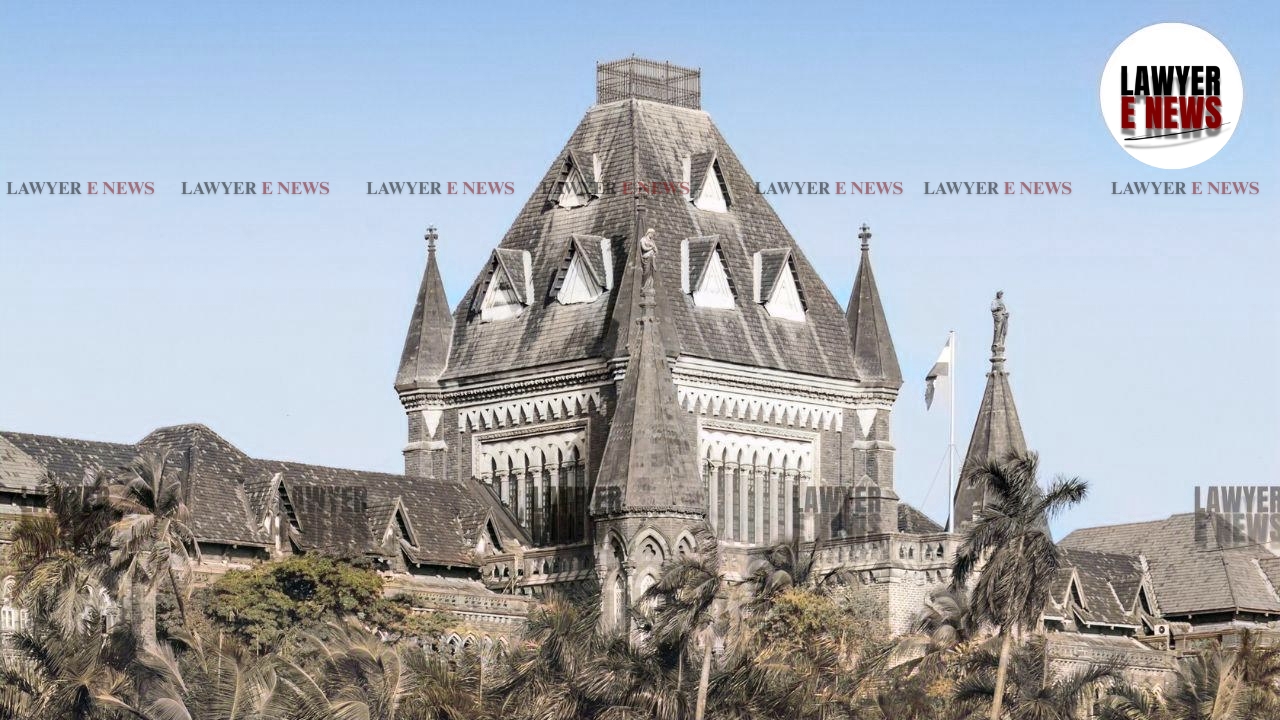
"An application for grant of Probate or Letters of Administration is for the Court’s permission to perform a legal duty created by a Will or for recognition as a testamentary trustee and is a continuous right, which can be exercised any time after the death of the deceased, as long as the right to do so survives and the object of the trust exists..." Bombay High Court has ruled that an application for probate represents a continuing right to perform a testamentary duty, holding that once the valid execution and attestation of a will are proved, the suspicion arising from delay no longer operates to defeat the grant.
A single-judge bench of Justice N.J. Jamadar granted probate in respect of the December 22, 1998 Will executed by late Rajalakshmi Gopal Ayengar, widow of renowned Bhabha Atomic Research Centre (BARC) scientist Dr. A.R. Gopal-Ayengar. The Court observed that while Article 137 of the Limitation Act, 1963 governs probate petitions, an executor cannot be non-suited solely due to delay when the testament is shown to be genuine and executed by a person of sound mind.
The plaintiff, Dr. Govindaraja Venkatesh Iyengar, an internationally acclaimed scientist based in the United States, instituted the testamentary petition as the named executor seeking probate of the Will of his late aunt, Rajalakshmi Gopal Ayengar, who died on February 2, 2002. Under the Will, the testatrix bequeathed her Chembur bungalow—which had devolved onto her as the sole Class-I heir of her late husband—with instructions that the property be utilized or its sale proceeds channeled towards the A.R. Gopal-Ayengar Educational Trust. The grant was vehemently contested by the husband's nephew, A.R. Sampathkumar (later substituted by his legal heirs), who occupied the property and claimed that the Will was forged, that the testatrix was admitted to the ICCU of BARC Hospital in an unconscious state on the date of execution, and that the petition suffered from an unexplained delay of nearly a decade.
The primary question before the Court was whether the deceased testatrix was of sound and disposing state of mind and whether the plaintiff proved the due execution and attestation of the Will dated December 22, 1998. The Court was also called upon to determine whether inordinate delay in filing the petition barred the grant of probate under Article 137 of the Limitation Act, 1963 read with Rule 382 of the Bombay High Court (Original Side) Rules, 1980.
Legal Framework Governing Proof Of Wills And Judicial Conscience
The High Court began by tracing the statutory mandate under Section 63(c) of the Indian Succession Act, 1925 read with Section 68 of the Indian Evidence Act, 1872. Referring to the landmark Supreme Court rulings in Jaswant Kaur v. Amrit Kaur, Sridevi v. Jayaraja Shetty, and Meena Pradhan v. Kamla Pradhan, the bench reiterated that the propounder must satisfy the conscience of the court that the testament was executed by the testator of their own free will while possessing a sound and disposing state of mind.
The Court highlighted that while suspicious circumstances place a heavier initial burden on the propounder, such circumstances must be real and germane, rather than the mere fantasy of a doubting mind.
"The test of judicial conscience has been evolved for dealing with those cases where the execution of the Will is surrounded by suspicious circumstances."
Testimony Of Attesting Witnesses Establishes Free Will And Due Execution
Evaluating the oral evidence, the Court noted that Mr. R.K. Ramanathan (PW-2), a former colleague of Dr. Gopal-Ayengar, offered an unshaken account of witnessing the testatrix sign each page of the Will at the BARC Hospital before subscribing his own signature in her presence. Crucially, Dr. P.T.V. Nair (DW-2), the other attesting witness who was examined by the caveator, made a clean breast before the Court, explicitly disowning an earlier adverse affidavit procured by the caveator's son. Dr. Nair confirmed under oath that the testatrix signed the Will in his presence and was fully conversant in English.
The Court noted that the testimony of the attesting witnesses was further reinforced by handwriting expert Mr. Yeshwant Datay (PW-3), whereas the original caveator had previously conceded before the City Civil Court that the testatrix's Will was not tampered with.
Expert Opinion Based On Photocopies Inherently Weak And Unreliable
The bench emphatically rejected the handwriting opinion produced by the caveator through defense expert Mrs. Titiksha Desai-Kamble (DW-3), pointing out that the witness was not the author of the report and had examined only a photostat copy of the disputed Will without adequate specimen signatures.
Citing the Supreme Court's decision in S.P.S. Rathore v. CBI and the High Court precedents in Abhay Jain v. State of M.P. and Bheri Nageswara Rao v. Mavuri Veerabhadra Rao, Justice Jamadar underscored that xerox copies lack the three-dimensionality and pressure-point details required for handwriting analysis.
"The analysis of a questioned document is limited to the features that survive the copying process... the signature mark on a xerox copy of a document can never constitute the basis."
Hospitalisation Does Not Presuppose Lack Of Testamentary Capacity
On the caveator's allegation that the testatrix was unconscious in the ICCU on the date of execution, the Court scrutinized the medical case records. The bench observed that while the 76-year-old testatrix had history of arthritis, hypertension, and breathlessness, the contemporaneous hospital records contained no indication that her cognitive faculties were impaired or that she was incapable of understanding the nature and effect of the disposition.
The Court observed that the testatrix survived for more than four years after executing the testament, which completely negated the caveator's theory of a terminal lack of testamentary capacity.
Probate Petition Enforces A Continuous Right Not Barred By Limitation
Addressing the delay of over nine years in instituting the probate petition, Justice Jamadar analyzed Article 137 of the Limitation Act alongside the Supreme Court rulings in Kunvarjeet Singh Khandpur v. Kirandeep Kaur and Sanjay Sharma v. Krishnadhan Khaware, as well as the Bombay High Court's decisions in Vasudev Daulatram Sadarangani v. Sajni Prem Lalwani and Wilma Levert Canuao v. Allan Sebastian D’Souza.
The Court observed that an application for probate seeks judicial recognition to perform a duty created by the testator, constituting a continuing right that survives as long as the object of the testament remains to be executed.
"Delay beyond 3 years after the deceased's death would arouse suspicion and greater the delay, greater would be the suspicion... but cannot be equated with the absolute bar of limitation; and once execution and attestation are proved, suspicion of delay no longer operates."
Executor Established Bonafides In Pursuing Charitable Cause
The bench observed that the plaintiff had satisfactorily explained the delay through uncontroverted testimony, citing his residence in the United States, parallel legal proceedings initiated by the caveators, and changes in legal counsel. The Court placed significant weight on the fact that the plaintiff asserted no personal monetary interest in the estate, seeking probate solely to implement the testatrix's wish of funding the A.R. Gopal-Ayengar Educational Trust.
Finding that the initial onus stood completely discharged by the propounder and that the caveator failed to prove fraud or fabrication, the Court decreed the suit in favor of the plaintiff.
The Bombay High Court decreed the testamentary suit and directed the grant of probate to the plaintiff with nationwide effect, while staying the execution of the decree for six weeks to enable the caveator to prefer an appeal. The judgment firmly establishes that where testamentary capacity, due execution, and attestation are affirmatively proved, procedural delay in petitioning the court will not operate as an absolute bar to executing a testator's charitable intent.
Date of Decision: 21 August 2026