-
by sayum
24 August 2026 3:22 PM







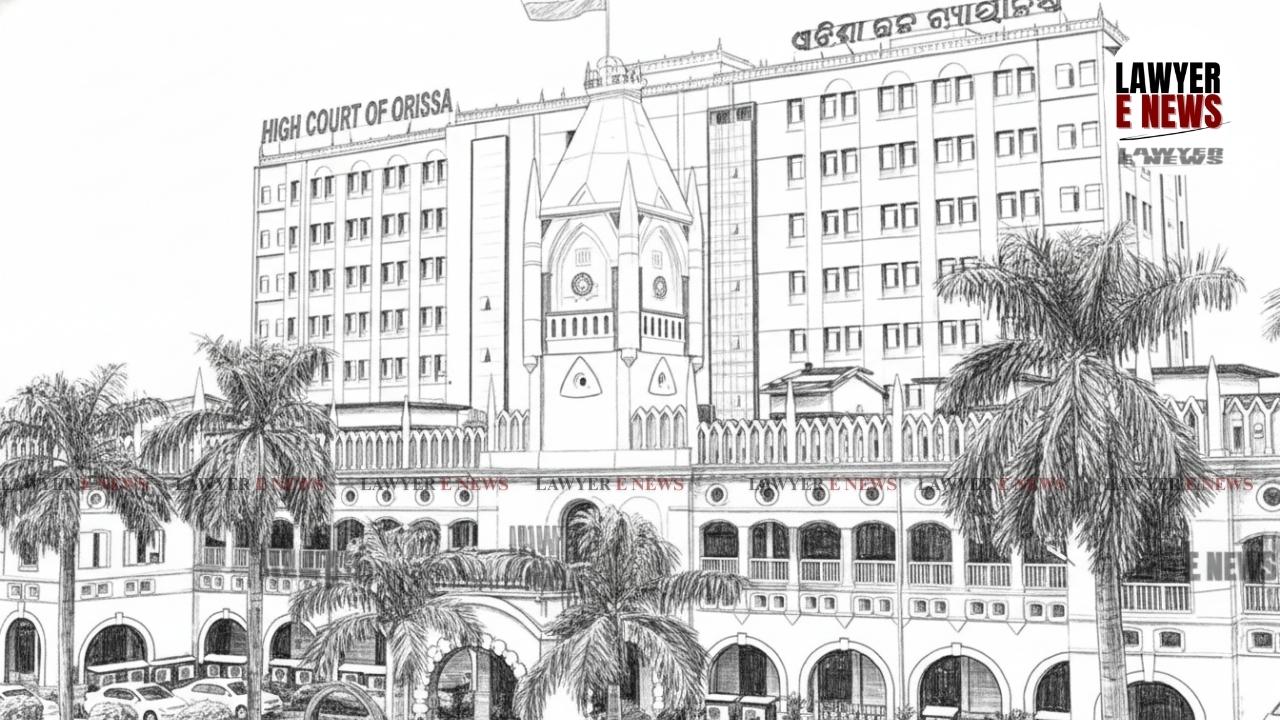
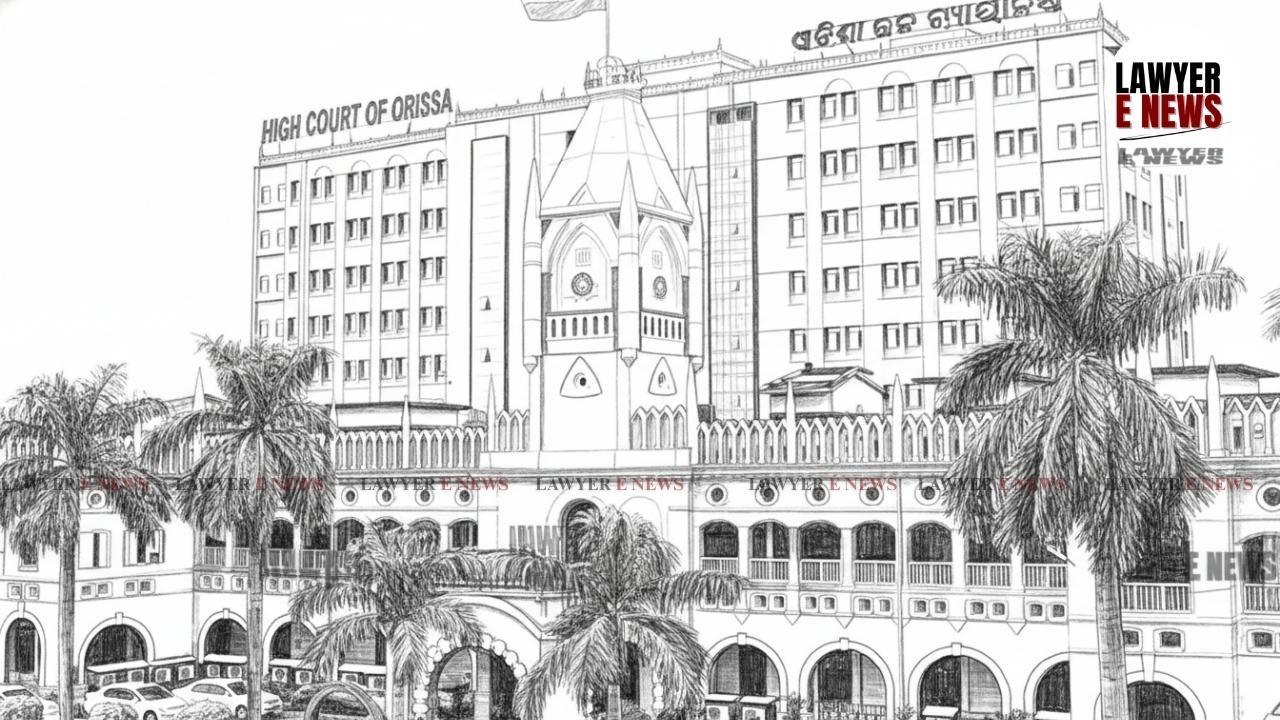
“The absence of negligence by the Railways is irrelevant under Section 124A—liability is automatic upon proof of an untoward incident involving a bona fide passenger.” - Orissa High Court delivered a significant ruling clarifying the evidentiary burden and scope of strict liability under Section 124A of the Railways Act, 1989. Justice Dr. Sanjeeb K. Panigrahi allowed an appeal challenging the dismissal of a compensation claim by the Railway Claims Tribunal, holding that the Tribunal’s conclusion—treating the injuries as self-inflicted—was contrary to the statutory framework and established evidence.
The Court ruled that once bona fide passengership is proven through valid ticket and supporting medical or police records, the burden shifts to the Railways to establish statutory exceptions, and in the absence of such proof, compensation becomes a legal entitlement.
“Strict Liability Means No Fault Requirement: Railways Must Compensate Unless Specific Exceptions Apply”
The case arose from an unfortunate accident on 22 July 2016, when Dipak Sahoo, while travelling on a valid ticket aboard the Howrah-Vasco-Da-Gama Express, fell from the train due to a sudden jerk and overcrowding between Anakapalle and Bayyavaram stations, suffering serious injuries.
He subsequently sought compensation under Section 124A of the Railways Act by filing a claim before the Railway Claims Tribunal, Bhubaneswar. However, the Tribunal dismissed the application on 6 January 2020, holding that the injuries were “self-inflicted” and the appellant had been “negligently travelling on the footboard,” thus falling within the statutory exceptions under Section 124A.
The High Court, however, found the Tribunal’s decision “a misdirection in law”, asserting that “strict liability under Section 124A does not depend on fault, and exceptions must be narrowly interpreted.”
The core factual dispute revolved around the nature of the injury: whether it resulted from an “untoward incident” as defined under Section 123(c)(2) or was a case of the appellant’s own negligent or intentional conduct. Dipak Sahoo had fallen from an overcrowded train due to a sudden braking incident and was grievously injured. The Tribunal accepted the presence of a valid journey ticket but ruled that the act of travelling on the footboard and absence of alarm chain pulling indicated self-infliction.
Aggrieved, the appellant challenged the Tribunal’s ruling before the High Court, arguing that the claim was wrongly denied despite substantial documentary and oral evidence corroborating the accidental fall and bona fide travel.
Justice Panigrahi answered all three in favour of the appellant.
The Court reasserted the established legal position that Section 124A embodies the principle of strict liability, requiring no proof of negligence by the Railways. The burden of proof lies initially with the claimant to establish bona fide passengership and occurrence of an untoward incident. Upon such establishment, “the Railway’s liability arises ipso facto and automatically, unless rebutted by cogent evidence falling under the exceptions.”
“The absence of any wrongful act, negligence, or default on the part of the Railway Administration is irrelevant, as the statutory provision enshrines the doctrine of strict liability,” the Court emphasized [Para 12].
Analysis of Evidence and Role of Public Documents:
Referring to Section 119(e) of the Bharatiya Sakshya Adhiniyam, 2023, the Court held that medical and police reports—being official records prepared in the course of public duty—carry a presumption of correctness. The Court observed that these reports, along with the recovery of a valid ticket and consistent witness testimony, clearly established the bona fide travel and the occurrence of an accidental fall.
“The cumulative probative effect of these materials leaves no manner of doubt that the appellant was travelling as a bona fide passenger at the relevant time,” the Court held [Para 17].
The High Court criticised the Tribunal for failing to apply the correct legal standard. It noted that while the Tribunal acknowledged the ticket’s genuineness, it erroneously required the appellant to disprove the exception of self-inflicted injury, thereby reversing the burden of proof.
Rejection of Railway’s Defence and Inconclusive Inquiry Reports:
The Respondent Railways had relied heavily on a DRM inquiry and the absence of an alarm chain pulling report to argue that the fall was not accidental. The High Court rejected this line of defence, ruling that such reports have no binding evidentiary value and cannot outweigh primary public documents and eyewitness accounts.
“In absence of any credible rebuttal from the Respondents… status as bona fide passenger and the occurrence of an untoward incident stand established,” the Court held [Para 22].
In doing so, the Court aligned with the Supreme Court’s ruling in Union of India v. Rina Devi [(2019) 3 SCC 572], which explained that the mere absence of a ticket does not defeat a claim if surrounding circumstances and credible affidavits establish bona fide travel.
Affirmation of Liberal and Purposive Interpretation:
Citing Union of India v. Prabhakaran Vijay Kumar [(2008) 9 SCC 527], the Court reaffirmed the doctrine that the Railways Act is a piece of welfare legislation, and must be construed liberally to achieve its objective of protecting passengers from the economic fallout of accidents.
“Adopting a restrictive meaning to the expression ‘accidental falling of a passenger’ would defeat the object of the legislation and unjustly deprive a large number of bona fide railway passengers of their rightful claim,” the Court noted [Para 23].
Appellant Entitled to Compensation Under Section 124A—No Exception Proved
In conclusion, the Court categorically held that the appellant had successfully established that the injury occurred during a lawful journey as a bona fide passenger, and none of the statutory exceptions under the proviso to Section 124A were attracted. Accordingly, the strict liability of the Railways was triggered, and the claimant was entitled to compensation.
The Tribunal’s decision was set aside, and the appeal allowed.
“The appellant is entitled to compensation of ₹8,00,000 with interest at 6% per annum from the date of claim till payment,” the Court ordered. The amount is to be deposited before the Tribunal within three months.
Date of Decision: 17th October 2025