
-
by sayum
21 October 2026 5:27 PM







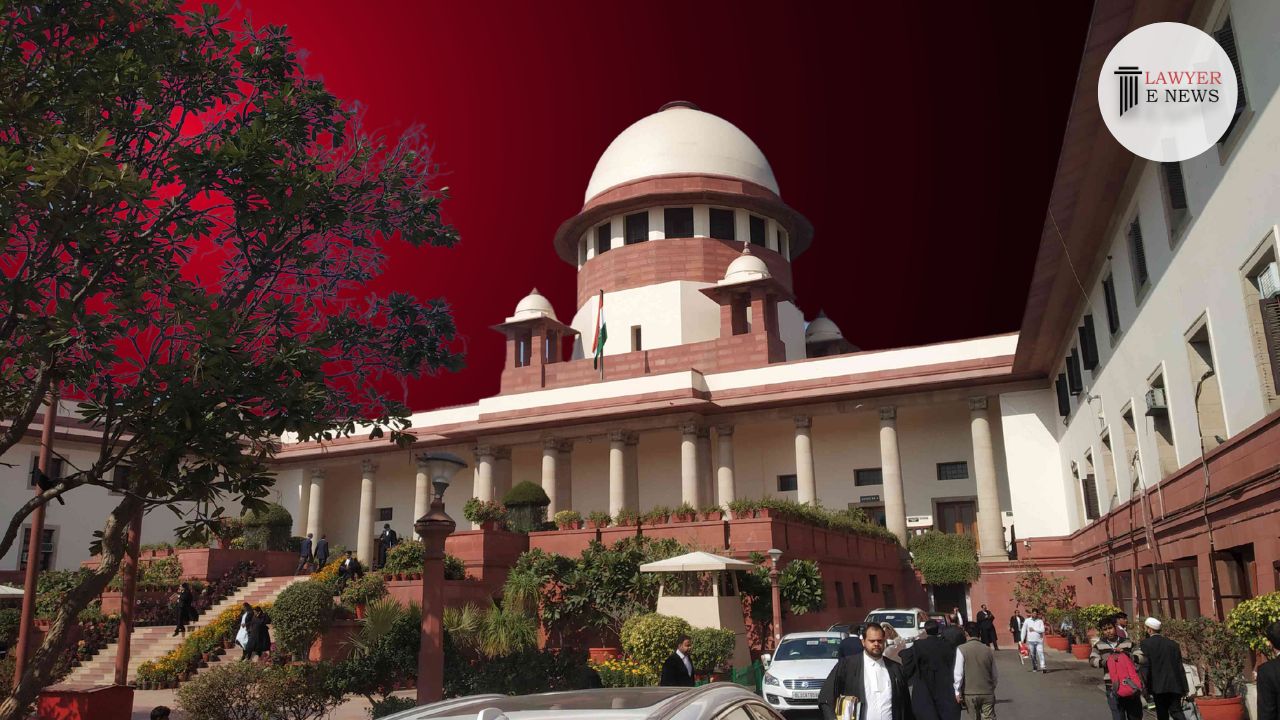
The Supreme Court ruled that a FIR under Section 306 of the Indian Penal Code (attempt to commit suicide) cannot be dismissed under Section 482 of the Criminal Procedure Code on the basis of a settlement. The bench composed of Justices Indira Banerjee and V.Ramasubramanian noted that "abetment of suicide" also falls under the category of heinous and serious offences and should be treated as a crime against society, not just against the individual.
"Heinous or serious crimes that are not private in nature and have a significant impact on society cannot be quashed based on a compromise between the offender and the complainant and/or the victim," the bench observed.
The accusation against the accused was that they defrauded the deceased of Rs. 2,35,73,200/-, forcing the deceased, who was in dire financial straits, to commit suicide. In response to a petition filed by the accused under Section 482 of the Criminal Procedure Code, the Gujarat High Court quashed the FIR filed under Section 306 of the Indian Penal Code against the accused due to a settlement between the accused named in the FIR and the deceased's cousin, the complainant. The deceased's wife's application for reversal of the judgement was also denied.
The issue before the Supreme Court was whether the Criminal Miscellaneous Applications filed by the accused under Section 482 of the Cr.P.C. could have been allowed and a FIR under Section 306 of the IPC for abetment to commit suicide, carrying a ten-year prison sentence, could have been quashed based on a settlement between the complainant and the accused named in the FIR.
The bench noted at the outset that the offence of aiding a suicide under Section 306 of the IPC is a grave, non-compoundable offence. The judge made the following remarks:
Crimes against society cannot be punished through negotiation.
On the basis of a compromise between the offender and the complainant and/or victim, heinous or serious crimes that are not private in nature and have a significant impact on society cannot be dismissed. The nature of crimes such as murder, rape, burglary, dacoity, and even aiding in suicide is neither private nor civil. These offences are against society. Under no circumstances may a prosecution be dismissed on the basis of a plea bargain when the offence is serious and grave and falls within the realm of crimes against society.
Otherwise, a dangerous precedent would be set.
Orders quashing FIRs and/or complaints relating to grave and serious offences only on the basis of an agreement with the complainant would set a dangerous precedent in which complaints would be filed for oblique reasons in order to extract money from the defendant. In addition, financially affluent offenders would walk free, even in cases of murder, rape, bride-burning, etc., by buying off informants/complainants and reaching a settlement with them. This would render obsolete IPC provisions such as Sections 306, 498-A, 304-B, etc., which serve a specific social purpose as a deterrent.
The law prohibits an informant from withdrawing a complaint regarding a non-compoundable crime of a grave, serious, or heinous nature that has an impact on society.
In Criminal Law, the position of the complainant is limited to that of the informant. Once a FIR and/or criminal complaint is filed and a criminal case is initiated by the state, the accused becomes a party to the dispute. The State is responsible for maintaining law and order in society. The state is responsible for prosecuting offenders. In cases of grave and serious non-compoundable crimes that have a significant impact on society, the informant and/or complainant only has the right to a hearing to ensure that justice is served through the conviction and punishment of the offender. The law prohibits an informant from withdrawing a complaint regarding a non-compoundable crime of a grave, serious, or heinous nature that has an impact on society.
The court cited a three-judge bench decision in State of Madhya Pradesh v. Laxmi Narayan (2019) 5 SCC 688 holding that Section 307 of the Indian Penal Code falls under the category of heinous and serious offences and must be treated as a crime against society and not the individual alone.
"The violation of section 306 of the Indian Penal Code falls into the same category. An FIR filed under Section 306 of the IPC cannot be dismissed based on any financial settlement with the informant, surviving spouse, parents, children, guardians, caretakers, or anyone else. It is clarified that it was not necessary for this Court to examine whether the FIR in this case discloses any offence under Section 306 of the IPC, since the High Court, in exercising its authority under Section 482 CrPC, quashed the proceedings solely on the basis that the disputes between the accused and the informant had been compromised "The court stated as it granted the appeal.
D.D:29-07-2022
Daxaben vs State of Gujarat