
-
by sayum
25 August 2026 12:32 PM







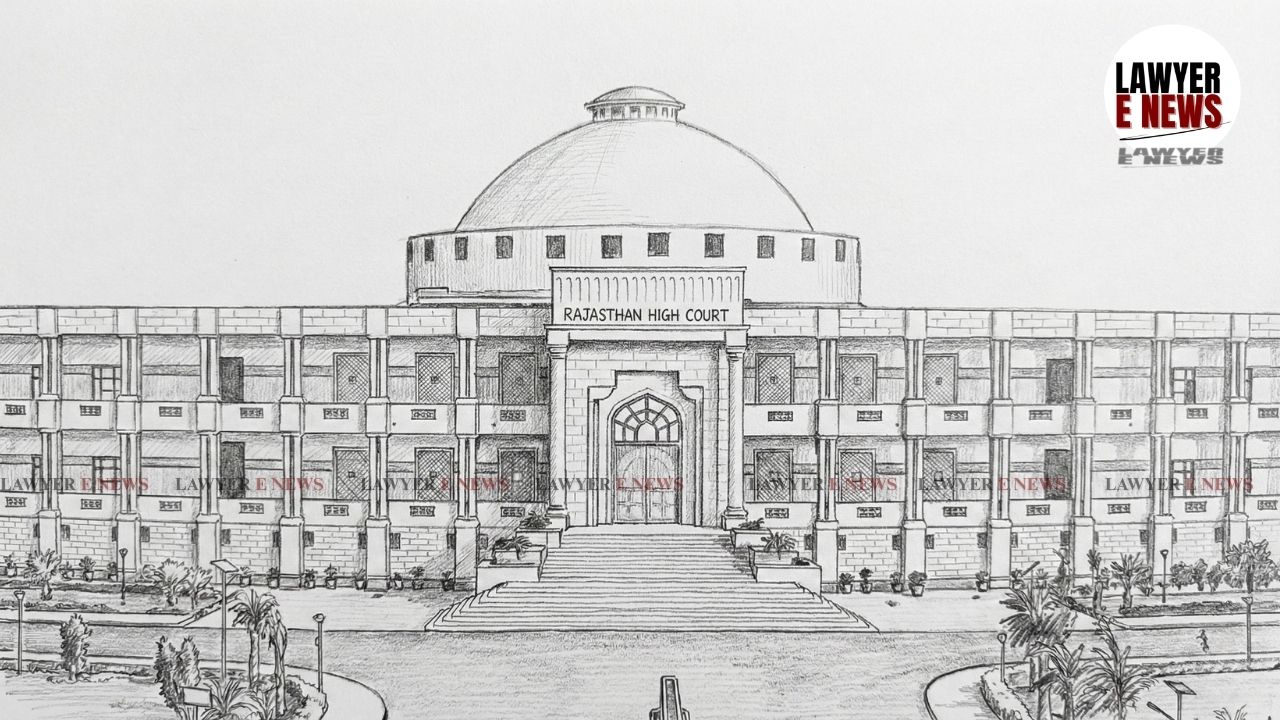
“When Statute Does Not Provide a Forum for Election Disputes, Civil Court’s Jurisdiction Cannot Be Ousted” – Rajasthan High Court dismissed a challenge to a civil suit seeking cancellation of the unopposed election of a trust office bearer, holding that the jurisdiction of the civil court is not barred under Section 73 of the Rajasthan Public Trust Act, 1959 when the suit involves allegations of fraud, corruption, and mala fide conduct in election processes.
Justice Mukesh Rajpurohit, sitting in revisional jurisdiction, affirmed the trial court’s order refusing to reject the suit under Order VII Rule 11 CPC, finding no error of jurisdiction or perversity.
Civil Court Not Ousted in Absence of Statutory Mechanism for Election Disputes
The judgment reiterates the foundational position of law that civil courts have plenary jurisdiction under Section 9 of the Code of Civil Procedure, 1908 unless expressly or impliedly barred by a statute. The High Court held that the Rajasthan Public Trust Act, 1959 does not contain any machinery for resolving election disputes regarding office bearers of public trusts, particularly those based on allegations of manipulation or collusion.
“There is no specific provision in the Rajasthan Public Trust Act, 1959 to deal with disputes of election in the Trust. Moreso, when an election in the present suit is challenged on the ground of adopting a corrupt practice, and the connivance between the Election Officer and elected candidate,” the Court observed, while expressly approving the ratio of Nathu Lal Sharma v. Omprakash.
Disputed Election to Registered Trust
The dispute arose after Navratan Joshi (respondent-plaintiff) filed a suit before the District Judge, Bikaner, challenging the unopposed election of petitioner Harigopal Sharma as President of the Akhil Bharatvarshiya Shri Mahrishi Gautam Education and Charitable Trust, held on March 26, 2024.
Joshi alleged his nomination was illegally rejected in a mala fide manner, and that the election process was manipulated through arbitrary timelines, collusion between officials and the elected candidate, and in violation of the principles of natural justice. He sought cancellation of the election, a declaration of it being void, an injunction restraining misuse of trust funds, and directions for a fresh fair election.
In response, the defendants filed an application under Order VII Rule 11 CPC read with Section 73 of the Rajasthan Public Trust Act, 1959, arguing that the suit was barred as the matter was already pending before the Assistant Commissioner, Devasthan Department under Sections 21–23 of the Act, which deal with change reports and entries.
Scope of Section 73 and Applicability of Dhulabhai Principles
Rejecting the plea of statutory bar, the High Court held that the jurisdiction of civil courts is not ousted merely because proceedings under the Trust Act are pending, especially when the issues in those proceedings are distinct in nature.
Section 73 of the 1959 Act, which bars civil courts from entertaining matters “required by this Act to be decided or dealt with” by the authorities under the Act, was held to be inapplicable since “election disputes, particularly those involving fraud and corruption, are not contemplated under any provision of the Act”.
The Court relied on the classic formulation in Dhulabhai v. State of M.P., AIR 1969 SC 78, stating:
“Exclusion of the jurisdiction of the Civil Court is not readily to be inferred unless the conditions… apply. Where there is no express exclusion, the examination of the remedies and the scheme of the particular Act… becomes necessary.”
The Court further quoted Nathu Lal Sharma v. Omprakash, where it was held:
“Prima facie, the dispute of election raised in the present civil suit does not attract the application of Section 23 of the Act of 1959… Under the scheme of Rajasthan Public Trust Act, 1959, there is no specific provision to deal with dispute of election in the Trust. Moreso, when an election in the present suit is challenged on the ground of adopting a corrupt practice… such nature of disputes are amenable and to be adjudicated by civil court only.”
The Court distinguished earlier decisions cited by the petitioners such as Sharad Kumar v. Raghuveer Singh, Mohan Singh v. Civil Judge, and Pukhraj Soni v. Seema, holding they were rendered in different factual and legal contexts where the statutory bar was clearly attracted.
Order VII Rule 11 CPC – Reaffirmed Principles
The Court reiterated the settled principle that at the stage of considering an application under Order VII Rule 11 CPC, only the averments in the plaint are to be examined, which must be presumed to be true. It held:
“Defence taken by the defendants or disputed questions of fact cannot be looked into at this stage… A bare perusal of the plaint… reveals specific allegations of mala fide conduct, corrupt practices and collusion… requiring adjudication on evidence.”
No Ground for Interference Under Section 115 CPC
The Court found no jurisdictional error, material irregularity, or perversity in the trial court’s refusal to reject the plaint, and dismissed the civil revision petition.
“In view of the discussion made hereinabove, the revision petition is devoid of merits and the same is hereby dismissed,” concluded Justice Rajpurohit.
The Rajasthan High Court’s ruling in Harigopal Sharma v. Navratan Joshi reaffirms that civil courts retain jurisdiction in trust election disputes involving fraud or mala fides, particularly in the absence of an express or implied statutory bar under the Rajasthan Public Trust Act. The judgment strengthens the principle that ouster of civil jurisdiction cannot be presumed, and matters entailing civil consequences continue to be governed by Section 9 CPC unless explicitly excluded.
Date of Decision: 02.02.2026





