-
by sayum
28 August 2026 6:47 AM







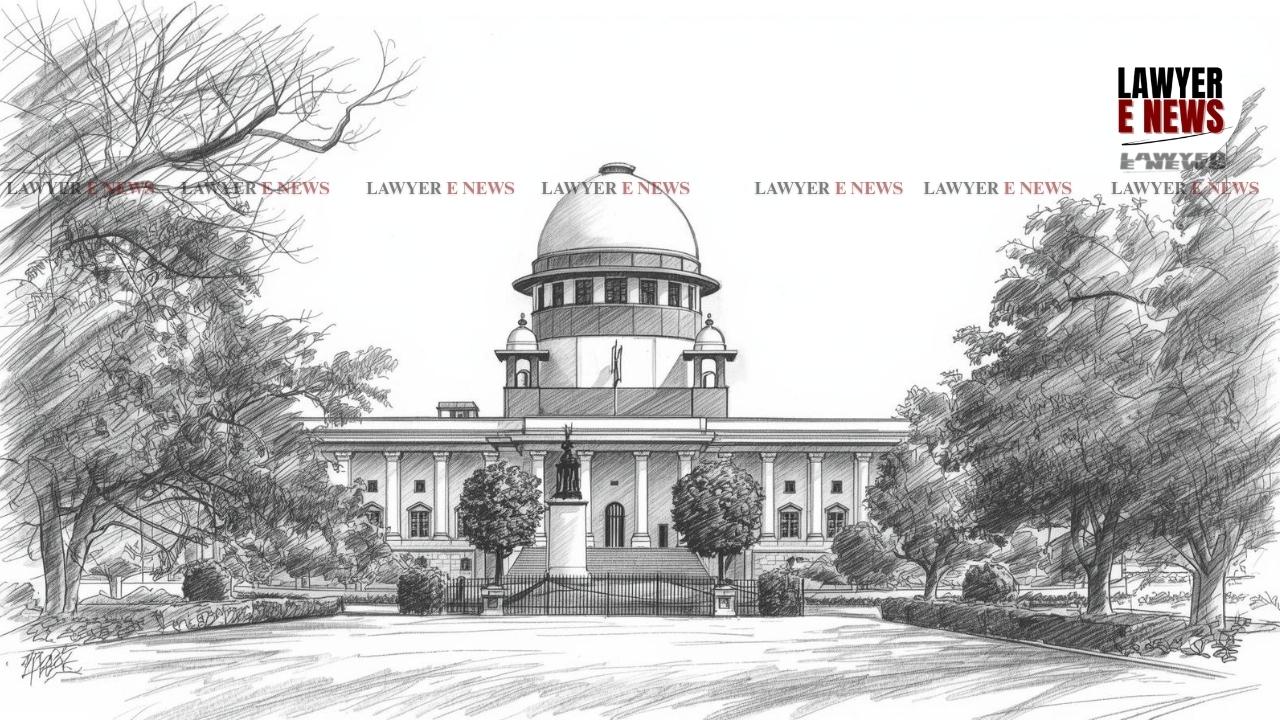
“Dying Declaration Is Not a Weak Link – It Is the Voice of the Dead”, On 15 January 2026, the Supreme Court of India delivered a powerful and precedent-reinforcing verdict in State of Himachal Pradesh v. Chaman Lal, reversing an acquittal in a brutal wife-burning case and restoring the conviction under Section 302 IPC. A Bench comprising Justice B.V. Nagarathna and Justice R. Mahadevan held that a dying declaration, if voluntary and reliable, can singularly sustain a conviction, even in the absence of corroboration. In doing so, the Court sent a strong message that technical trivialities cannot be allowed to bury substantial justice.
“This is not a case where the dying declaration could have been discarded on any sound legal ground,” observed the Court, finding the High Court’s interference in the trial court’s conviction not just unwarranted but “manifestly erroneous.”
The Supreme Court set aside the judgment of acquittal dated 26.08.2014 passed by the Himachal Pradesh High Court and reinstated the Trial Court’s order convicting Chaman Lal for the murder of his wife, Saro Devi, who succumbed to severe burn injuries in January 2010 after alleging that her husband had poured kerosene on her and set her on fire.
“Each Dying Declaration Carries With It the Weight of a Last Breath” – SC Affirms It Can Be Sole Basis for Conviction
At the core of the controversy was a dying declaration made by the victim, recorded by a Tehsildar-cum-Executive Magistrate in the presence of senior police officers and after a medical opinion declared her fit. Saro Devi, in that declaration, clearly blamed her husband, stating that he had set her on fire after repeatedly abusing her and calling her “Kanjri”.
The High Court, however, discarded this crucial piece of evidence by doubting the exact time of recording and the presence of police personnel during the statement. The Supreme Court categorically rejected this reasoning, holding that the dying declaration was “voluntary, truthful, and reliable” and that “hyper-technical objections cannot form the basis for its rejection.”
The Court ruled that “there is no law which mandates that a dying declaration cannot be acted upon without corroboration” and relied on Khushal Rao v. State of Bombay, Paniben v. State of Gujarat, and Laxman v. State of Maharashtra to underline the legal position that a dying declaration, if recorded properly and found trustworthy, can form the sole basis for conviction.
“When Truth Speaks from the Deathbed, the Court Must Listen”—High Court Reversed for Misreading Evidence
The Supreme Court was particularly scathing in its analysis of the High Court’s judgment. “The High Court fell into manifest error,” declared the Bench, noting that the lower appellate court had relied on hostile and partisan witnesses while ignoring the clear and consistent declaration made by the deceased.
The Court noted: “Such rejection of a cogent dying declaration on conjecture and speculation amounts to a miscarriage of justice.”
Dismissing the High Court’s suspicion over the timing of the declaration, the Court said, “A minor discrepancy, satisfactorily explained by multiple witnesses, cannot negate a dying declaration that was lawfully recorded and medically certified.”
Regarding the presence of police officers at the time of recording, the Court ruled: “Presence of officials by itself does not vitiate the declaration in the absence of any coercion or interference. To hold otherwise would be to paralyse the criminal process by over-technicality.”
“Absence of Litigation Doesn’t Mean Absence of Motive”—Court Finds Sufficient Background of Matrimonial Discord
While the High Court dismissed the possibility of motive by citing the absence of pending litigation between the spouses, the Supreme Court held that such reasoning was legally flawed. “Matrimonial discord does not always find its way to the courtroom,” the Bench observed, adding that the dying declaration and testimonies of close relatives “clearly reflected a background of humiliation, quarrels, and verbal abuse” that could provoke the act.
The Court observed that “proof of motive is not indispensable in cases resting on direct evidence like a dying declaration”, further holding that the lack of strong motive cannot override a voluntary and reliable dying declaration.
“Self-immolation Theory a Desperate Defence”—SC Discards Hostile and Defence Testimony
The respondent, Chaman Lal, attempted to introduce the theory of self-immolation through defence witnesses including his minor son and a village acquaintance. The Supreme Court dismissed this as “unreliable, partisan, and hearsay”, noting that the minor son admitted he did not witness the act and only saw his mother in flames.
The Court noted that “the act of attempting to douse the fire or suffering minor burn injuries does not by itself exonerate the accused. It could very well be a post-offence ploy to fabricate innocence.”
Further, the Bench observed that hostile witnesses, including the respondent’s aunt, could not be relied upon as their testimonies “emerged belatedly, were inconsistent, and contradicted by all core prosecution witnesses”.
Conviction Restored, Respondent Ordered to Surrender
Allowing the appeal filed by the State of Himachal Pradesh, the Supreme Court restored the life sentence imposed by the Trial Court, and directed the respondent to surrender forthwith, failing which appropriate steps shall be taken by the trial court to ensure compliance.
The Court concluded with a stark reminder of the principle of criminal justice:
“Justice must not be defeated by misplaced sympathy or excessive deference to procedural pedantry. When truth emerges from the last breath, the Court cannot shut its ears.”
Date of Decision: 15 January 2026