
-
by sayum
26 August 2026 1:49 PM







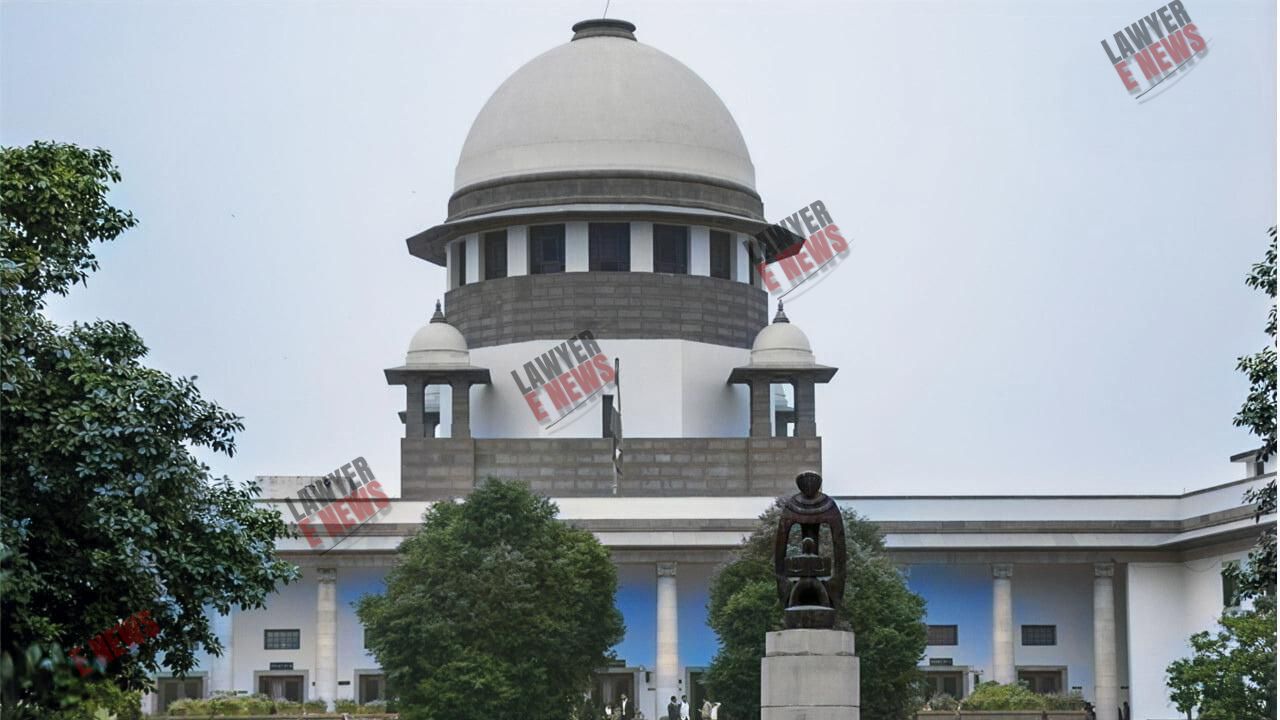
The Supreme Court, in a reportable decision, held that active facilitation of a brutal attack by transporting armed co-accused and preventing victims' escape is sufficient to infer common object under Section 149 IPC, even if the appellants did not inflict fatal blows themselves.
Supreme Court dismissed appeals by three accused—accused nos. 3, 4 and 6—against their conviction under Sections 302 and 307 read with Section 149 of the IPC, while upholding the Bombay High Court’s reversal of their earlier acquittal. The Bench comprising Justice Prashant Kumar Mishra and Justice Vipul M. Pancholi held that the Trial Court’s acquittal was manifestly unsustainable and that the High Court was justified in reappreciating the evidence and convicting the appellants for their role in a coordinated and premeditated murderous assault.
“An Assembly Armed with Deadly Weapons, Moving in Concert, Needs No Further Proof of Common Object to Kill”
The core legal issue in the appeals revolved around whether the appellants, who were neither alleged to have inflicted fatal injuries nor recovered with weapons, could be held liable under Section 149 IPC, which imposes vicarious criminal liability on all members of an unlawful assembly acting in furtherance of a common object.
Rejecting the appellants’ defence that they were passive onlookers or merely transported others to the scene, the Court observed:
“The cumulative evidence clearly shows that the appellants were not passive spectators but active participants and facilitators in a deliberate and planned assault.”
“Once participation and sharing of the common object are proved, every member becomes vicariously liable for offences committed in prosecution of that object.” [Para 42]
Brutal Killing During Wedding Festivities Led to Murder Convictions Under Section 149
The case arises from a fatal attack on 27 April 1999, following a prior altercation during a wedding procession in Pune’s Kari village. The victim, Ankush Gholap, had earlier lodged a police complaint after being assaulted. The next day, while returning from the police station in a jeep with friends and relatives, including PW-1, PW-7 and PW-9, the group was ambushed by six accused persons arriving on motorcycles.
The accused allegedly dragged the victim and others out of the jeep, and while accused nos. 1 and 2 stabbed Ankush to death with sharp-edged weapons, others including the present appellants—accused nos. 3 (Haribhau), 4 (Rajendra Shirawale), and 6 (Subhash Pawar)—either assaulted the injured witnesses or prevented their escape.
Trial Court's Acquittal Reversed: High Court Upheld Common Object Theory
The Sessions Court in Pune acquitted accused nos. 3, 4, and 5, and convicted accused nos. 1 and 2 for murder and attempted murder. Accused no. 6 was convicted for attempted murder but acquitted for murder. On appeal, the High Court reversed the acquittal of accused nos. 3, 4, and 6 under Section 302/149, holding that their presence, facilitation, and active roles satisfied the legal threshold for common object under Section 149.
In the present appeals before the Supreme Court, the appellants challenged this reversal, arguing that they had no specific role, were not armed, and that the High Court had wrongly reappreciated the evidence in the absence of any overt act.
“Trial Court Ignored Consistent Eyewitness and Medical Evidence”
The Supreme Court held that the Trial Court’s acquittal was perverse, stating:
“The Trial Court overlooked the consistent and corroborated testimony of injured eyewitnesses and failed to appreciate the legal effect of the active participation of the appellants as members of an unlawful assembly.” [Para 30]
Citing Chandrappa v. State of Karnataka (2007) 4 SCC 415, the Court reiterated that while interference with acquittal must be cautious, it is permissible when the view taken is manifestly unreasonable or contrary to evidence.
Eyewitness Testimony: Consistent, Corroborated, and Specific
Three prosecution witnesses—PW-1, PW-7 and PW-9—were found to be natural, coherent, and consistent, with the medical evidence fully corroborating their version.
PW-1 stated:
“Accused No.3 Bhausaheb took off the key of my jeep… He gave the first blow on my mouth… He and other accused dragged Ankush out of the jeep… Accused No.3 was holding Ankush while others assaulted him.” [Para 32]
PW-7 and PW-9 similarly identified all the accused and described their roles, including the use of knives and sattur (cleavers), the dragging of victims, and the coordinated attack.
The Court noted:
“The consistent narrative of these eyewitnesses leaves no room for doubt that appellants... were integral participants in the execution of the unlawful design.” [Para 37]
Medical Evidence: Grievous, Targeted Injuries Proved Premeditation
The autopsy by PW-16 showed that the victim had suffered multiple stab injuries on vital organs, including the heart, brain, and intestines, resulting in death by haemorrhagic shock.
PW-7 and PW-9 had grievous injuries, including rib fractures and internal perforations, corroborated by three doctors—PW-16, PW-19, and PW-21—who confirmed they were inflicted by sharp weapons like those seized.
“These medical findings align perfectly with the ocular evidence and highlight the brutal and coordinated nature of the attack.” [Para 40]
“Individual Infliction of Fatal Blows Is Not Required for Section 149”
The Court strongly rejected the appellants’ argument that they could not be convicted without direct assault or weapon recovery, citing Masalti v. State of U.P. (AIR 1965 SC 202) and Lalji v. State of U.P. (1989) 1 SCC 437.
It held:
“Section 149 IPC unequivocally provides that every member of an unlawful assembly is guilty... irrespective of who inflicted the fatal act.” [Para 42]
“The appellants transported the armed assailants to the scene, prevented escape, and joined the execution—this is sufficient to establish common object.” [Para 43]
High Court’s Conviction Affirmed – Appeals Dismissed
Rejecting all three appeals, the Supreme Court affirmed the conviction and sentences imposed under Sections 302 and 307 read with Section 149 IPC, ruling that:
“The High Court was correct in holding that the Trial Court’s acquittal was unsustainable, as it failed to properly appreciate the material evidence… The impugned judgment… cannot be said to suffer from any illegality, perversity or infirmity.” [Para 46]
“The ingredients of Section 149 of the IPC stand fully satisfied, rendering each appellant vicariously liable for the offences committed.” [Para 47]
Common Object Liability Demands Awareness, Not Active Stabbing
This judgment is a reaffirmation of settled law under Section 149 IPC, clarifying that:
Presence in an unlawful assembly armed with weapons;
Knowledge of the group’s objective;
Facilitation or support during the assault;
are collectively sufficient to impose vicarious criminal liability for murder, even if the accused did not personally wield a weapon or inflict fatal injury.
Date of Decision: 29 October 2025





