-
by sayum
25 August 2026 11:37 AM







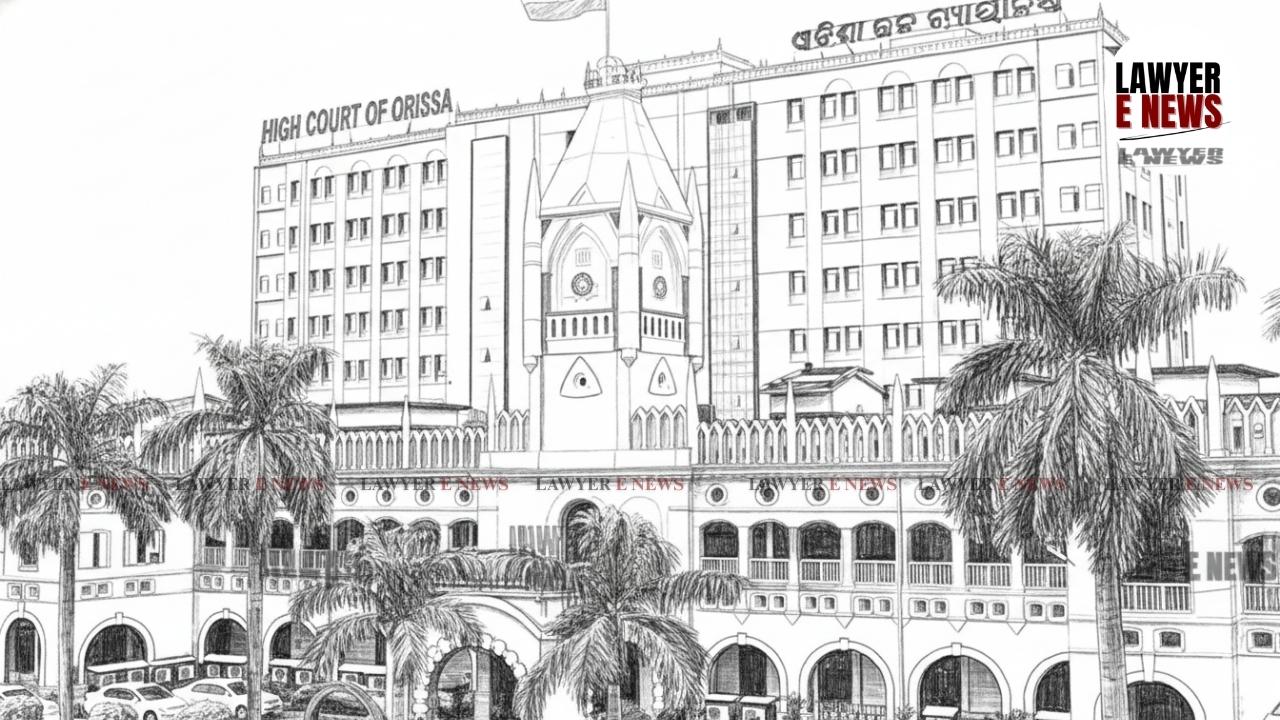
“Interference At The Middle Stage Of Examination Will Affect The Whole Administration And Management Process”, On 06 February 2026, the High Court of Orissa at Cuttack, speaking through Justice A.C. Behera, delivered a clear message on judicial restraint in examination matters while deciding W.P.(C) No. 2319 of 2026, filed by Principal, Higher Secondary School of Art and Culture, Sarakhia, Dhenkanal. The Court refused to interfere with the tagging of the petitioner’s institution with another examination centre for the Higher Secondary Examination, 2026, holding that once the examination process has substantially commenced, courts should not disturb the administrative arrangement. The writ petition was dismissed, though liberty was granted to seek recognition as an independent examination centre for future years.
“Once The Examination Has Progressed Substantially, Change Of Centre Is Impermissible”
The writ petition was instituted under Articles 226 and 227 of the Constitution of India, challenging the action of the authorities in not permitting the petitioner’s institution to function as an independent examination centre for the Higher Secondary Examination, 2026, despite having done so continuously from 2014 to 2025.
The petitioner institution has been conducting a +2 Vocational Music Course since 2011, pursuant to permission dated 18.08.2011 and recognition dated 29.12.2011. It was asserted that the institution is an unaided institution under Section 3(p) of the Orissa Education Act, 1969, and not a self-financing institution. For the academic year 2025–26, 51 second-year students had filled up forms to appear in the Higher Secondary Examination, 2026.
The controversy arose when the institution was erroneously shown as a self-financing institution, resulting in its tagging with Dhenkanal Higher Secondary School for theory examinations. Although this error was later corrected by the Director, Higher Secondary Education, Odisha through Office Order dated 13.01.2026, the examination centre arrangement remained unchanged.
The petitioner emphasized that practical examinations were already conducted smoothly in its own premises, and only the theory examinations, scheduled from 19.02.2026, remained. It was contended that since question papers are routed through hubs, there was “no legal or logistical impediment” in permitting the theory examination to be conducted in the petitioner’s institution as well.
“Change Of Examination Centre At This Juncture Will Affect The Entire Examination Process”
Rejecting the plea, the High Court placed decisive weight on the stage of the examination process. Justice A.C. Behera observed that the Higher Secondary Examination, 2026 had already progressed substantially, with practical examinations concluded and theory examinations imminent.
The Court categorically held:
“When the Higher Secondary Examination, 2026 of the students of the petitioner’s institution has already been progressed substantially… then at this juncture, any interference… for the change of examination centre shall ultimately affect the whole administration/management/process of examination.”
The Court made it clear that correction of the classification error, whereby the institution was rightly declared as non-self-financing, could not by itself justify a mid-course alteration of the examination centre.
The administrative convenience of the examination authority, certainty in examination logistics, and avoidance of disruption were treated as overriding considerations. The Court declined to issue a mandamus directing conduct of the 2026 theory examination in the petitioner’s premises.
Judicial Review Under Articles 226 And 227 – “Restraint Is The Rule In Ongoing Examinations”
The judgment reinforces the settled principle that courts should exercise restraint in matters concerning examination administration, particularly when the examination cycle has already commenced.
Justice Behera concluded that:
“The question of allowing such prayer of the petitioner for changing the examination centre at the midst of the examination does not arise.”
Accordingly, the writ petition was found to be devoid of merit and dismissed.
However, balancing equities, the Court granted prospective relief, directing the authorities to consider any application made by the petitioner for declaration as an independent examination centre for the Higher Secondary Examination, 2027 onwards, thereby keeping the petitioner’s future rights intact.
The Orissa High Court’s decision draws a firm boundary against judicial interference during an ongoing examination process, even where an administrative error has been acknowledged and rectified. The ruling underscores that stability, certainty, and administrative feasibility in examinations outweigh individual inconvenience once exams are underway, while still preserving institutional remedies for subsequent academic years.
Date of Decision: 06 February 2026