-
by sayum
28 August 2026 2:11 PM







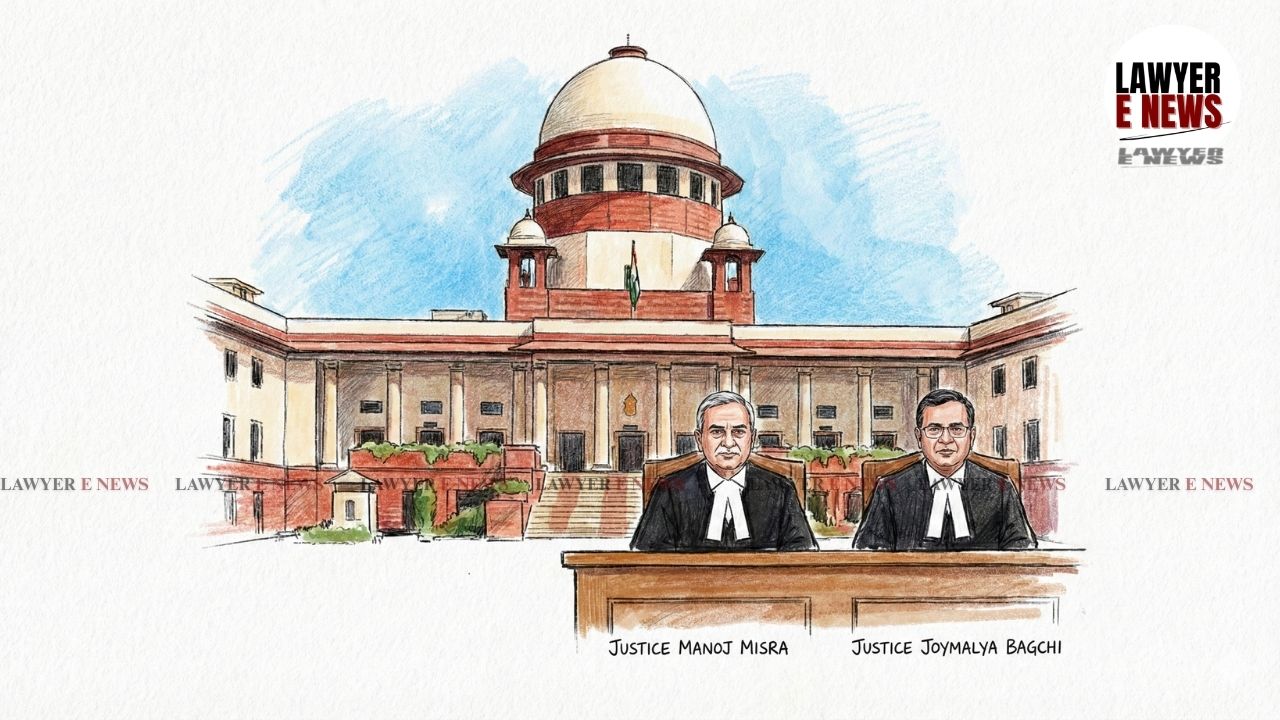
“Pursis claiming ‘no instructions’ does not amount to withdrawal of vakalatnama; litigants can’t exploit procedural confusion to undo decrees” —In a decisive judgment with significant implications for civil procedure and the supervisory jurisdiction of High Courts, the Supreme Court set aside a Bombay High Court order that had remanded an eviction suit on the ground that the defendant’s counsel had submitted a “no instructions” pursis without formally withdrawing his vakalatnama.
Allowing the appeal, the Bench of Justice Manoj Misra and Justice Joymalya Bagchi held that the High Court had exceeded its jurisdiction under Article 227 of the Constitution by interfering with a well-reasoned appellate decision which had refused to grant relief to a negligent defendant who failed to respond or contest proceedings for over three months.
The Court observed:
“The High Court without any justification went on to consider the procedure prescribed for withdrawal of Vakalatnama when neither withdrawal of Vakalatnama was permitted by the Trial Court nor the pursis prayed for its withdrawal. In such circumstances, the entire exercise of the High Court was misconceived.”
Litigants Cannot Hide Behind Advocates’ ‘No Instructions’ Plea While Staying Silent Themselves: Supreme Court Endorses Appellate Court’s View
The dispute arose from a 2014 eviction suit filed under Sections 16(1)(g) and (n) of the Maharashtra Rent Control Act, 1999. The defendants, including a trading firm and its partners, were duly served summons but failed to appear. The Trial Court proceeded ex parte, later recalled the order on their application, and allowed the defendants to file a written statement.
Subsequently, the advocate representing the defendants filed a pursis (Exhibit 42), stating that he was receiving no instructions from his clients. Crucially, no application for withdrawal of the vakalatnama was filed. Attached to the pursis was a letter dated 20.11.2014, sent by the advocate to the clients via RPAD, cautioning them that he would not be able to proceed unless contacted. Despite this, the defendants took no steps to engage another counsel or appear before the Court.
The Trial Court proceeded to decree the suit on March 4, 2015. This decree was challenged in appeal under Section 34 of the 1999 Act, where the Appellate Court scrutinized the facts in detail and rejected the argument that the defendants were denied an opportunity.
The Appellate Judge observed:
“The appellants cannot take the benefit of their own casualness and inaction at all levels… They cannot play hide and seek in their pleadings by remaining silent about this important aspect.”
The Appellate Court further noted that the RPAD notice raised a presumption of service, and the defendants had neither denied receipt nor contested the suit after being made aware. It concluded that:
“There was no withdrawal of vakalatnama... The course adopted by the learned Trial Court was perfectly legal within the parameters of the Advocates Act and Civil Manual.”
High Court Misapplied Procedural Rules, Ignored Material Findings: Supreme Court Cautions Against Expanding Article 227 Jurisdiction
The High Court, however, interfered with the appellate order under Articles 226 and 227 of the Constitution, relying heavily on Clause 660(4) of the Civil Manual and Rule 8(4) of the Bombay High Court Appellate Side Rules, 1960. It held that the notice sent by the advocate was posted just a day before the ‘no instructions’ pursis was filed, and there was no proof of service on the client, thus violating the procedural requirements.
The High Court concluded that the defendant was deprived of the opportunity to present its case and remanded the matter to the Trial Court.
But the Supreme Court decisively overturned this view. Citing Radhey Shyam v. Chhabi Nath (2015) 5 SCC 423, the Bench held that:
“Article 227 jurisdiction is not meant to substitute one plausible view with another… unless there is a jurisdictional error, or failure of justice, the supervisory power cannot be used to displace considered findings.”
The apex court underscored that the Appellate Court had considered all relevant facts, including:
The Court concluded:
“The view taken by the appellate court that defendant cannot take advantage of his own wrong was a plausible view based on materials available on record.”
Accordingly, the High Court’s order of January 30, 2023, was quashed, and the Trial Court’s decree as affirmed in appeal was restored.
When Lawyers Say “No Instructions”, It’s Still the Litigant’s Duty to Act: A Cautionary Tale for Parties and the Bar
This judgment is a crucial reminder that litigants cannot simply blame advocates or procedural technicalities to undo adverse decrees. The Court noted:
“It would have been a different case if the appellant had made a statement that the notice dated 20.11.2014 was not received… But he did not. The fault lies with the party, not the lawyer.”
Interestingly, the Court also observed that no disciplinary action had been initiated against the advocate, indicating that even the defendants were not serious in alleging professional misconduct.
From an advocate’s perspective, the ruling also reasserts that a “no instructions” pursis is not tantamount to withdrawal of appearance unless backed by formal procedures laid down under the Advocates Act, Civil Manual, or High Court Rules. The Supreme Court has thus drawn a clear procedural distinction between withdrawal and non-participation, rejecting attempts to conflate the two.
Judicial Efficiency Prevails Over Procedural Excuses
The Supreme Court has once again sent a strong signal to litigants and the bar that supervisory jurisdiction is not a sandbox for relitigating settled matters. Where a party fails to act despite ample opportunity and due notice, courts are not bound to accommodate excuses dressed in procedural formality.
In the words of the Court:
“Appellate court’s order was not amenable to interference… The High Court clearly exceeded its jurisdiction.”
The appeal was allowed, and the High Court’s remand was set aside — a firm affirmation of finality in litigation, judicial discipline, and responsibility of parties to actively participate in their own cases.
Date of Decision: 18 November 2025