
-
by sayum
26 August 2026 1:49 PM







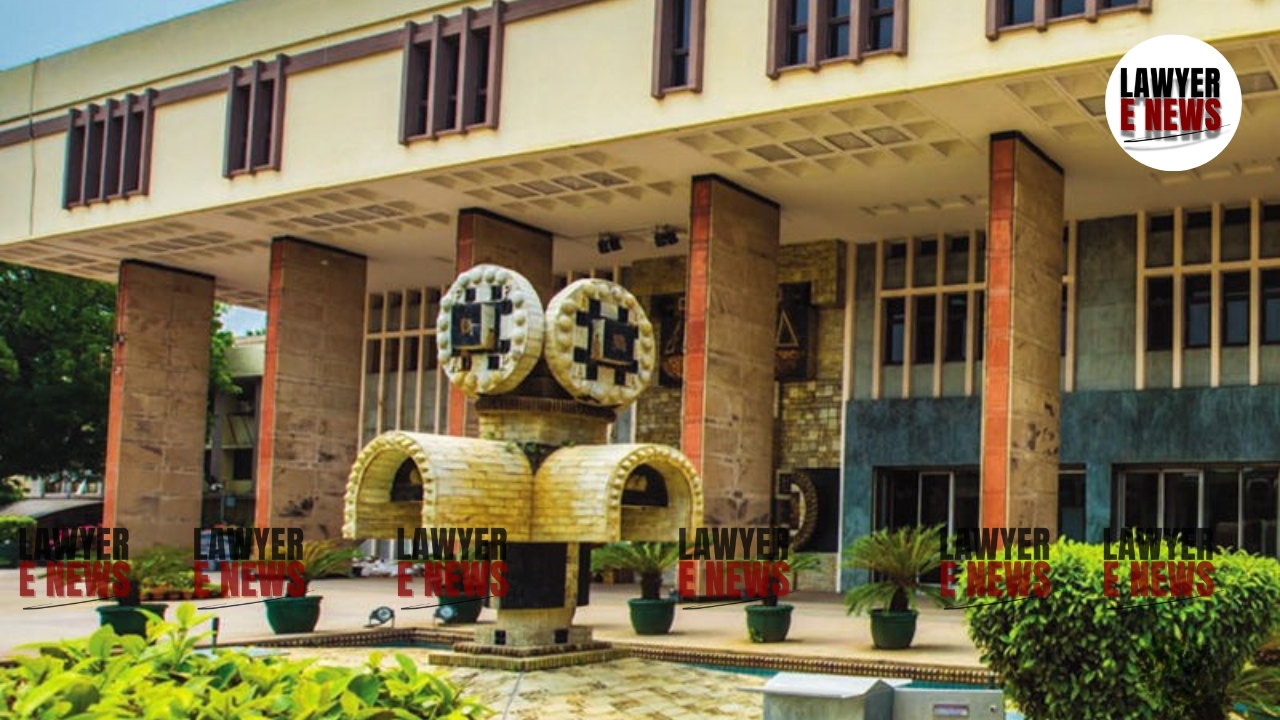
“Testimony Lacks Sterling Quality”, Delhi High Court, in a reportable judgment authored by Justice Manoj Kumar Ohri, allowed two criminal appeals and set aside the conviction of Naushad @ Bombay and Salman, who had been convicted by a trial court in a 2019 robbery case. The appellants were previously held guilty under Sections 392/34 IPC, with Naushad additionally convicted under Section 397 IPC for allegedly using a pistol in the robbery.
The Court observed: “The complainant’s testimony, marred by material improvements and contradictions, cannot be the sole basis for conviction. When evidence is not of sterling quality, it cannot be relied upon to uphold a conviction.” [Para 14]
The decision underscores a critical principle in criminal law — that liberty cannot be sacrificed at the altar of uncorroborated and inconsistent testimony, especially when no recovery of stolen property or weapon is made, and no independent witnesses are joined.
The case originated from an FIR (No. 163/2019) lodged on May 16, 2019, at PS Mayur Vihar, Delhi, based on the complaint of one Ram Kishore, who alleged that two persons robbed him of four gold rings and ₹5010, allegedly at gunpoint, on a public road in broad daylight.
According to the complainant, the accused came on a scooty, stopped him, and robbed him — with Naushad allegedly wielding a pistol. The police later arrested Naushad and Salman in another case and claimed that both admitted to their involvement in this robbery as well.
The trial court, relying predominantly on the deposition of the complainant, convicted both appellants. Naushad was sentenced to 7 years of rigorous imprisonment under Sections 392/34/397 IPC, and Salman to 4 years under Section 392/34 IPC.
Delayed and Contradictory Allegations Regarding Use of Weapon
“The pistol was conspicuously absent from the complainant’s initial statement and mysteriously introduced hours later at 11 PM in his police statement — this is a material improvement.” [Para 9]
The Court noted that GD Entry No. 46A, recorded soon after the incident, made no mention of a weapon. The introduction of the pistol much later, during the formal recording of the statement, was found to be a significant contradiction.
Material Improvements in Court Testimony
“The complainant’s deposition is riddled with contradictions. What he left out in the FIR, he invented in court.” [Para 10]
Key inconsistencies included:
No initial mention of the accused asking for directions.
No reference to them stopping their scooty in front of his bike.
Absence of any description of the assailants or the scooty.
The Court stated that such omissions were not minor but struck at the heart of the prosecution's case.
No Recovery of Weapon or Robbed Property
“Not only were the robbed articles never recovered, but the pistol allegedly used was never exhibited in the present trial — despite being available in another case involving the same accused.” [Para 12]
This, the Court noted, fatally weakened the link between the accused and the alleged offence.
Non-Joining of Public Witnesses
Although the robbery took place in broad daylight on a busy road, no public witness was examined. The Court held:
“While non-joining of public witnesses may not be fatal in every case, it becomes crucial where the prosecution’s sole witness lacks credibility.” [Para 13]
The Court relied on the Supreme Court’s decision in Gian Chand v. State of Haryana, (2013) 14 SCC 420, to reinforce this position.
Test Identification Parade (TIP) Not Conducted, In-Court Identification Unreliable
Though the appellants refused to participate in the TIP, they explained that their photos were shown to unknown individuals at the police station, casting doubt on the reliability of any subsequent identification.
“The refusal to participate in TIP, coupled with absence of initial description, renders the complainant’s in-court identification unreliable.” [Para 12]
Discrepancies Between Complainant and Police Witnesses
The complainant claimed that SHO and PCR officials arrived, recorded his statement, and that he later went to the police station. However, ASI Sunil Kumar, the first police officer to arrive at the scene, completely contradicted this version.
“The complainant's narrative of the police's role appears to be a figment of imagination, unsupported by any officer's testimony.” [Para 11]
Justice Manoj Kumar Ohri delivered a clear and unequivocal conclusion:
“While each contradiction may not be fatal alone, taken together, they shake the very foundations of the prosecution’s version.” [Para 14]
“Despite the incident occurring in a public place, the lack of any recovery, the inconsistencies in testimony, and the absence of public witnesses cumulatively lead this Court to conclude that the prosecution has failed to prove its case beyond reasonable doubt.” [Para 14]
The Court, therefore, held that the conviction was not sustainable in law and:
“The complainant’s deposition is not of a sterling quality that could stand on its own.” [Para 14]
The appeals were allowed.
The conviction of Naushad under Sections 392/34/397 IPC and of Salman under Section 392/34 IPC was set aside.
Both appellants were acquitted of all charges.
Naushad, who had served over six years in custody, was directed to be released forthwith, if not wanted in any other case.
Salman, whose sentence was already suspended, had his bail bonds cancelled and sureties discharged.
This judgment is a firm reiteration of the principle that criminal conviction cannot rest on uncorroborated, inconsistent, and improved testimony, especially in the absence of recoveries, corroborating witnesses, and reliable identification.
“When prosecution evidence is anything but cogent and reliable, and the sole witness improvises at every stage, the Court must intervene to prevent miscarriage of justice.”
By demanding sterling quality of evidence, especially in serious offences involving allegations of armed robbery, the Delhi High Court has reaffirmed the judiciary’s role as a protector of individual liberty and due process.
Date of Decision:13 August 2025





