-
by sayum
05 October 2026 9:18 AM







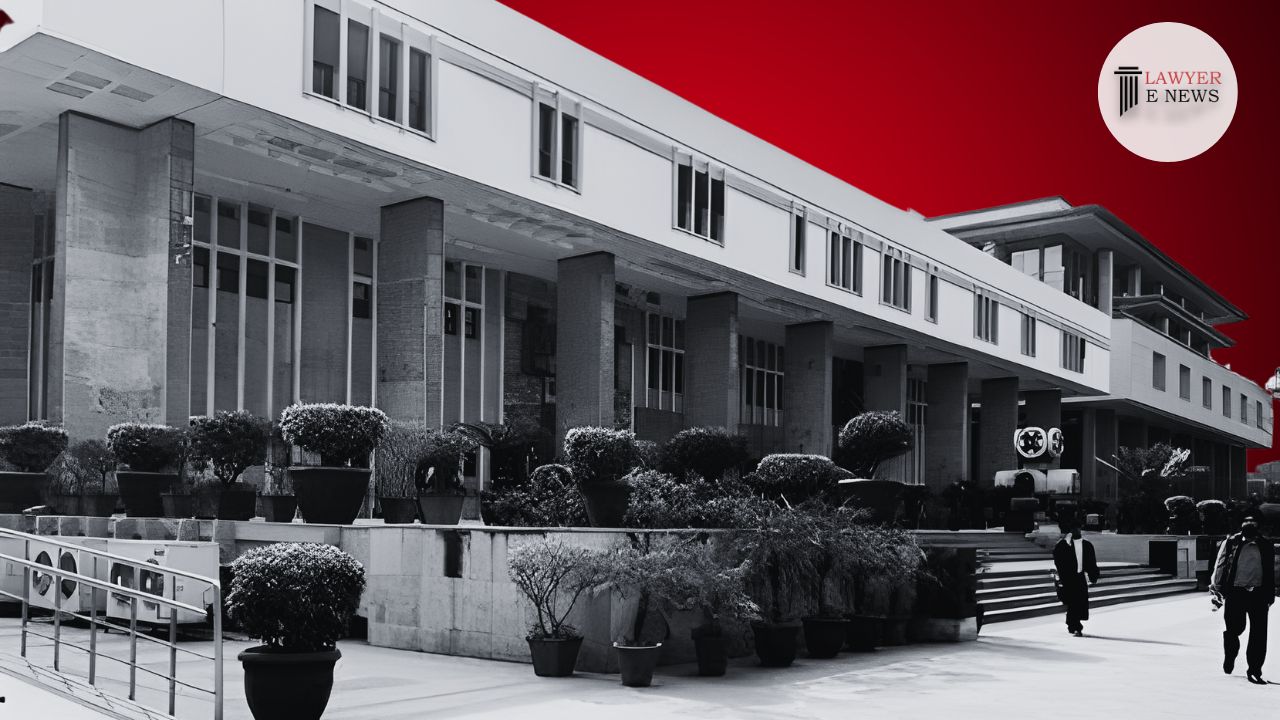
In a significant judgment, the High Court of Delhi dismissed an appeal against the decision of the Railway Claims Tribunal, which had previously rejected a compensation claim under the Railway Claims Tribunal Act. The appellants, Suresh Kumar Sharma & Anr., had approached the High Court challenging the Tribunal's order that denied compensation for the death of Nishant Sharma, who allegedly died due to an accidental fall from a train.
Justice Dharmesh Sharma, presiding over the case, meticulously analyzed the evidence and testimonies presented. The judgment, pronounced on January 25, 2024, emphasized, "In the absence of any supporting evidence, the self-serving statement of the applicant regarding the deceased having a journey ticket and being a bonafide passenger on board the 2MNR train cannot be accepted." This observation was pivotal in determining the outcome of the appeal.
The case revolved around the incident that occurred on January 1, 2011, where the deceased was alleged to have fallen from a train due to overcrowding and was subsequently crushed by another train. The appellants sought a compensation of Rs. 4,00,000 from the respondent railways.
However, the court noted inconsistencies in the appellants' claims, especially regarding the deceased's status as a bonafide passenger. The court remarked, "The Jamatalashi of the deceased, which was taken soon after the accident, shows that his bag containing books and mobile phone were recovered from the site and there was no recovery of any journey ticket."
Further, the court observed, "The evidence on record does not show that the death of the deceased was due to any accidental fall from a train. On the contrary, his death was due to getting hit by the engine of the train while he was walking along the track." This observation was critical in upholding the Tribunal's decision.
The appellants had placed reliance on the testimony of AW-2 Sh. Shailesh Chaubey, who claimed to be an eyewitness. However, the court found his evidence unconvincing, noting the absence of his mention in crucial documents, including the death report and the post-mortem report.
In conclusion, the court dismissed the appeal, underscoring the lack of evidence to substantiate the claims of the appellants. This judgment serves as a reminder of the stringent standards of proof required in such compensation claims and the necessity for claimants to establish their case with credible evidence.
Date of Decision: 25 January 2024
SURESH KUMAR SHARMA & ANR VS UNION OF INDIA THR GM