-
by sayum
23 August 2026 2:56 PM







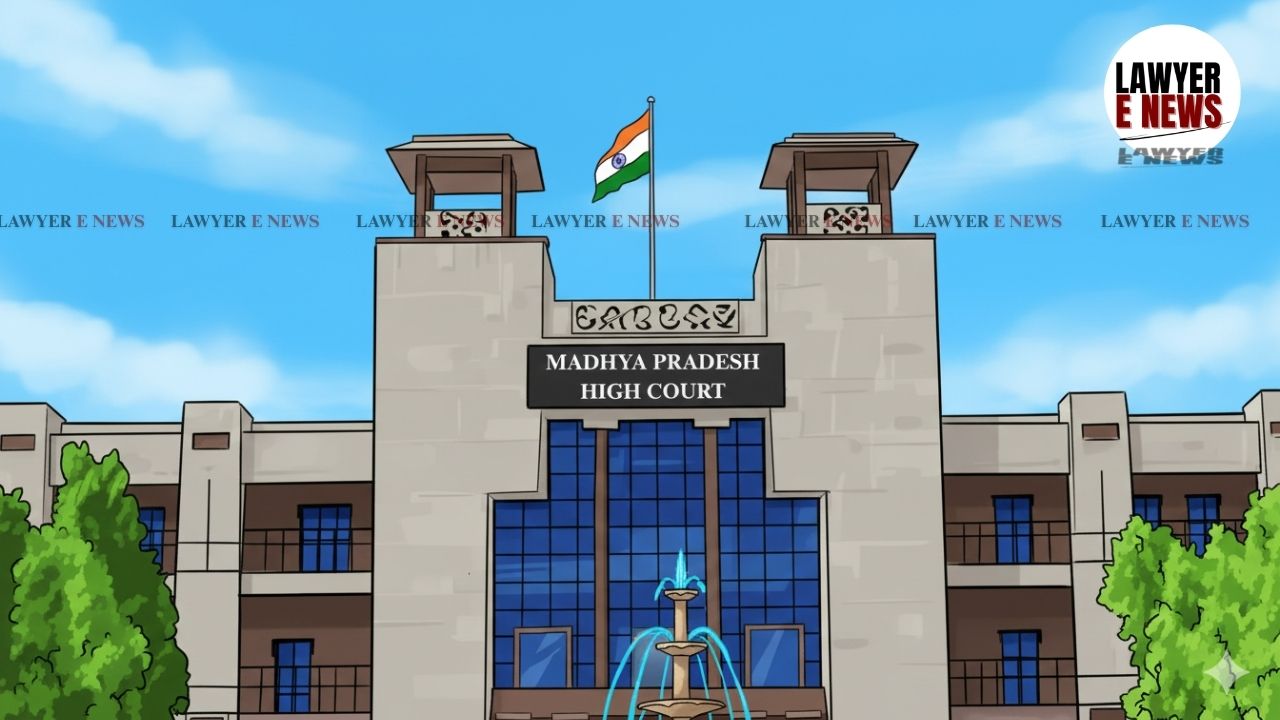
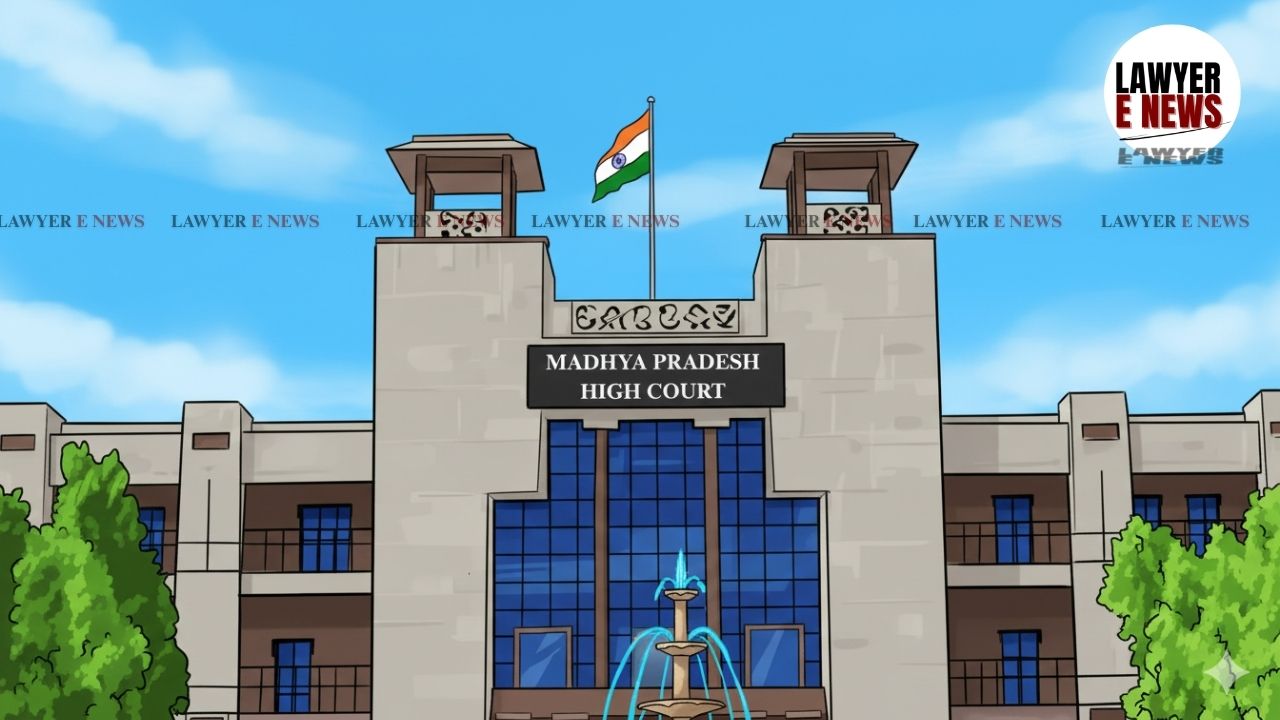
“No new rights can be created post winding-up to defeat pari passu distribution among creditors” – High Court of Madhya Pradesh at Indore, in a significant ruling concerning adjudication of claims in company liquidation proceedings, dismissed a batch of miscellaneous company appeals filed by creditors and shareholders of M/s Nandlal Bhandari & Sons Pvt. Ltd., upholding the decision of the Official Liquidator to restrict interest on deposits to 1.5% per annum, as per a Board Resolution dated 28.04.1972.
The judgment by Justice Pavan Kumar Dwivedi in MCOMA No. 2 of 2025 and connected appeals reaffirms the principle that in absence of any contractual or statutory right to a higher interest, the Official Liquidator’s adjudication, based on binding resolutions and company records, is legally sound. The Court also held that no allegations of mismanagement or siphoning of funds could override the procedure prescribed under the Companies (Court) Rules, 1959, particularly Rules 156 and 179, which cap interest claims in absence of express agreements.
“Interest not exceeding 4% p.a. permissible in absence of agreement; Board Resolution allowing 1.5% binds all depositors” – Court interprets Company Rules strictly
The appeals arose from creditors’ challenge to the Official Liquidator’s rejection of their demand for interest at 12% per annum on their deposits, and instead awarding interest at 1.5%, as per the company’s internal resolution.
The appellants, who were both shareholders and creditors, contended that they were entitled to higher interest either on the basis of implied contractual expectations or parity with other creditors who were allegedly awarded 9% interest through prior settlements. One of the key arguments made was that the 1972 Board Resolution reducing interest to 1.5% was unilateral, lacked the appellants’ consent, and was passed after the majority shareholders had allegedly adjusted their own deposits to their benefit.
Rejecting these contentions, the Court observed:
“There is complete absence of any document so as to show that there was agreed rate of interest of 12% per annum… In absence of either [agreement or reservation], this Court is unable to hold that the appellant is entitled for interest at the rate of 12% per annum.” [Para 8]
The Court closely examined Rule 156 and Rule 179 of the Companies (Court) Rules, 1959, which govern claims for interest in liquidation, and emphasized:
“Both the Rules provide that in absence of any reserved rate of interest on debt… it will carry interest at the rate not exceeding 4% per annum.” [Para 9]
Since the Board Resolution dated 28.04.1972 had fixed the applicable interest rate at 1.5%, and no contrary agreement was proven, the Court found no illegality in the Official Liquidator’s adjudication under Rule 163, which formalizes acceptance or rejection of creditors' claims.
Post-Winding Up Claims Cannot Upset Pari Passu Distribution Among Creditors
A critical legal foundation of the judgment was drawn from the Supreme Court’s decision in J.K. (Bombay) (P) Ltd. v. New Kaiser-I-Hind Spg. & Wvg. Co. Ltd., [1968 SCC OnLine SC 32], which the High Court relied on to underline the sanctity of pari passu distribution in liquidation.
Quoting the principle that:
“No new rights can thereafter be created and no uncompleted rights can be completed. For doing so would be contrary to the creditors' right to have the proceeds of the assets distributed among them pari passu,” [Para 9]
the Court dismissed the argument that any pre-winding up correspondence or notices from the appellant demanding 12% interest created a legally enforceable right to that effect.
Justice Dwivedi ruled:
“At this stage, it cannot be held that the appellant is entitled for 12% per annum interest on his deposits… Form 70 issued under Rule 163 accepting the claims with interest at 1.5% is valid and legal.” [Para 10]
Allegations of Mismanagement and Siphoning of Funds Deemed Irrelevant to Liquidation Claim Adjudication
One of the repeated submissions from the appellants was that the majority shareholders had deliberately protected their own interests by securing their deposits before reducing the interest rate via the Board Resolution. The appellants alleged discriminatory treatment and mismanagement, including diversion of assets and preferential payments.
However, the Court held that:
“The action of the majority shareholders group was never challenged for mis-management… And in any case that issue is not relevant for the purpose of the present case.” [Para 10]
The Court reiterated that liquidation proceedings have a limited scope, and unless the Board Resolution itself is challenged through appropriate proceedings, the Official Liquidator is bound to act in accordance with the records available and established procedures under company law.
Failure to Prove Additional Claims – Director’s Remuneration and Third Party Payments Also Rejected
In MCOMA No. 6 of 2024, one appellant had additionally sought remuneration for serving as Director from May 1972 to June 1975, and reimbursement of payments allegedly made to Narmada Valley Chemical Industries Pvt. Ltd., MPEB, and Indore Municipal Corporation.
The Court upheld the rejection of these claims by the Official Liquidator, noting:
“No proof in respect of claim towards cost awarded by the Court… or payments made to these entities are furnished.” [Para 12]
Regarding the claim for Director’s remuneration, the Court recorded:
“No specific order regarding payment of remuneration was furnished to this office… There are no documents which would show the claims as made by the appellant before the Official Liquidator.” [Para 12]
Thus, in the absence of adequate documentary evidence or statutory entitlement, all such additional claims were dismissed.
The High Court has once again reinforced the strict procedural discipline that governs liquidation proceedings under the Companies Act, 1956, and the Companies (Court) Rules, 1959. The ruling is a reminder that claims against a company under liquidation must be strictly proved, and any assertion of interest beyond statutory limits must be backed by express agreement or reservation.
“Adjudication by the Official Liquidator under Rule 163 was lawful and not arbitrary… No error or infirmity found in limiting the rate of interest to 1.5% per annum.” [Para 11]
Date of Decision: 08 January 2026