-
by sayum
27 August 2026 3:32 PM







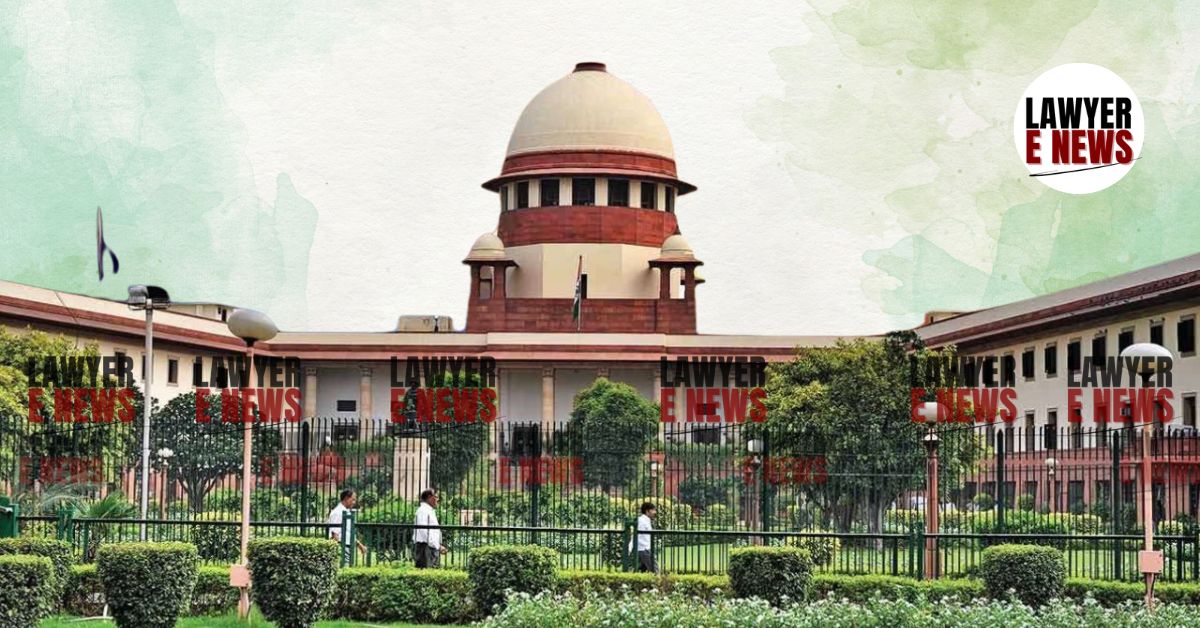
“High Court Has No Jurisdiction to Interfere Once Election Process Begins — The Only Remedy Is an Election Petition”, In a strongly worded judgment upholding the constitutional sanctity of the electoral process, the Supreme Court of India striking down a controversial interim order of the Uttarakhand High Court that had allowed a disqualified Panchayat election candidate to re-enter the fray after the electoral process had concluded and a rival candidate had been elected unopposed.
Calling the interference "a transgression of constitutional limits," the Bench of Justices Vikram Nath and Sandeep Mehta ruled that the High Court had acted in direct contravention of Article 243-O of the Constitution, which imposes a clear and express bar on judicial intervention in Panchayat elections except through a statutorily governed election petition.
"The High Court committed a manifest error," the Court said, "in acting in the teeth of the constitutional embargo contained in Article 243-O."
“Where Statutory Election Remedy Exists, Article 226 Cannot Be Invoked as a Substitute”: SC Cautions Against Judicial Adventurism in Electoral Matters
The core legal issue before the Court was whether the High Court could entertain a writ petition challenging the rejection of a nomination paper during Panchayat elections — despite the fact that the Uttarakhand Panchayati Raj Act, 2016 provides a complete statutory remedy under Section 131H.
The Supreme Court answered with clarity and finality: No.
"It would not be permissible for respondent No. 1 to seek enforcement of compliance with the provisions of the Panchayati Raj Act... while at the same time electing to bypass the statutorily prescribed remedy available under the said enactment," the Bench held.
The judgment restores the unopposed election of appellant Sandeep Singh Bora, whose victory had been undermined by a last-minute Division Bench order that permitted the rejected candidate, Narendra Singh Deopa, to contest the elections without even hearing the elected appellant.
"The High Court proceeded to stay the order of the learned Single Judge... without affording an opportunity of hearing to the appellant, who stood directly and adversely affected,” the Court noted with disapproval.
“A Constitutional Non-Obstante Clause Cannot Be Side-Stepped for Individual Convenience”: SC on Article 243-O
The Supreme Court forcefully reasserted the legal effect of Article 243-O(b), which prohibits questioning any Panchayat election except through an election petition:
"Article 243-O(b) of the Constitution makes it abundantly clear that no election to any Panchayat can be called in question except by way of an election petition presented to such authority and in such manner as may be provided by the State Legislature.”
The Court reminded the High Courts that the existence of a specific election mechanism is not a technicality to be circumvented by invoking writ jurisdiction under Article 226.
Quoting from Harnek Singh v. Charanjit Singh, the Bench reaffirmed:
“Article 243-O of the Constitution mandates that all election disputes must be determined only by way of an election petition... ordinarily such jurisdiction would not be exercised.”
“Smooth and Uninterrupted Elections Are a Matter of Public Interest — Not to Be Halted by Individual Grievances”: Supreme Court
In a cautionary note directed at the judiciary, the Supreme Court emphasized that elections are not personal disputes but processes of public importance:
“The election process cannot be lightly interdicted or stalled at the behest of an individual grievance... The High Court must eschew the grant of liberal interim reliefs in favour of individuals and instead remain mindful of the overarching public interest.”
The Court further underlined that the right to contest or question an election is a statutory right, not a fundamental one, and must be exercised in accordance with statutory procedure. It observed:
“Given the non-obstante nature of Article 243-O of the Constitution, its mandate is required to be adhered to in both letter and spirit.”
Division Bench Ignored Completed Election and Issued Order Without Hearing Affected Party: SC Terms It Procedurally Unsustainable
The interim order passed by the High Court’s Division Bench not only violated constitutional limitations, but also fundamental principles of natural justice, the Supreme Court noted.
On July 11, 2025, after Deopa’s nomination was rejected for non-disclosure of a prior criminal case, and his writ petition was dismissed, Sandeep Singh Bora was declared elected unopposed. However, without impleading Bora in the appeal, Deopa approached the Division Bench, which passed an interim order permitting him to contest.
The apex court found this unacceptable:
“The High Court... issued directions contrary to a process which had already attained finality with the appellant having been declared elected unopposed.”
“Statutory Election Framework Cannot Be Bypassed Merely Because a Candidate Disagrees With a Nomination Rejection”: Apex Court
The Supreme Court clarified that even if the rejection of Deopa’s nomination was improper — a claim based on an alleged non-disclosure of an acquittal — the law provides a direct remedy under Section 131H(1)(b) of the Uttarakhand Panchayati Raj Act, 2016:
“Section 131H contemplates a situation where the result of an election has been materially affected by the improper acceptance or rejection of a nomination.”
“The appropriate remedy lay within the framework of the Panchayati Raj Act itself,” the Court held, dismissing the notion that writ courts can pre-empt statutory mechanisms.
SC Relies on Foundational Precedents to Reassert Judicial Restraint in Election Matters
The judgment draws upon foundational authorities including:
Upholding Election Integrity Over Expedient Remedies
Summarizing its conclusions, the Court declared:
“Where the statute provides a complete and efficacious mechanism for redressal, the extraordinary exercise of jurisdiction under Article 226... would defeat the very object for which Article 243-O was enacted.”
The appeal was allowed. The High Court's interim order was set aside. The unopposed election of Sandeep Singh Bora stands upheld.
In doing so, the Supreme Court once again reminded all constitutional courts that the rule of law in elections lies not in what may seem expedient, but in what the Constitution commands.
Date of Decision: February 2, 2026