-
by sayum
13 October 2026 6:59 AM







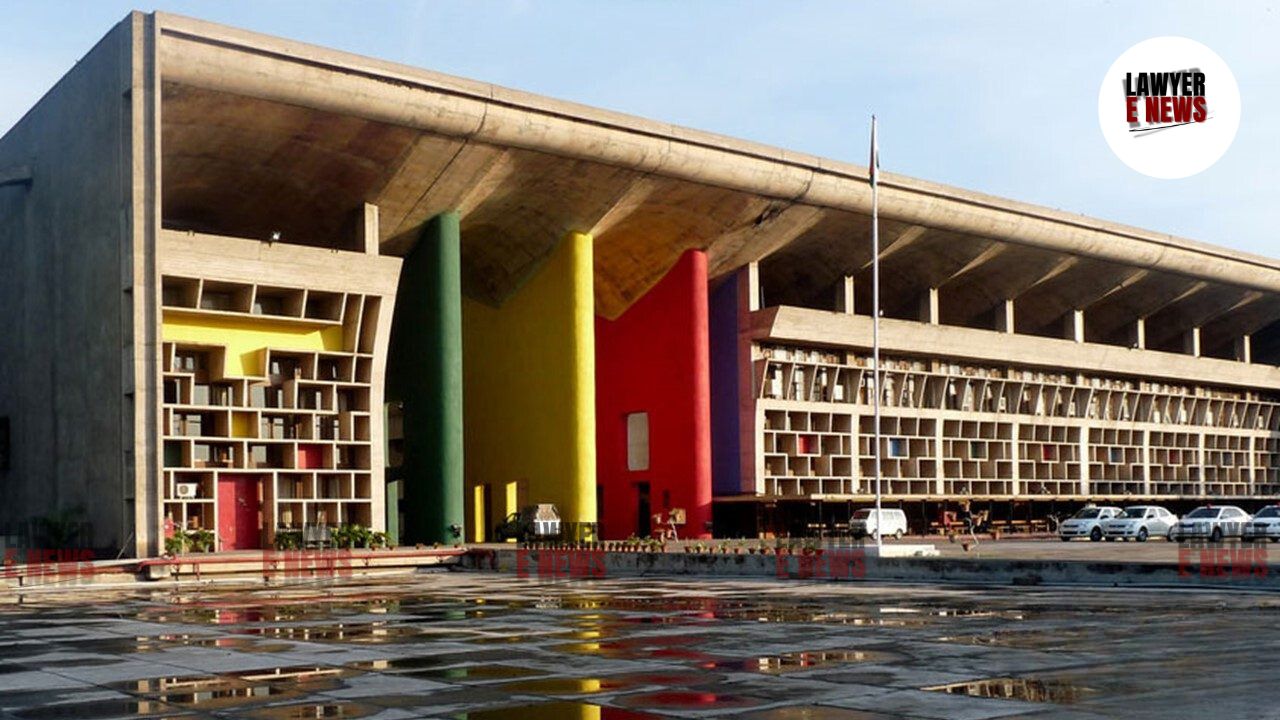
"The doctrine of double jeopardy under Article 20(2) of the Constitution of India is not applicable in service jurisprudence." Punjab and Haryana High Court, in a significant ruling, held that an authority’s decision to treat a period of suspension as 'non-duty' following the conclusion of disciplinary proceedings does not constitute double jeopardy.
Justice Sudeepti Sharma, while dismissing a writ petition filed by a driver, observed that such an order is a natural consequence of the disciplinary action taken against the employee and not a fresh penalty.
The petitioner, a driver appointed in 2007, challenged an order dated February 10, 2023, which treated his suspension period from March 7, 2019, to May 11, 2022, as a period not spent on duty. The petitioner had originally been placed under suspension and subsequently faced disciplinary proceedings. During the inquiry, the petitioner confessed to the charges, tendered an apology, and sought reinstatement on compassionate grounds, ultimately accepting the penalty of the stoppage of two annual increments with cumulative effect for five years.
The Question Of Double Jeopardy
The primary question before the court was whether the respondents' decision to treat the suspension period as 'non-duty' after having already imposed a penalty of withholding increments amounted to illegal 'double jeopardy.' The court was also called upon to determine whether the principles of natural justice were violated by failing to issue a fresh show-cause notice before treating the suspension as a non-duty period.
Court Clarifies Regulatory Framework
The court analyzed the scope of Rule 7.3 and Rule 7.3-B of the Punjab Civil Services Rules, Volume 1 (Part 1). Relying on the Supreme Court’s decision in Sukhdarshan Singh Vs. The State of Punjab and Others, the bench noted that the competent authority is statutorily empowered to make a specific order regarding pay and allowances upon the reinstatement of an employee. The court emphasized that when an employee is found guilty or fails to be fully exonerated, the authority has the discretion to decide whether the period of absence—including suspension—should be treated as duty or otherwise.
"Suspension Period Decision Is A Consequence Of Punishment"
Justice Sharma observed that the determination of the suspension period is not an independent penalty, but a consequential act following the disciplinary outcome. The court reiterated that since the petitioner had explicitly pleaded guilty and accepted the disciplinary findings, he could not subsequently claim that the resulting administrative orders were arbitrary.
"No Violation Of Natural Justice"
The court rejected the petitioner's argument regarding the lack of a show-cause notice. Given that the petitioner had admitted to the charges and requested leniency, the requirement for a fresh notice was rendered unnecessary. The court held that the procedural safeguard of natural justice had been satisfied by the inquiry process which the petitioner himself had facilitated by admitting guilt.
Reference To Recent Precedents
The bench drew heavily from its recent coordinate bench ruling in State of Punjab and Others Vs. Hardial Singh, which clarified that treating a suspension period as non-duty is a standard administrative consequence of a disciplinary order. The court reaffirmed that the doctrine of double jeopardy, as enshrined in Article 20(2) of the Constitution, is limited to criminal proceedings and does not extend to service jurisprudence or departmental administrative actions.
Final Order And Implications
Concluding the matter, the court found no merit in the petition, noting that the petitioner had voluntarily accepted the disciplinary action and its consequences. The writ petition was consequently dismissed, reinforcing the authority of state departments to determine the status of suspension periods in accordance with the Punjab Civil Services Rules.
Date of Decision: 24 August 2026