-
by sayum
25 August 2026 12:32 PM







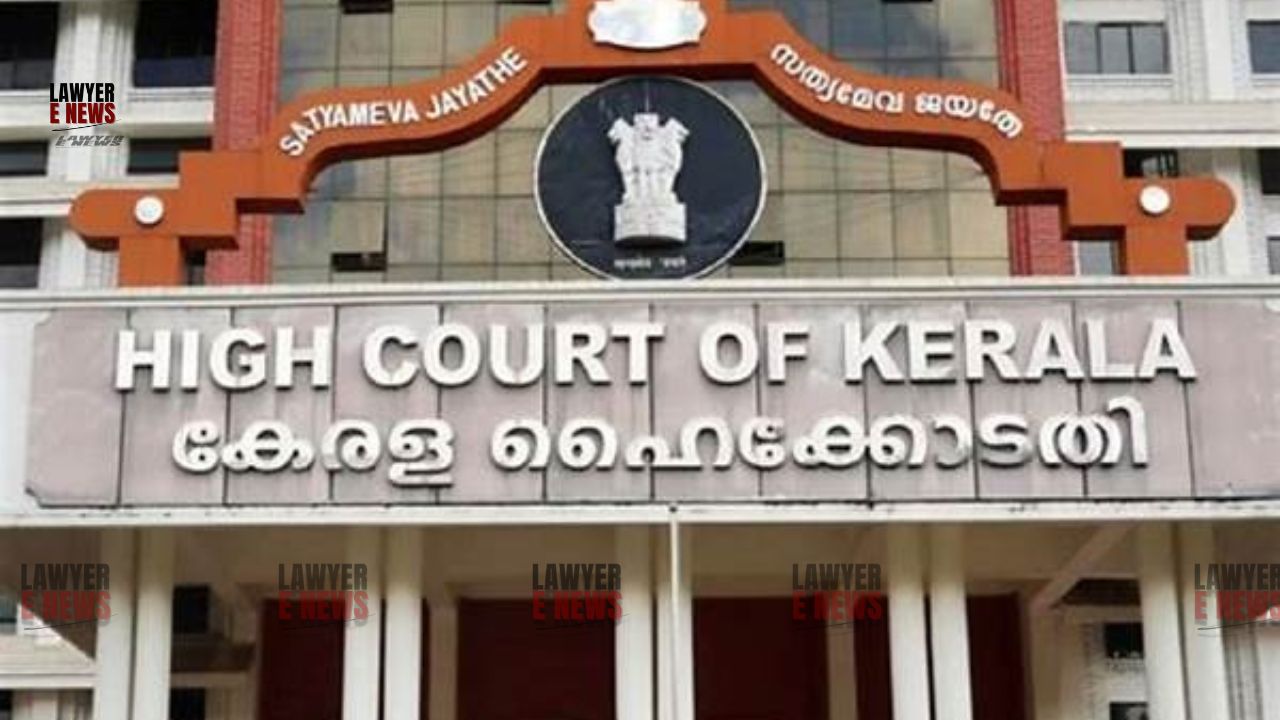
“No educational institution can function outside the statutory framework under the guise of religious or pre-school instruction” – In a crucial ruling on the enforcement of the Right of Children to Free and Compulsory Education Act, 2009, the Kerala High Court has held that National Institute of Open Schooling (NIOS) accreditation cannot substitute or override the mandatory requirement of State recognition under Section 18 of the RTE Act for running an educational institution.
Justice Harisankar V. Menon directed the closure of an unrecognised institution in Punnayur, Thrissur, which was imparting religious pre-school education to around 300 students, despite lacking formal approval under the RTE framework. The Court simultaneously dismissed the writ petition filed by the institution seeking to continue operations.
“Section 18 of the RTE Act Prohibits Any School from Functioning Without Recognition” – NIOS Accreditation No Defence, Rules High Court
Rejecting the institution’s primary defence that NIOS recognition dated 28.11.2024 justified its continuation, the Court held:
“Accreditation by NIOS does not dispense with the requirement of recognition under Section 18 of the RTE Act from the State Government – NIOS recognition alone is insufficient.”
The judgment emphasises that even if an institution has a valid NIOS tie-up, it cannot operate as a school in the State without complying with the local statutory regime, including registration and inspection by the Department of General Education.
The Court took note that the institution had never obtained formal recognition under the RTE Act, and its own affidavit revealed that it was functioning as a religious pre-school teaching Quran and allied subjects, thus squarely attracting Section 18 of the Act, which requires recognition from the competent authority for any school imparting elementary education.
Religious Instruction Without Permission Offends Secular Mandate: Court Applies Precedent from Hidaya Trust Case
Justice Menon referred to the binding precedent of the Kerala High Court’s earlier ruling in Trustee, Hidaya Educational & Charitable Trust v. State of Kerala [2020 (1) KHC 775], where it was held:
“No school required to have recognition shall impart religious instruction or religious study without permission from the State Government. Such practice offends the very fabric of secular society.”
Reinforcing that ratio, the Court held:
“Educational institutions cannot be allowed to function outside the statutory framework under the guise of religious or pre-school instruction.”
The Court reiterated that secular oversight and curriculum regulation under the RTE Act cannot be bypassed on the basis of religious freedom or minority status when basic recognition norms are not met.
Mandamus Issued to Shut Down the Institution, But Court Grants Limited Relief for Students’ Interest
Allowing the public interest writ petition filed by local residents (WP(C) No. 21615 of 2023), the Court issued a writ of mandamus directing the District Collector and Educational Authorities to take immediate steps to shut down the institution in accordance with Ext.P4 inspection report and Ext.P10 official communication, both of which confirmed that the school was functioning without valid recognition.
However, balancing the interests of the 300 enrolled students, the Court granted limited protection, directing that:
“The respondents shall permit the educational institution to function for the academic year 2025–26 to enable the students to make alternative arrangements.”
This pragmatic relief aligns with the principle of equitable transition, ensuring that children’s right to education is not abruptly interrupted while the institution winds down.
Institution’s Petition Dismissed: “No Legal Right to Continue Without Recognition”
In WP(C) No. 28053 of 2024, the school management had challenged the closure notice issued by the Assistant Educational Officer, claiming that it had obtained building permits, fitness certificates, and even applied for a CBSE NOC. However, the Court found that:
“Despite documents regarding construction and NIOS affiliation, there is no dispute that the institution lacks State recognition under Section 18 of the RTE Act.”
Consequently, the Court held that no enforceable legal right existed for the institution to demand continuation, and dismissed the petition in its entirety.
Accreditation ≠ Recognition, and Religious Education Cannot Be a Loophole
This ruling sends a strong message that no private institution can operate under alternate affiliations like NIOS or religious pretexts to bypass the mandatory regulatory regime under the RTE Act. It clarifies that accreditation is not a licence, and religious education must be state-approved to ensure conformity with national education standards, curriculum norms, and secular values.
By enforcing the statutory bar under Section 18 and holding the authorities accountable to act on their own findings, the High Court has reaffirmed the rule of law in educational governance.
Date of Decision: February 2, 2026