-
by sayum
28 August 2026 2:11 PM








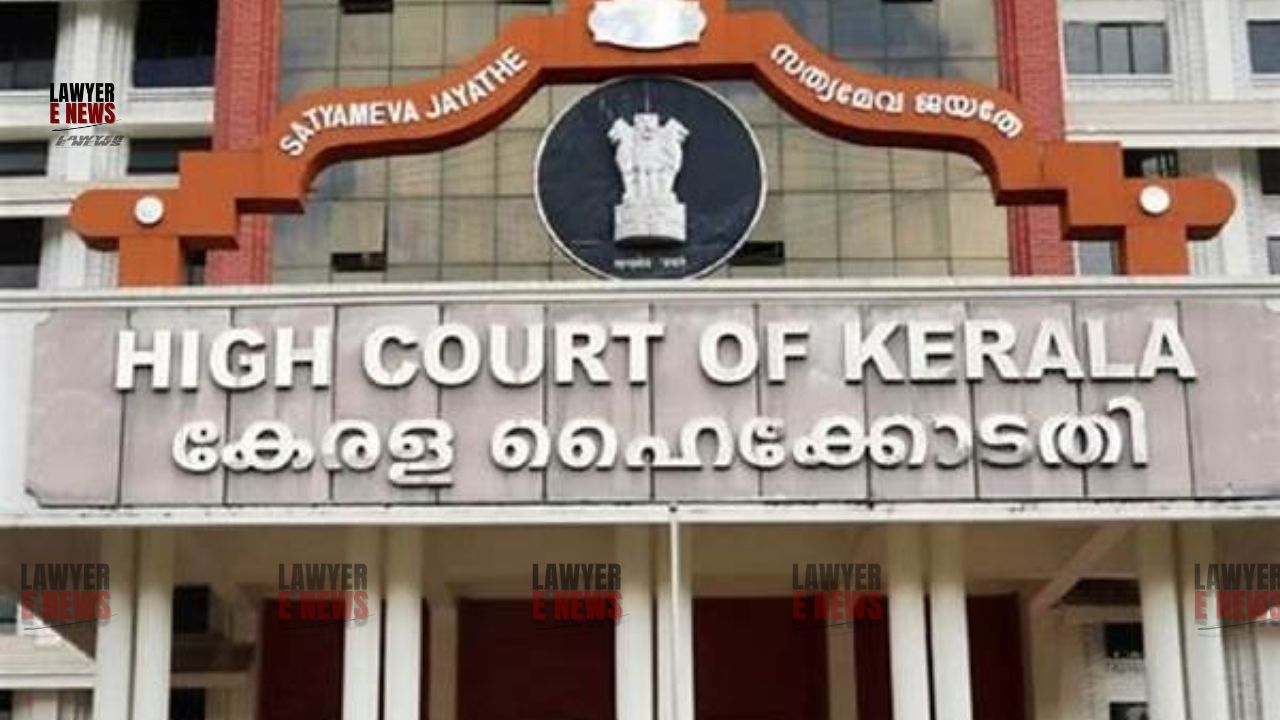
"Indubitably such evidence shall be given by the person, who had direct knowledge regarding the transaction and execution of the cheque and the evidence of a person, who does not know the same is insufficient to prove the transaction and the execution of the cheque," Kerala High Court, in a significant judgment, held that the benefit of statutory presumptions under Sections 118 and 139 of the Negotiable Instruments Act (NI Act) cannot be extended to a complainant who fails to prove the underlying transaction through a witness with direct knowledge.
A bench of Justice A. Badharudeen observed that for a prosecution under Section 138 to succeed, the "passing of consideration" must be proved in a convincing manner, typically by the individual who personally witnessed or participated in the transaction.
The appellant, Shijosh K., had filed a complaint alleging that the accused borrowed Rs. 4,50,000 and issued a cheque dated March 9, 2004, which was subsequently dishonoured. The Judicial First Class Magistrate-II (Mobile), Kottayam, acquitted the accused in 2007, leading the complainant to approach the High Court. The primary contention of the accused was that the complainant had no personal knowledge of the transaction, as the money was allegedly handled by the complainant's father.
The primary question before the court was whether the complainant had successfully proved the transaction and execution of the cheque to trigger the presumptions under Sections 118 and 139 of the NI Act. The court also considered whether the evidence of a witness who lacks direct knowledge of the passing of consideration is sufficient to sustain a conviction under Section 138.
Proof Of Transaction Is A Pre-condition For Statutory Presumptions
The Court emphasized that while Sections 118 and 139 of the NI Act provide "twin presumptions" in favour of the holder of a cheque, these are not absolute. The bench noted that the pre-condition for invoking these presumptions is the proof of the transaction and execution of the cheque in a "convincing manner." The Court clarified that this proof must necessarily include evidence regarding the passing of consideration.
"The same would definitely include passing of consideration covered by the cheque. Indubitably such evidence shall be given by the person, who had direct knowledge regarding the transaction."
Evidence Of Witness Lacking Direct Knowledge Is Insufficient
Upon scrutinizing the testimony of the complainant (PW1), the Court found that he admitted during cross-examination that the money was given to the accused by his father in five installments. PW1 further stated that his father maintained a notebook recording these installments, yet this notebook was never produced in court. The Court observed that PW1 was unaware of when the first installment was given or the specific details of the agreement.
Complainant Not Competent Witness For Transaction Handled By Father
The bench highlighted that since the transaction and passing of consideration occurred between the father and the accused, the father was the competent person to testify. However, the father was not examined as a witness. The Court took note of the respondent's argument that the father, a police officer, may have avoided testifying to hide an unauthorized money-lending business in violation of Government Servant Conduct Rules.
"In the instant case the competent person to depose about the transaction and execution of Ext.P1 cheque is none other than the father of PW1. It is relevant to note that, despite this fact, the father of the complainant was not examined."
Failure To Discharge Initial Burden Rebuts Presumption
The High Court concluded that the complainant miserably failed to discharge the initial burden of proving the transaction. Because the primary witness (the father) was withheld and the complainant lacked personal knowledge, the legal presumptions under the NI Act could not be applied in the complainant's favour. The Court found no reason to interfere with the Magistrate's order of acquittal.
"The transaction which led to execution of Ext.P1 cheque failed to be proved by the evidence of PW1 and the complainant had miserably failed to discharge the initial burden cast upon him... which would disentitle him the benefit of presumptions under Sections 118 and 139 of the NI Act."
The High Court dismissed the appeal and confirmed the acquittal of the accused. The ruling reinforces the principle that the complainant must provide direct and competent evidence of the debt or liability before relying on the statutory presumptions of the NI Act.
Date of Decision: 09 June 2026