-
by sayum
27 October 2026 2:43 PM







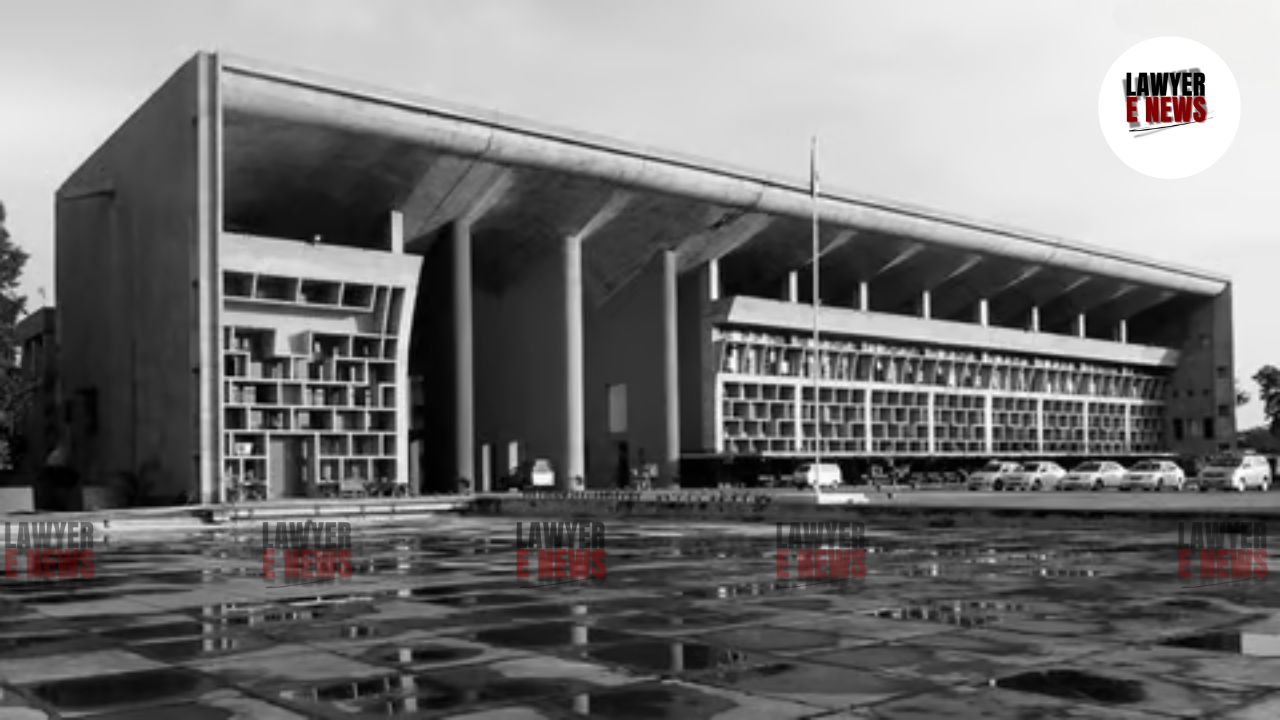
"It is well settled that the mere establishment of a breach of the insurance policy condition relating to the driving licence does not, by itself, absolve the insurer of its statutory obligation to satisfy the claims of third parties." Punjab and Haryana High Court, in a significant ruling dated October 16, 2026, held that an insurance company cannot disown its statutory liability to satisfy third-party compensation awards merely because the driver of the offending vehicle lacked a valid and effective driving licence.
A single bench of Justice Amarinder Singh Grewal ruled that the breach of an insurance policy condition must be treated distinctly from statutory obligations owed to third-party victims, upholding the Motor Accident Claims Tribunal's invocation of the "pay and recover" principle under Section 149 of the Motor Vehicles Act, 1988. The Court observed that directing the insurer to satisfy the award with liberty to recover the amount from the vehicle owner strikes an appropriate balance by safeguarding the interests of victims without forfeiting the insurer's recovery rights.
The dispute arose out of a head-on collision on September 28, 1997, when a Maruti Van carrying passengers was rammed near Village Jhangri by a rashly driven truck operating without its right headlight. The collision resulted in the instantaneous death of a 55-year-old homemaker, inflicted grievous bodily injuries on three other occupants—including causing the termination of a four-month pregnancy—and caused substantial vehicular damage. The Motor Accident Claims Tribunal, Chandigarh, found that the truck was being driven by an employee working as a cleaner who held no valid driving licence, yet directed the insurer to satisfy the awards and recover the sums from the truck owner. Challenging this liability, the insurer filed statutory appeals under Section 173 of the Motor Vehicles Act, 1988, while the claimants filed cross-appeals seeking enhancement of compensation.
The primary question before the High Court was whether the insurer could avoid its liability to satisfy the compensation awarded to third-party victims on the ground that the driver of the offending vehicle was not holding a valid driving licence at the time of the accident. The Court was also called upon to determine whether the compensation awarded across the fatal accident, bodily injury, and property damage claims was just and reasonable or required reassessment.
Breach Of Licence Condition Does Not Wipe Out Third-Party Liability
Justice Grewal affirmed the Tribunal's factual finding that the driver of the offending truck lacked a valid and effective driving licence at the time of the occurrence. The Court underscored that while the evidence firmly demonstrated that the truck cleaner was at the wheel without a licence, such an infraction operates within the contractual matrix between the insurer and the insured rather than affecting statutory third-party entitlements.
The bench stressed that an insurer's statutory duty towards road accident victims remains intact despite established policy breaches. "The breach of a policy condition relating to the driving licence has to be considered separately from the insurer's statutory liability towards third parties," the Court held.
'Pay And Recover' Safeguards Claimants While Preserving Insurer's Remedy
Relying upon the landmark precedent of the Supreme Court in National Insurance Co. Ltd. v. Swaran Singh (2004), the High Court clarified the clear demarcation between third-party statutory indemnification and the subsequent inter se recovery rights of the insurer against the insured owner.
The bench noted that the Tribunal's order requiring the insurance company to first pay the claimants and subsequently recover the disbursed sum from the owner was sound in law. "The said direction appropriately safeguards the interests of the claimants without depriving the Insurance Company of its right to recovery in accordance with law," the Court observed while repelling the insurer's challenge.
"The assessment of the income of a homemaker cannot be confined to her direct monetary earnings, as the services rendered by her towards household management, care of family members and maintenance of the household have substantial economic value."
Substantial Economic Value Of Homemaker's Services Must Be Recognized
Addressing the fatal accident claim regarding the 55-year-old deceased homemaker, the High Court held that the Tribunal erred gravely by fixing her income at a meagre sum of Rs. 1,800 per month and applying a multiplier of 7. The bench ruled that courts cannot adopt a narrow approach that confines a homemaker's contribution strictly to direct monetary receipts.
Citing the Supreme Court's decisions in Lata Wadhwa v. State of Bihar (2001) and Arvind Kumar Pandey v. Girish Pandey (2024), the Court reassessed the deceased's notional income at Rs. 4,500 per month. Justice Grewal factored in a 10 percent addition towards future prospects, deducted one-fourth towards personal expenses given the five surviving dependants, and applied a multiplier of 11 in line with National Insurance Company Limited v. Pranay Sethi (2017), fixing loss of dependency at Rs. 4,90,050.
Conventional Heads And Filial Consortium Overhauled
The High Court further observed that the Tribunal failed to award any compensation under conventional heads or for loss of consortium. Remedying this omission, the Court awarded Rs. 18,150 each towards loss of estate and funeral expenses, incorporating the mandated triennial 10 percent escalation under the Pranay Sethi framework.
Additionally, the Court awarded filial consortium of Rs. 48,400 to each of the five surviving children, aggregating to Rs. 2,42,000 under this head alone. The total compensation for the deceased homemaker was consequently enhanced from Rs. 1,00,000 to Rs. 7,68,350, granting an enhancement of Rs. 6,68,350.
Trauma Of Pregnancy Loss Demands Enhanced Compensation
Evaluating the injury appeal of a 23-year-old claimant who suffered the termination of her four-month pregnancy due to the accident, the High Court held that the Tribunal's lump-sum award of Rs. 50,000 was completely disproportionate to the actual injury.
The bench remarked that the Tribunal failed to appreciate the depth of physical and emotional trauma stemming from the loss of an unborn child. Taking into account the unrebutted medical evidence, hospital treatment, and prolonged distress, the Court enhanced her compensation to Rs. 2,00,000.
Reassessment Of Bodily Disability And Vehicle Damage Claims
Regarding the 25-year-old car driver who suffered 12 percent whole-body permanent disability, two surgeries, and leg plating, the Court increased his compensation to Rs. 1,53,840 after applying a multiplier of 18 alongside enhanced amounts for pain, suffering, and loss of amenities. For another injured occupant who established medical and conveyance outlays, the Court raised the award to match actual proved expenses of Rs. 66,580.
Lastly, modifying the award for vehicular damage to the Maruti Van, the Court enhanced the compensation from Rs. 70,000 to Rs. 1,00,000 as just and reasonable relief, while noting that an unverified repair estimate alone cannot form the sole basis for awarding the full projected expenditure.
Partly allowing the appeals filed by the claimants, the High Court enhanced the awarded compensation across all categories along with 7.5 percent interest per annum from the date of the claim petitions until realization. Dismissing the appeals preferred by the insurance company, the Court held that the insurer remains statutorily bound to satisfy the awards in the first instance, retaining full liberty to execute recovery against the owner of the offending truck in accordance with law.
Date of Decision: 16 October 2026