Registration Act | Contested Decree Declaring Pre-Existing Rights By Adverse Possession Does Not Require Compulsory Registration Or Stamp Duty: Madhya Pradesh High Court Section 498A IPC | Vague Allegations Without Specific Overt Acts Against Relatives Cannot Sustain Prosecution: Kerala High Court Motor Accident Claims | Tribunal Must Adopt Standardised Notional Income Charts For Determining Loss Of Future Earnings: Karnataka High Court Suit On Dishonoured Cheque Is Based On Statutory Liability Under Negotiable Instruments Act And Not On Underlying Original Transaction: Kerala High Court State Cannot Re-Litigate Grounds Rejected In Earlier Final Judgment To Deny Employment: Allahabad High Court Orders Appointment of Librarians JJ Act | JJBs Cannot Simply 'Return' Child In Conflict With Law To Police Without Passing Placement Orders If Bail Not Granted: Andhra Pradesh High Court PMLA | Official Banking Transactions In Usual Course Of Business Cannot Be Construed As Proceeds Of Crime: Bombay High Court Section 41A CrPC | Serving Notice After Arrest Is Illegal, Police Cannot Simply Arrest To Ask Questions: Bombay High Court Fit-Out Possession Without Completion Certificate Is Not Valid Possession; Builder Cannot Charge Delayed Interest Or GST When Default Is On Its Part: Chandigarh State Commission Appellate Court Must Not Disturb Acquittal Unless Trial Court’s View Is Perverse Or Manifestly Illegal: Gujarat High Court Order 12 Rule 6 CPC | Landlord Divesting Ownership Via Pre-Suit Sale Deed Loses Locus Standi Under Section 109 TP Act; Summary Eviction Decree Impermissible: Delhi High Court Section 151 CPC Cannot Be Invoked For Restoration Of Possession When Statutory Remedy Under Section 144 Exists: Calcutta High Court 'Mere Assertion Of Higher Rent By Landlord Cannot Oust DRC Act': Delhi High Court Sets Aside Eviction Decree, Remands Matter Back Arbitration Clause In Agreement No Safe Harbour For Criminal Breach Of Trust; Pre-Arrest Bail In Economic Offences An Exception: Allahabad High Court Order 7 Rule 10 CPC | Pecuniary Jurisdiction Cannot Be Determined Solely On Plaintiff's Oral Admission In Cross-Examination: Madras High Court Principle Of Parity Applies Even If Earlier Order Was Declared 'Not A Precedent': Orissa High Court Acquisition Lapses If Authority Inactive For Over 5 Years Excluding Stay; Bar On Subsequent Purchasers Inapplicable If Land Stood Released: Madhya Pradesh High Court Senior Citizens Act  | Summary Eviction Remedy Cannot Be Extended To Daughter-In-Law As She Is Neither 'Child' Nor 'Relative': Punjab & Haryana High Court Section 471 IPC | Mere Absence Of Direct Forgery Does Not Absolve Accused Of Using Forged Document As Genuine: Rajasthan High Court Criminal Proceedings Against Husband's Relatives Cannot Continue On Vague & Omnibus Allegations Without Specific Overt Acts: Telangana High Court Magistrate's Inability To Recall Order Does Not Preclude High Court From Restoring Cheque Bounce Complaint Dismissed In Default: Punjab & Haryana High Court

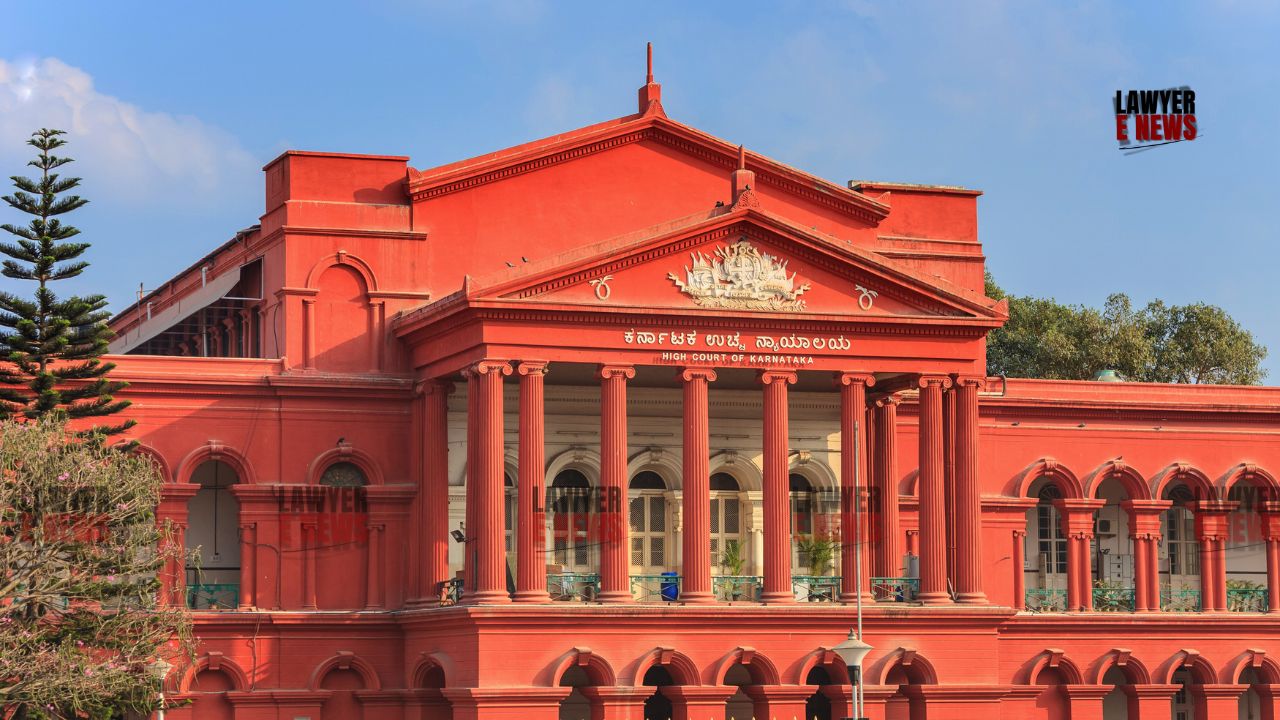
Motor Accident Claims | Tribunal Must Adopt Standardised Notional Income Charts For Determining Loss Of Future Earnings: Karnataka High Court

23 October 2026 12:17 PM

By: sayum


"Since the income proof is not produced, the notional income is to be taken into consideration. The notional income fixed for the year 2020 is Rs.14,500/- p.m. and that is to be taken as against Rs.14,000/- taken by the Tribunal." Karnataka High Court, in a latest judgment, has clarified the imperative for Tribunals to adhere to standardised notional income benchmarks when calculating compensation in motor accident claims where the victim lacks formal income documentation.

A bench of Justice Shivashankar Amarannavar observed that failure to align with established notional income charts for the relevant assessment year constitutes a legal error that requires appellate correction.

Application of Notional Income Benchmarks

The appellant, a mason and agricultural worker, had challenged the award passed by the MACT, Hassan, which had assessed his monthly income at Rs. 14,000 for an accident occurring in 2020. Upon review, the High Court held that courts must strictly apply the recognised notional income figures for the specific year of the accident to ensure consistency and fairness in the adjudication process.

Court Re-evaluates Compensation Quantum

The primary issue before the court was whether the Tribunal erred in its assessment of "loss of future income" and "loss of income during the laid-up period." The court noted that while the Tribunal correctly applied a multiplier of 13 and a disability percentage of 6% to the whole body, the foundational income figure was lower than the prescribed standard for the year 2020.

Standardising The Loss Of Future Earnings

Adjusting the monthly income to Rs. 14,500, the court re-calculated the loss of future income, arriving at a sum of Rs. 1,35,720. The bench emphasised that compensation must reflect the economic reality of the claimant’s loss at the time of the incident, leaving no room for arbitrary reduction of income figures when formal proof is absent.

Court Enhances Non-Pecuniary Damages

Beyond pecuniary losses, the court addressed the claimant's period of hospitalisation, which lasted 75 days. The bench observed that the original compensation for attendant charges, food, and nourishment was inadequate given the duration of the treatment. The court enhanced this head to Rs. 75,000, calculated at a rate of Rs. 1,000 per day of admission.

"The claimant is entitled to conveyance and attendant charges, food and nourishment in a sum of Rs.75,000/- (Rs.1,000 x 75 days) as against Rs.30,000/- awarded by the Tribunal."

Final Order And Interest Liability

The court found the total compensation package to be Rs. 4,58,368, representing an enhancement of Rs. 72,680 over the Tribunal’s original award. The respondent insurer was directed to deposit the enhanced amount, along with interest at 6% per annum, within six weeks. The judgment reinforces the principle that appellate courts will intervene to rectify mathematical inconsistencies in compensation awards to ensure the claimant is adequately indemnified.

Date of Decision: 07 September 2026



Latest Legal News