-
by sayum
27 July 2026 10:58 AM







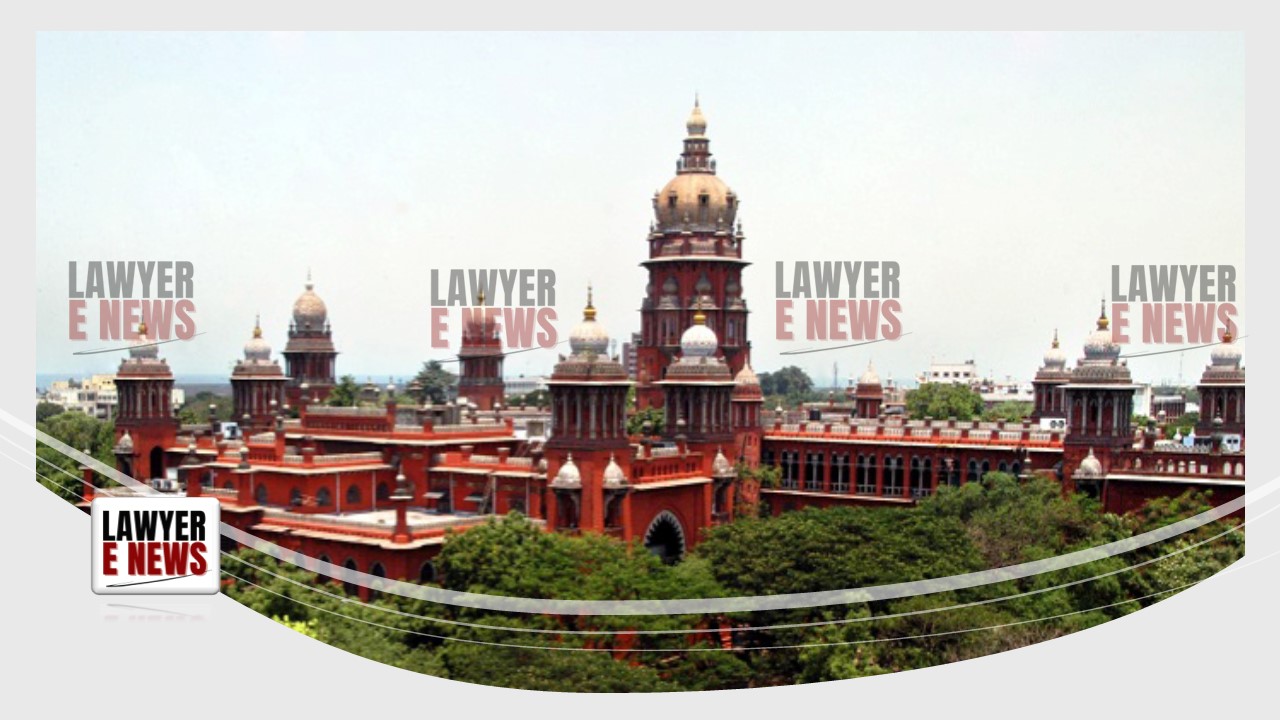
High Court directs respondent to seek redress under government schemes after setting aside Single Judge’s compensation order.
The High Court of Judicature at Madras, on July 16, 2024, delivered a judgment in the case concerning the wrongful exclusion of C. Periyasamy from the seniority list of Foresters appointed after 1980. The Division Bench, comprising Justices D. Krishnakumar and K. Kumaresh Babu, partially allowed the appeal filed by the State of Tamil Nadu and related appellants, setting aside the order for monetary compensation issued by the Single Judge. Instead, the Court directed the respondent to seek redress under applicable Government schemes for senior citizens.
The respondent, C. Periyasamy, was excluded from the seniority list of Foresters appointed post-1980, allegedly due to not being in service during the list’s preparation. Periyasamy, who had worked as a Forester after 1980, claimed his rightful place in the seniority list, which was denied. This led to prolonged litigation, during which he attained superannuation. The Single Judge had acknowledged the wrongful exclusion and directed the appellants to compensate Periyasamy monetarily. Dissatisfied with this order, the appellants challenged the decision, arguing that the compensation was inappropriate as Periyasamy had already retired.
The Court agreed with the Single Judge’s finding that Periyasamy’s exclusion from the seniority list was wrongful. The appellants admitted the exclusion but justified it on the basis that Periyasamy was not in service at the time of list preparation. However, the Court maintained that this justification did not negate the wrongful nature of the exclusion.
The Court noted that regularisation of Periyasamy’s services post-superannuation was not feasible. The Single Judge’s order acknowledged this but still directed monetary compensation, which the appellants contended was unwarranted.
The Court found merit in the appellants’ argument against monetary compensation. Justice K. Kumaresh Babu observed, “Even though the respondent was wrongfully excluded, there is no Scheme for payment of monetary compensation to such individuals post-superannuation. Therefore, monetary compensation ordered by the Single Judge is set aside.”
The Bench highlighted various Government schemes available to senior citizens, directing Periyasamy to seek appropriate relief under these schemes. The Court instructed the relevant authorities to consider and dispose of Periyasamy’s application for such benefits within four weeks of receipt.
Justice K. Kumaresh Babu remarked, “The respondent’s wrongful exclusion from the seniority list cannot be remedied through monetary compensation post-superannuation. Instead, he is directed to seek relief under suitable Government schemes for senior citizens.”
The Madras High Court’s decision underscores the judicial approach towards balancing wrongful administrative actions with practical remedies available within the legal framework. By directing the respondent to seek benefits under Government schemes, the judgment provides a structured path for addressing grievances of superannuated employees while maintaining the integrity of existing legal provisions. This ruling is expected to influence future cases involving seniority disputes and compensation claims post-retirement.
Date of Decision: July 16, 2024