-
by sayum
20 October 2026 1:07 PM







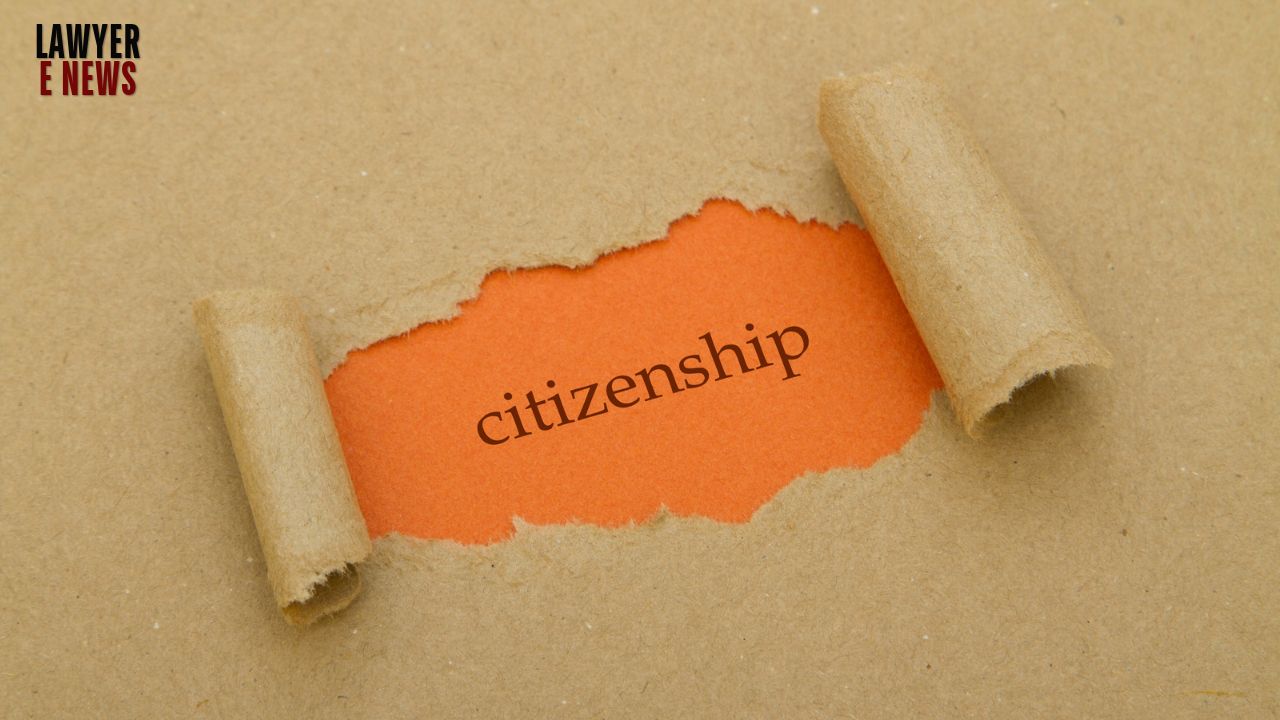
"In the absence of statutory sanction, the minor cannot be stripped of citizenship merely because his father acquired the citizenship of the United Kingdom in 2021." Madras High Court, in a significant ruling, held that a minor child who is an Indian citizen by birth under Section 3(1) of the Citizenship Act, 1955, cannot be deprived of Indian citizenship merely because a parent subsequently acquired foreign nationality under Section 9 of the Act.
A single bench of Justice Senthilkumar Ramamoorthy clarified that the statutory cessation of a minor's citizenship under Section 8(2) applies strictly when a parent voluntarily renounces Indian citizenship by declaration under Section 8(1), and cannot be imported into Section 9, which contains no such provision.
The minor petitioner, born in India in 2016 to Indian citizen parents, was previously issued an Indian passport from London, which was due to expire in October 2026. The Regional Passport Officer objected to renewing the minor's passport on the ground that the father had ceased to be an Indian citizen upon acquiring United Kingdom citizenship in May 2021, invoking Section 8(2) of the Citizenship Act. The minor, through his father, then approached the High Court seeking a writ of mandamus to direct the passport authorities to process the renewal application without requiring the mother's application.
The primary legal issue before the court was whether a minor child automatically ceases to be a citizen of India under Section 8(2) of the Citizenship Act, 1955, when a parent acquires foreign citizenship under Section 9. The court was also called upon to determine whether the passport authority was justified in withholding the passport renewal on that ground.
Distinction Between Renunciation Under Section 8 And Acquisition Of Foreign Nationality Under Section 9
Examining the statutory framework of the Citizenship Act, 1955, the bench drew a sharp distinction between the operational fields of Section 8 and Section 9. The court observed that Section 8 specifically governs the renunciation of Indian citizenship by a declaration made in the prescribed manner by a citizen of full age and capacity.
The bench explained that only when citizenship is severed by an explicit declaration under Section 8(1) does Section 8(2) operate to divest the minor child of citizenship. The court observed that as can be seen from the text of sub-section (1) of Section 8, the provision requires a registered declaration, and where it applies, "sub-section (2) of Section 8 provides that every minor child of the declarant shall cease to be a citizen of India upon the declarant ceasing to be a citizen of India."
Section 9 Does Not Ipso Facto Strip Minor Children Of Indian Citizenship
Turning to Section 9 of the Act, the bench observed that the provision addresses an entirely different contingency where an Indian citizen acquires the nationality of another sovereign state by naturalisation, registration, or otherwise. The court noted that unlike Section 8, Section 9 contains no statutory mandate providing that the minor children of such an individual automatically lose their Indian citizenship.
In the case at hand, the minor's father acquired citizenship of the United Kingdom on May 7, 2021, and did not make a declaration of renunciation under Section 8. Consequently, the High Court held that the case was governed exclusively by Section 9 and not Section 8, rendering the respondent's reliance on Section 8(2) fundamentally misplaced.
Citizenship Conferred By Birth Under Section 3(1) Cannot Be Curtailed Without Statutory Sanction
The court placed strong emphasis on Section 3(1)(c) of the Citizenship Act, 1955, which defines citizenship by birth. The bench noted that the child was born in Salem, Tamil Nadu, on January 23, 2016, at a time when both of his parents were undisputed citizens of India.
The court observed that because both parents held Indian citizenship when the child was born, the minor acquired citizenship by birth in terms of Section 3(1). The bench ruled that "in the absence of statutory sanction, the minor cannot be stripped of citizenship merely because his father acquired the citizenship of the United Kingdom in 2021."
Madras High Court Endorses Kerala High Court Precedent In Chaitanya S. Nair
In arriving at its conclusion, the bench fully endorsed and adopted the rationale laid down by the Kerala High Court in Chaitanya S. Nair (Minor) v. Union of India, 2022 LiveLaw (Ker) 127. In that ruling, the Kerala High Court had exhaustively analyzed the Citizenship Rules, 2009, along with Sections 8 and 9 to hold that the loss of citizenship under Section 9 does not extend to minor children.
Justice Ramamoorthy recorded his concurrence with the precedent, affirming that the Kerala High Court had properly contrasted the two provisions and examined the prescribed procedures for renunciation under the Citizenship Rules. Concurring with that view, the bench held that there was no impediment under the Citizenship Act to renewing the child's passport.
Disposing of the writ petition, the High Court directed the Regional Passport Officer to consider and dispose of the renewal application for the petitioner's passport within a maximum period of three months. The court further clarified that if any supporting documentation is required, the petitioner shall provide the same to the authority.
Date of Decision: 13 October 2026