-
by sayum
25 August 2026 11:12 PM







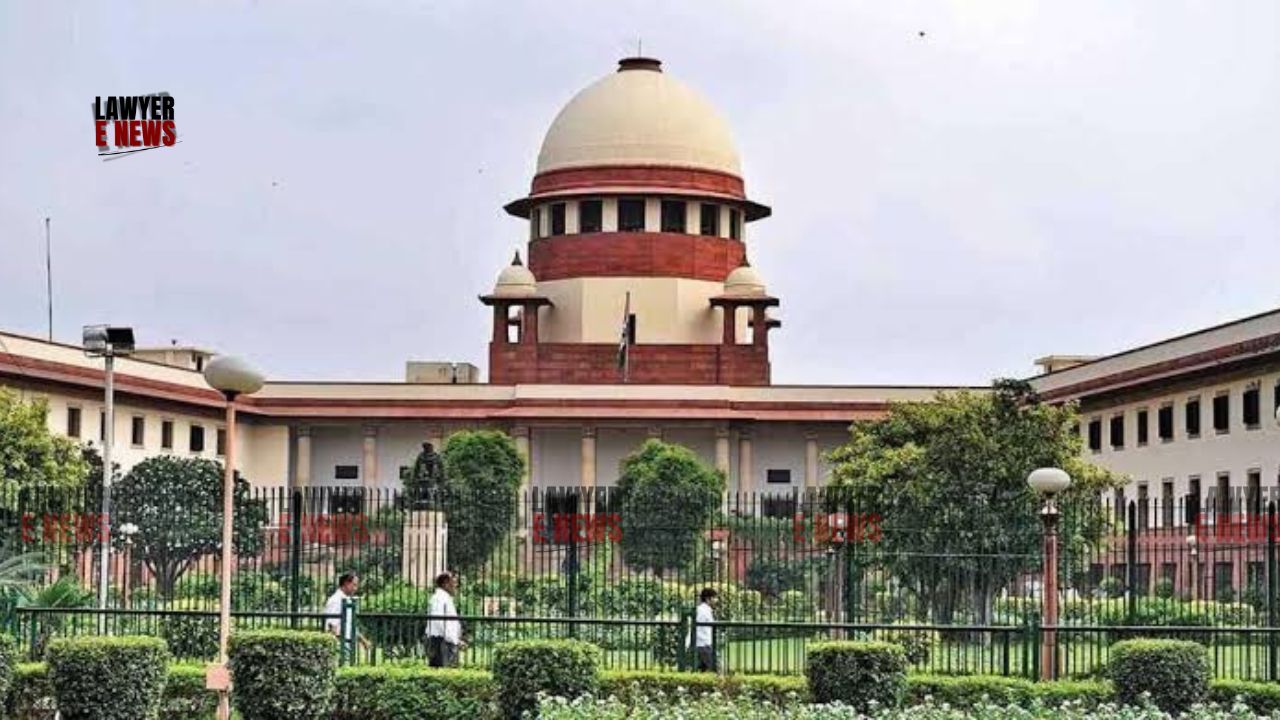
“Intention to Kill Was Missing, Only Knowledge Present…….Where There Is No Premeditation or Clear Intent to Kill, But Death Results from a Knife Attack Done in Anger, The Offence Is Not Murder” – In a significant judgment clarifying the thin line between murder under Section 302 IPC and culpable homicide not amounting to murder under Section 304 Part I, the Supreme Court of India on 10 November 2025 held that an act committed without premeditation or clear intention to cause death, but with knowledge that it may result in death, cannot be classified as murder.
Supreme Court set aside the conviction under Section 302 IPC and substituted it with Section 304 Part I IPC, holding that the appellant's act of stabbing the victim Louis Williams during a sudden altercation lacked the mens rea required for murder. Considering that the appellant had already served over 14 years in prison, the Court held that the sentence already undergone was sufficient and no further incarceration was necessary.
“Mere Use of a Knife in a Fit of Anger Cannot Impute a Definite Intention to Kill” – SC Says Death After 13 Days Due to Septicemia Did Not Break the Causal Chain
The bench of Justice K. Vinod Chandran and Justice N.V. Anjaria revisited the scope of culpable homicide and murder, examining the mental state of the accused at the time of inflicting the injury and the medical circumstances leading to the death of the victim.
As per the prosecution case, on the night of 12 June 1998, following an earlier quarrel, the appellant entered the victim’s house and inflicted multiple stab injuries with a knife. The victim, Louis Williams, was hospitalised, underwent surgery, and was eventually discharged. However, due to complications and development of septicemia, he died 13 days later, on 26 June 1998.
Both the Trial Court and the High Court of Gujarat convicted the appellant under Section 302 IPC, concluding that the act was intentional and the weapon used—knife—was deadly. However, the Supreme Court disagreed with this finding on the degree of intent, holding that:
“It would not be correct to presume or view in respect of the conduct on part of the appellant that the appellant acted with premeditation to kill or that he acted in assailing the deceased with an intention to cause death.” [Para 6.2]
“Culpable Homicide Is Genus; Murder Is Only Its Species” – Court Applies Classic Formulation to Downgrade Offence
The Court invoked the celebrated distinction elaborated in Kesar Singh v. State of Haryana, Virsa Singh v. State of Punjab, and Shankar Narayan Bhadolkar v. State of Maharashtra, to explain the conceptual layers of culpability under Section 304 IPC. It observed:
“If an injury is inflicted with the knowledge and intention that it is likely to cause death, but with no intention to cause death, the offence would fall within the definition of Section 304 Part I.” [Para 5.8]
It was further clarified that where there is knowledge that death may ensue, but no deliberate intent to cause death, the conviction must fall under Section 304 Part I, and not Section 302.
The Court observed:
“Given the totality of facts and circumstances… the act on part of the appellant has to be treated as ‘culpable homicide not amounting to murder’ falling under Section 304 Part I, IPC.” [Para 7]
Delay in Death Due to Septicemia Doesn’t Break Causation or Reduce Gravity
A key defence argument was that the death occurred 13 days after the assault, and was not instantaneous, thus diluting the causal link. The Supreme Court firmly rejected this, holding:
“The injuries did not result into instantaneous death of the deceased. Thus, the attack by the appellant remained with the knowledge but without intention to cause death. The cause of death was medically identified as ‘Septicemia’.” [Para 6.3]
The Court reiterated that delay in fatal outcome due to medical complications does not absolve the assailant of liability, especially when the original injury is found to be sufficient to cause death in the ordinary course of nature, as was confirmed by the doctor (PW 8).
“Evidence of Relatives Is Not Automatically Unreliable” – Court Upholds Findings on Eyewitness Testimony
The defence challenged the conviction on the ground that the only eyewitnesses were relatives—the sister and nephew of the deceased—namely Gajraben (PW 2) and Rajesh (PW 4). The Court refused to discard their evidence solely on this basis, holding:
“The Trial Court has accepted the evidence of Gajraben (PW 2) and Rajesh (PW 4) and the High Court has proceeded to confirm the reasoning by affirming the conviction... The testimony of related witnesses cannot be rejected merely on the ground of relationship, especially when it is otherwise consistent and corroborated by medical evidence.” [Para 5.2]
“Sentence of 14 Years Already Undergone Is Sufficient” – Court Declines Further Incarceration
Acknowledging that the appellant had already served more than 14 years in prison before being granted bail by the Supreme Court in June 2014, the Court exercised judicial discretion in the matter of sentencing. It held:
“The sentence of 14 years already undergone by the appellant shall be treated as sufficient and subserve the interest of justice.” [Para 10]
Accordingly, the bail bond furnished to the Trial Court was discharged, and no further imprisonment was ordered.
Conviction Under Section 302 Set Aside; Replaced With Section 304 Part I With Sentence Already Undergone
Summarising its findings, the Supreme Court concluded that while the appellant’s act was undoubtedly criminal and fatal, it lacked the deliberate intention necessary to uphold a conviction under Section 302 IPC. The offence, therefore, fell squarely within Section 304 Part I IPC, and the sentence already served was held to be adequate in the circumstances.
“The present appeal is accordingly allowed to the above extent.” [Para 11]
The judgment reaffirms that intent remains the touchstone for distinguishing murder from culpable homicide, and courts must closely examine mental state, motive, provocation and factual context before confirming a murder conviction.
Date of Decision: 10 November 2025