-
by sayum
22 October 2026 11:50 AM







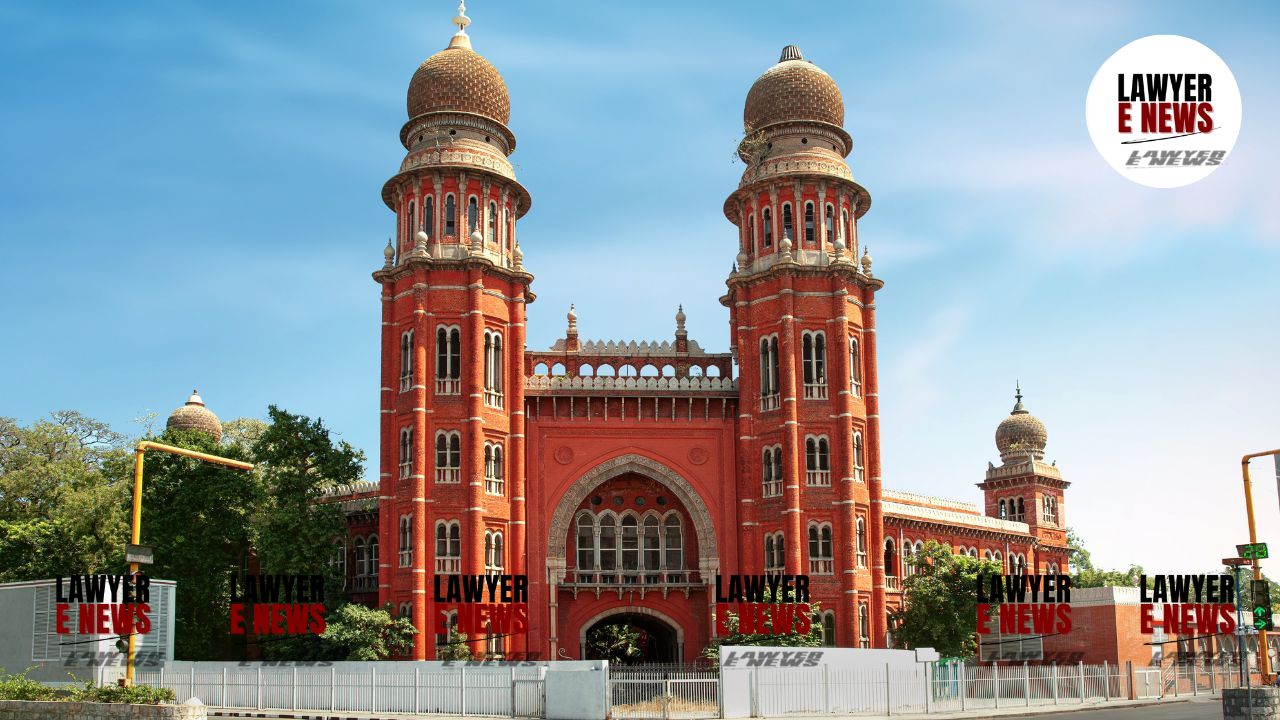
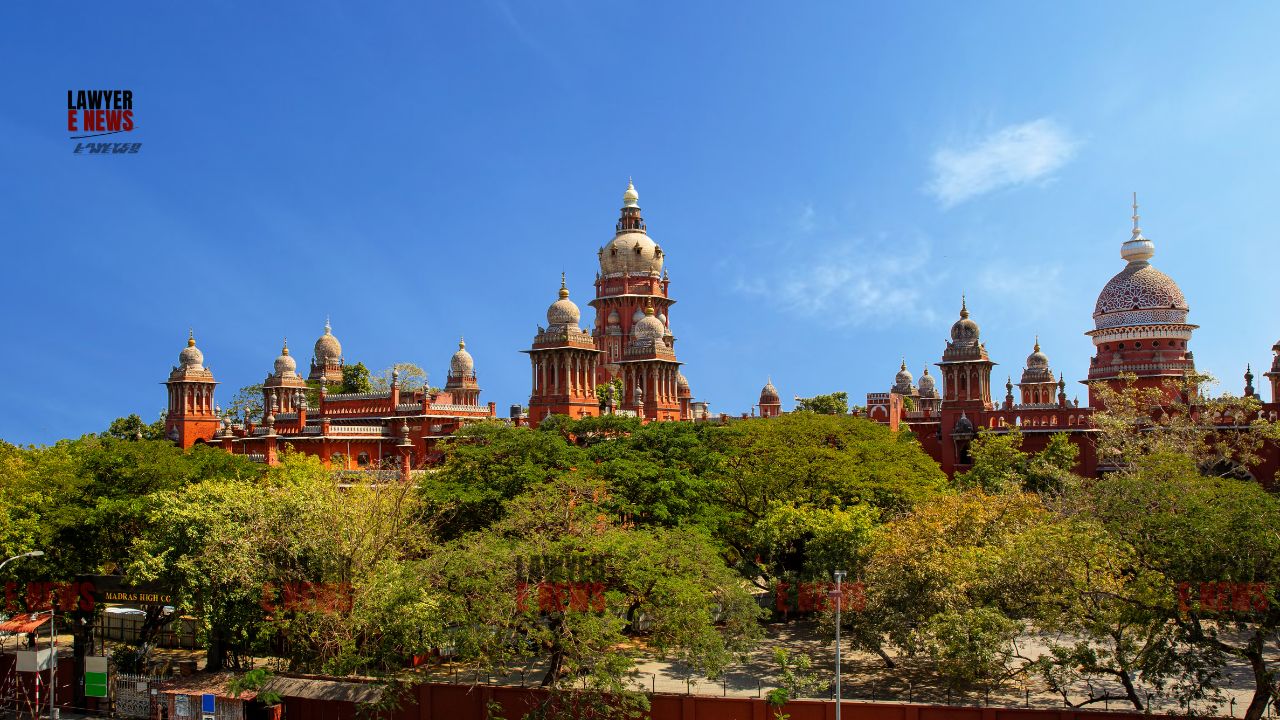
"Though the registration carries presumption that every official acts are done properly, mere registration of the will will not dispense the proof and validity of the will." Madras High Court, in a significant ruling dated July 8, 2026, held that the mere registration of a Will does not relieve the propounder of the burden to prove its valid execution and attestation as mandated by Section 68 of the Evidence Act.
A bench comprising Justice N. Sathish Kumar and Justice M. Jothiraman observed that while registration carries a presumption of regularity for official acts, it cannot by itself satisfy the court's conscience if the document is shrouded in suspicious circumstances.
The court emphasized that the propounder must affirmatively establish that the testator signed the Will with free will after understanding its contents. The bench noted that even a registered Will must be proved in the manner contemplated by law, and the burden shifts to the contestant only after a prima facie case of valid execution is made out.
The dispute arose among siblings regarding the properties of their deceased mother, Sakunthala Ammal. The appellant/plaintiff (the younger son) claimed title to the entire property based on an unregistered Will dated January 2, 2002, and a subsequent registered Will dated August 12, 2002. The other legal heirs challenged these documents as forged and fabricated. The Trial Court disbelieved the Wills due to suspicious circumstances and granted a 1/5th share to the plaintiff through intestate succession, leading to the present appeal.
The primary question before the court was whether the registration of a Will dispenses with the need for independent proof of execution under Section 68 of the Evidence Act. The court also examined whether the active participation of the beneficiary in the preparation of the Will and inconsistencies in the testimonies of attesting witnesses constituted "suspicious circumstances" that remained undispelled.
Registration Does Not Substitute Proof Of Execution Under Section 68 Evidence Act
The Court clarified the legal position regarding registered testamentary documents, stating that registration is not a substitute for the statutory requirements of proof. Relying on the Supreme Court precedent in Pentakota Satyanarayana v. Pentakota Seetharatnam, the bench observed that the onus remains on the propounder to prove the competence of the testator and the execution of the Will.
The bench held that even if a Will is duly registered, it must still be proved in accordance with Section 63 of the Indian Succession Act and Section 68 of the Evidence Act. The judges noted that the mere fact of registration will not dispense with the necessity of proving the document's validity through the evidence of attesting witnesses who can speak to the voluntary nature of the act.
Court Explains The "Armchair Of The Testator" Rule
While assessing the naturalness of the testamentary disposition, the Court reiterated that it must place itself in the "armchair of the testator." Citing Venkatachala Iyengar vs. B.N. Thimmajamma, the bench explained that the court must consider the surrounding circumstances as they would have appeared to the executant at the time of signing.
The bench observed that if a disposition appears unnatural or wholly unfair in light of the relevant circumstances, it creates a legitimate doubt regarding the testator's state of mind. In such cases, the propounder is duty-bound to remove all legitimate suspicions before the document can be accepted as the last will of the deceased.
Active Participation Of Beneficiary In Will Preparation Raises Suspicion
The Court found it significant that the plaintiff, who was the sole beneficiary, took an active role in the preparation and registration of the Wills. The evidence showed that the plaintiff arranged the document writers, called the attesting witnesses, and accompanied the mother to the registration office.
The bench remarked that when a propounder takes a prominent part in the execution of a Will that confers a substantial benefit upon them, it constitutes a strong suspicious circumstance. The Court noted that the plaintiff failed to provide a satisfactory explanation for his overwhelming involvement in the process, which pointed toward undue influence.
"The exercise is complete when the propounder satisfies the Court’s conscience that the testator had signed the Will with free will, being aware of its contents."
Inconsistencies Between Attesting Witnesses Vitiate Genuineness
The bench conducted a granular analysis of the testimonies of the attesting witnesses, PW2 and PW3. It found glaring contradictions regarding the place of execution. While the plaintiff claimed the Will was signed in the Notary Public's office, the attesting witnesses asserted that the Notary was present at the testator's house.
Furthermore, the Court noted that the witnesses were close associates and employees of the beneficiary. The bench held that while being close to the beneficiary is not always a ground for disqualification, the verbatim similarities in their chief examinations and the failure to mention other present witnesses in cross-examination created "serious doubt about the very execution of the will."
Unjustified Disinheritance Of Legal Heirs Without Strained Relations
The Court scrutinized the reasons assigned in the Wills for excluding the other children, including a daughter. The Wills claimed the other sons were not supportive and might misuse blank papers. However, the evidence showed that the relationship between the mother and the other children remained cordial, with one son even holding her power of attorney for other legal proceedings during her lifetime.
The bench observed that when there is no evidence of a rancorous or strained relationship, the total exclusion of other legal heirs from a vast estate is highly improbable. The Court held that "inserting such clause is also attached with some artificiality to exclude all the legal heirs," concluding that the Wills were not genuine dispositions of the mother's intent.
The Madras High Court concluded that the appellant failed to dispel the inherent suspicious circumstances surrounding the Wills. Holding that the Trial Court's decision was correct, the High Court dismissed the appeals and affirmed that all legal heirs are entitled to equal shares in the property and compensation amounts through intestate succession.
Date of Decision: 08 July 2026