-
by sayum
24 August 2026 3:22 PM







“Magistrate must apply independent judicial mind before overriding a police refer report – casual observations like ‘prima facie case made out’ are no substitute for judicial reasoning” – Kerala High Court
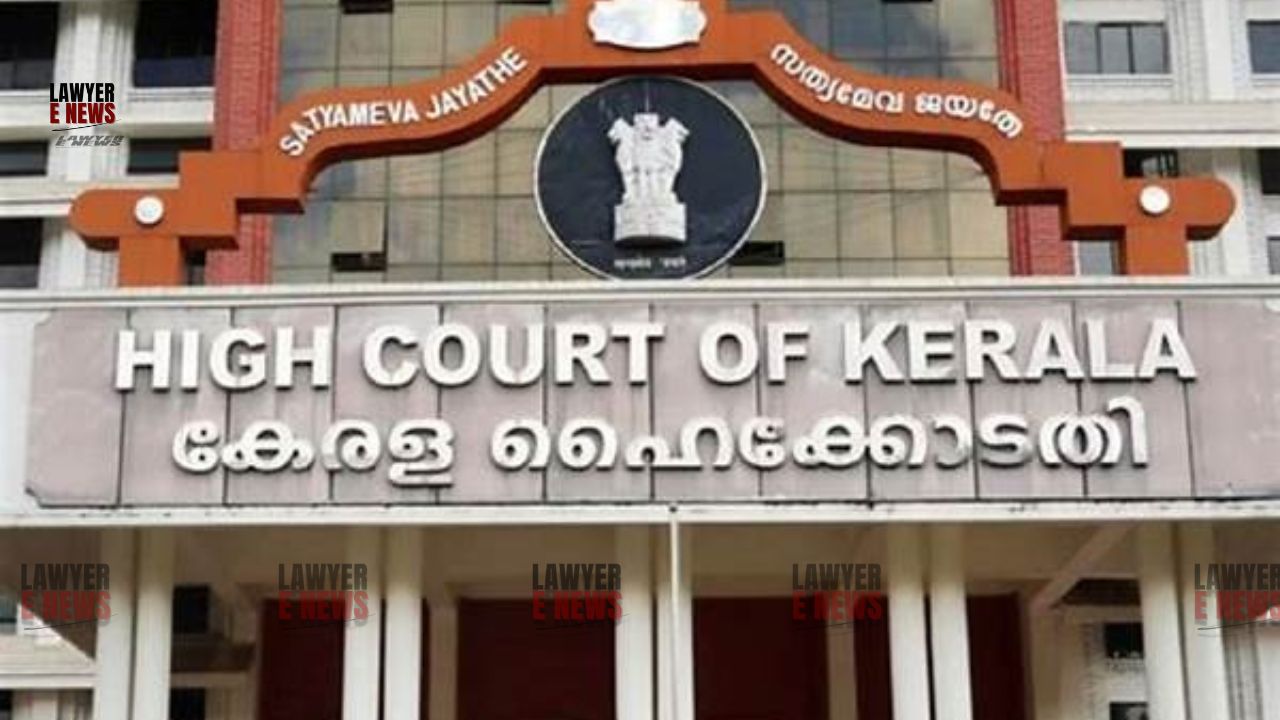
In a notable judgment delivered on January 9, 2026, the High Court of Kerala at Ernakulam, came down strongly on the mechanical manner in which a Magistrate had taken cognizance of serious criminal charges of forgery and cheating, despite a police closure report finding the allegations to be false. The Court held that such mechanical orders devoid of any application of mind are legally unsustainable and amount to an abuse of the criminal justice system.
Justice G. Girish, invoking the inherent powers under Section 482 CrPC, quashed the proceedings pending before the Judicial First Class Magistrate, Piravom in C.C. No. 93 of 2019, observing that "the Magistrate’s order merely stating ‘prima facie case made out’ without discussing evidence or recording reasons shows total non-application of mind and vitiates the very foundation of cognizance."
The Court further observed that "a Magistrate is not a mere post office" and emphasized that before taking cognizance on a protest complaint, especially after a police report refers the case as false, the Magistrate must give due reasons, analyze the evidence, and explain why the findings of the Investigating Officer are being disregarded.
“Prosecution of Sub-Registrar for Performing Statutory Duty Without Sanction Is Impermissible” – Court Upholds Protection Under Section 197 CrPC
One of the key aspects of the case was the arraignment of a Sub-Registrar as the fourth accused solely for having registered the Will in question. The High Court categorically rejected this as untenable, holding that "no criminal prosecution can be maintained against a public servant for acts done in discharge of official duty without prior sanction as mandated under Section 197 CrPC."
Justice Girish noted, “The only act attributed to the Sub-Registrar was registration of a Will, which was admittedly done in his official capacity. There is nothing in the order of the Magistrate to indicate any independent or malicious conduct on his part.” The Court further stated that “proceeding against the Sub-Registrar in the absence of sanction is not merely irregular but goes to the root of jurisdiction and cannot be allowed to stand.”
The Court emphasized that such procedural safeguards are not technicalities but constitutional protections against harassment of public officials acting lawfully in their professional roles.
“Typographical Error Cannot Be Basis For Forgery Allegation” – Magistrate Ignored Police Closure Report Without Justification
The case arose from a private complaint alleging that a forged Will was created in the name of the complainant’s deceased father. The allegation was primarily based on a discrepancy in the name of one of the attesting witnesses — “Beena Kunjukunju” instead of “Binu Kunjukunju.”
However, the police, after thorough investigation, concluded that it was a typographical error and that the signatory was indeed Binu Kunjukunju, who was alive and had signed the Will. The Will had been registered in due course by the Sub-Registrar.
The High Court observed that “the Magistrate failed to consider the police findings, failed to record any disagreement with the investigation report, and simply took cognizance based on the protest complaint without judicial scrutiny.” The Court held that “such casual approach results in misuse of criminal law, wasting judicial time and causing undue hardship to accused.”
“Taking Cognizance Is Not A Routine Act – Magistrate Must Demonstrate Judicial Mind”
The High Court laid down in clear terms that an order taking cognizance must not be a formalistic declaration, but a reasoned judicial decision, especially when the Magistrate chooses to differ from the conclusion of a police investigation.
Justice Girish remarked, “The order of the Magistrate reflects a mechanical exercise — it neither refers to the statements recorded under Section 200 CrPC nor evaluates the protest complaint in light of the closure report.” The Court warned that if such proceedings are allowed to continue, it would amount to abuse of process and defeat the ends of justice.
The Court underscored that the power under Section 482 CrPC exists precisely to prevent such misuse, and that the High Court is duty-bound to interfere where the process of law is being manipulated to harass individuals, particularly public servants discharging statutory functions.
“Quashing Criminal Proceedings Essential To Prevent Judicial Process From Being Weaponized”
Concluding that the complaint was ill-founded, the investigation had rightly reported it false, and the Magistrate’s cognizance order lacked legal substance, the High Court quashed the entire proceedings in C.C. No. 93/2019.
Justice Girish declared, “The continuation of criminal prosecution in this case, especially when no prima facie case exists, is wholly unjustified and amounts to an abuse of process of law. Quashing is necessary to secure the ends of justice.”
Thus, the Kerala High Court reaffirmed the necessity for judicial application of mind at every stage of criminal procedure, stressed the importance of protecting public servants from frivolous prosecution, and set a precedent against misuse of protest complaints to reopen matters already investigated and closed.
Date of Decision: January 9, 2026