-
by sayum
28 August 2026 10:07 AM








"Unless the claimant establishes that a right inheres in him to possess in law the property or document, the return of which he is claiming, the Court will not order the return of the property or document to the said person." Supreme Court, in a significant ruling, held that applicants seeking the return of 'Muddamal' property under Section 452 of the Code of Criminal Procedure, 1973 (CrPC) must establish a legal "entitlement to possession" and that a mere "no objection" from other witnesses is insufficient.
A bench of Justices K.V. Viswanathan and Arun Palli underscored that the onus lies squarely on the claimants to demonstrate their legal right to possess the property.
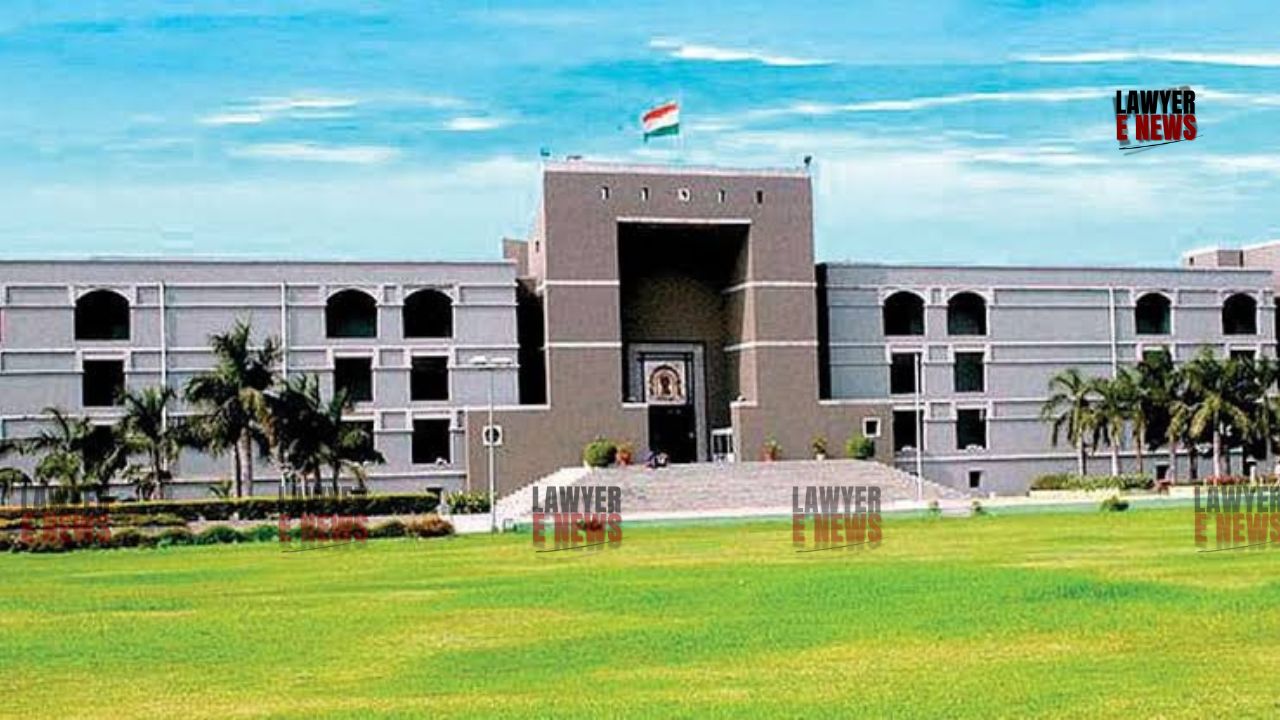
The matter originated from a First Information Report lodged on May 26, 2003, at Maidharpura Police Station concerning offenses including murder and robbery of a diamond broker. During the subsequent Sessions Trial, several applications were filed under Section 452 CrPC for the return of seized diamonds, which were material objects ('Muddamal' articles). The Trial Court rejected these applications, ordering the diamonds to be auctioned and the proceeds deposited with the State, a decision subsequently upheld by the Gujarat High Court, which suggested the applicants pursue civil remedies.
The primary question before the Supreme Court was whether the applicants had sufficiently established their "entitlement to possession" of the seized diamonds under Section 452 CrPC. The Court was also called upon to clarify the standard of proof required to claim such property.
Applicants Failed To Satisfy Section 452 CrPC Ingredients
The Supreme Court expressed satisfaction that, based on the material available on record, the appellants, including the original 14 applicants, failed to satisfy the necessary ingredients of Section 452 CrPC. The bench noted that the Trial Court had rightly concluded that the applicants had not provided any proof of ownership over the diamonds.
Court Amazed By Fluctuating Claimant Numbers
The Court also observed, with a touch of amazement, the fluctuating number of claimants throughout the legal process. From 14 original applicants before the Trial Court, the number "ballooned" to 37 before the High Court in a single common appeal, only to "shrink back" to 21 before the Supreme Court.
Interpretation Of 'Entitled To Possession' Under Section 452 CrPC
A careful reading of sub-sections (1) and (2) of Section 452 CrPC reveals that a person must establish "entitlement to possession" for any property or document produced before the Trial Court or in its custody. The bench clarified that while the word "ownership" is not explicitly used, the phrase "entitled to possession" nonetheless requires a legal right to possess.
Mere No-Objection Is Not Legal Entitlement
The Court firmly rejected the argument that a mere "no objection" from other witnesses was sufficient to establish entitlement. It emphatically stated that this approach is "hardly a legal way of establishing entitlement to possession."
Onus on Claimants to Demonstrate Legal Basis
The bench underscored that the onus rests squarely on the applicants and appellants to demonstrate "how and on what legal basis they are setting up a claim for possession." The right to possession must inherently vest in the claimant and cannot be merely inferred from the absence of objection by others.
Reference to Bharat Sanchar Nigam Limited Case
To buttress its interpretation, the Supreme Court cited its own judgment in Bharat Sanchar Nigam Limited v. Suryanarayanan and Another, (2020) 12 SCC 637. In that case, Justice D.Y. Chandrachud (as he then was) lucidly explained that "entitlement postulates a right" and that the court's function under Section 452 CrPC is of a judicial nature, requiring due regard to the entitlement claimed. The precedent highlighted the need for the claimant to establish a prima facie basis for their claim, such as title or payment for goods.
No Merit Found In Appeal
Ultimately, the Supreme Court found no merit in the appeal, concurring with the findings of the Trial Court and the High Court that the appellants had failed to establish their entitlement to possession of the diamonds.
Civil Remedy Preserved For Eight Weeks
However, in consideration of an alternative submission by the appellants' senior counsel regarding their civil suit remedy, the Supreme Court directed a stay on the auction of the diamonds for a period of eight weeks. This stay is intended to allow the appellants to assert their civil remedies, which will be decided on their own merits, including on the question of limitation.
The Supreme Court dismissed the appeal, reinforcing the principle that a person seeking the return of seized property under Section 452 CrPC must prove a legal "entitlement to possession" and that passive consent or "no objection" from witnesses is insufficient. While upholding the lower courts' decision to deny the return of the diamonds, the Court granted a limited stay on their auction to enable the claimants to pursue their civil remedies.
Date of Decision: 16 July 2026