-
by sayum
05 August 2026 3:07 PM








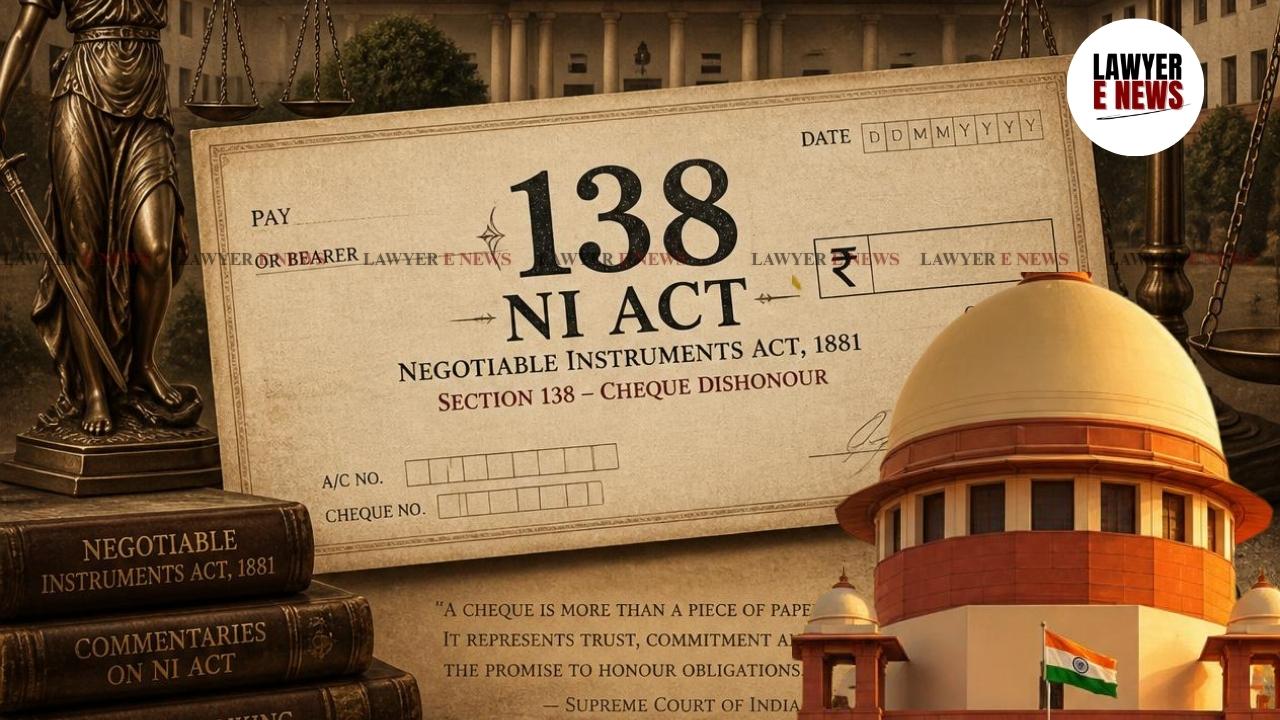
“Company With Admitted Debt and No Assets Cannot Seek Shelter Behind Technical Defences”, In a significant ruling Bombay High Court (Justice M.S. Sonak and Justice Jitendra Jain) delivered a judgment dismissing the appeal filed by M/s. Bassein Metals Pvt. Ltd., affirming the order of winding up passed by the Company Court under Section 433(e) of the Companies Act, 1956. The High Court categorically held that acquittal in cheque bounce cases under Section 138 of the Negotiable Instruments Act cannot override a civil decree acknowledging debt, nor can it obliterate a company’s failure to pay undisputed dues.
The case originated from a winding-up petition filed in 2001 by the National Small Industries Corporation Ltd., a government undertaking, seeking liquidation of Bassein Metals for its consistent failure to repay a sanctioned loan availed under the raw material assistance scheme. Despite issuing cheques worth over Rs. 2.67 crores and executing a demand promissory note admitting liability, the company defaulted in repayment and faced a winding-up order in October 2007.
Addressing the principal legal challenge, the Court noted that the appellant’s defence primarily rested on two grounds: its subsequent acquittal in criminal proceedings under Section 138 NI Act and purported discrepancies in the debt amount raised only after the winding-up notice. The Court rejected both grounds, observing, “The demand promissory note executed in January 1999 for ₹2.83 crore is a clear and unequivocal acknowledgment of liability. Raising disputes after receipt of winding-up notice, having remained silent for years, reeks of afterthought and lacks bona fides.”
The Court clarified that criminal acquittal based on the standard of proof beyond reasonable doubt does not dilute civil liability, which is adjudicated on preponderance of probabilities. “An acquittal under Section 138 NI Act cannot wash away a decree passed in civil proceedings. The existence of a binding civil decree, which has neither been challenged nor satisfied, clinches the issue of indebtedness,” the Court emphasised.
Highlighting the company’s evasive conduct, the Court observed, “No denial of liability was raised until the company received the statutory notice. There was no challenge to the demand promissory note or the statement of accounts provided in March 1999. This sudden emergence of disputes in the reply to the winding-up petition appears to be nothing more than a tactical ploy to escape the consequences of non-payment.”
The Court underscored that the appellant was not engaged in any business activities and admitted to having no assets, thus eliminating any scope of financial rehabilitation. It held, “Winding up provisions exist to prevent insolvent companies from continuing operations and deceiving future creditors. It is better to liquidate a non-functioning company than permit it to misuse corporate identity and default further.”
Rejecting the appellant’s reliance on the decision in Madhusudan Gordhandas & Co. v. Madhu Woollen Industries Pvt. Ltd., the Court pointed out, “The defence of the company must be bona fide, of substance, and supported by prima facie proof. In this case, the company failed to produce any credible material disputing the debt before the statutory notice and relied solely on bald, unsubstantiated denials.”
The High Court also addressed the Summary Suit Decree obtained by NSIC in 2011, which the company neither appealed nor satisfied. The Court remarked, “The admitted debt, reinforced by a court decree, and the absence of any payment or appeal leave no room to interfere with the winding-up order.”
Rejecting the argument based on the company’s criminal acquittal, the Court stated, “Findings in criminal proceedings cannot determine civil liability, particularly where a civil court has already decreed the debt.”
Concluding the matter, the Court declared, “It is better to bury a company that has no assets and no commercial activity, rather than allow it to remain a dormant vehicle of defaults, causing hardship to creditors and eroding public trust in commercial transactions.”
The appeal was dismissed with no order as to costs, and the interim stay on winding up was vacated, ensuring the liquidation process would proceed.
The judgment reiterates the principle that companies cannot use procedural tactics or the distinction between civil and criminal proceedings to escape genuine financial liability. Where debt is admitted, codified in a decree, and unpaid despite multiple opportunities, liquidation becomes a necessary consequence in the interest of creditors and financial discipline.
Date of Decision: 09 July 2025