-
by sayum
27 August 2026 3:32 PM







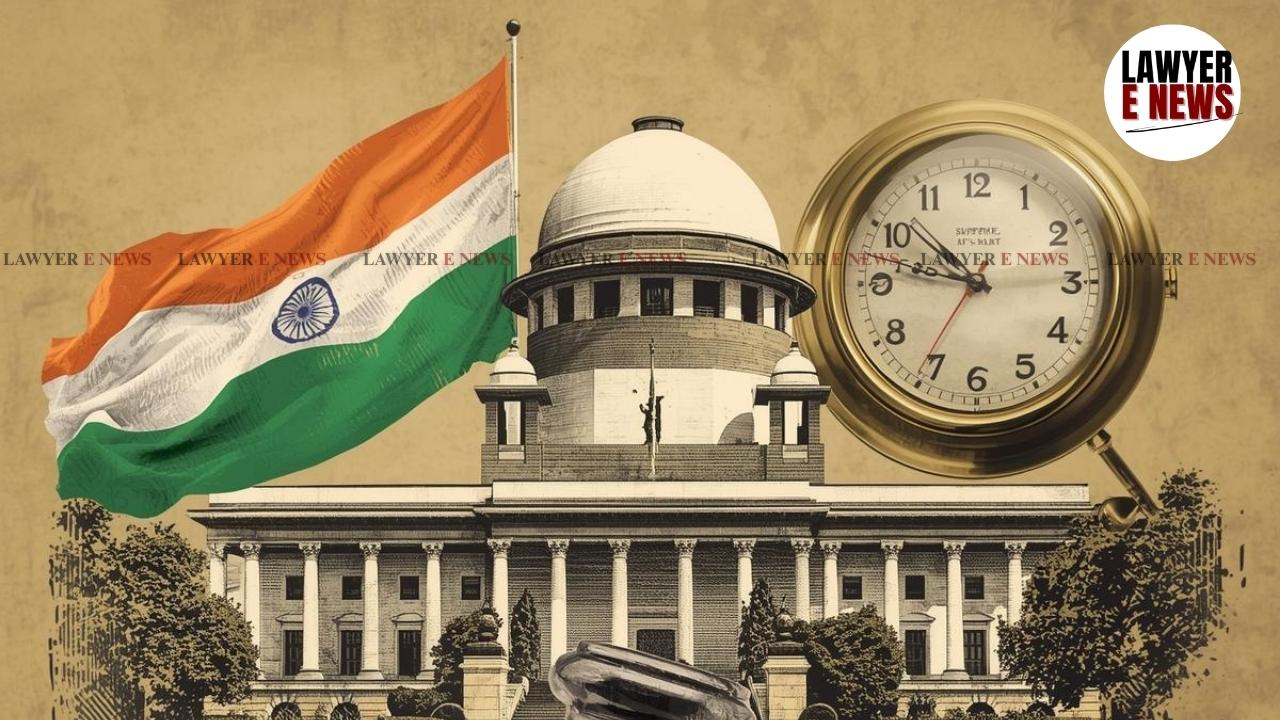
“Once the General Body has consciously accepted membership... High Court erred in ignoring such subsequent developments” – In a powerful reaffirmation of the autonomy of co-operative housing societies and the sanctity of their General Body decisions, the Supreme Court delivered a landmark judgment. The Court overturned the Bombay High Court’s interference with a long-delayed yet lawfully ratified admission of membership, holding that mere delay cannot override a legally sound resolution passed by a society's General Body.
The bench of Justice Vikram Nath and Justice Sandeep Mehta held that once the co-operative society had itself resolved to admit the appellants’ predecessor as a member, and the resolution had never been rescinded or legally challenged, the High Court was not justified in annulling membership on the ground of delay.
“When a person continues in peaceful, undisputed occupation, and the General Body has resolved to admit him, denying membership solely due to delay would cause injustice and disturb settled expectations,” the Court observed, restoring the appellants’ status as members and upholding the subsequent transfer of the flat to a third-party purchaser.
"Revisional Authority Did Not Exceed Jurisdiction; It Revived a Right Already Created": Court Dismantles High Court’s Reasoning
At the heart of the dispute was Flat No. 7 in Malboro House Co-operative Housing Society, Mumbai, formerly a company-owned building occupied by tenants, including Shri Narendra Patel—the predecessor of the appellants. While other tenants collectively paid to acquire ownership through the co-operative route in 1995, Patel did not contribute ₹5 lakhs as demanded. But crucially, the Society itself had passed a General Body Resolution in 2005 admitting him as a member subject to payment.
“The AGM resolution of 11th August 2005 was neither challenged nor withdrawn; it created enforceable rights which could not be annulled by procedural delay alone,” the Court emphasized, criticising the High Court for acting in “complete disregard” of the Society’s own subsequent affirmation of that resolution.
The Revisional Authority, acting under Section 154 of the Maharashtra Co-operative Societies Act, had allowed the appellants’ membership in 2025, relying on the earlier 2005 resolution. The High Court quashed this, branding it an overreach. But the Supreme Court categorically disagreed:
“Statutory remedies were properly invoked, and the Revisional Authority acted well within its jurisdiction, particularly when the General Body itself had earlier resolved to admit the member.”
“To Occupy Without Membership Would Create Anomalies”: Court Emphasises Equitable Recognition of Rights
The Court found that the occupation of Flat No. 7 by Shri Narendra Patel and, later, by his legal heirs, was never contested by the Society or its members—a factor that heavily weighed in favour of equitable relief.
“It is not the case of the writ petitioners that the occupation was illegal. Nor did the Society seek eviction for decades. Denial of membership in such a case would perpetuate unnecessary tension and friction.”
The judgment highlighted that in September 2025, during the pendency of proceedings, the Society's General Body passed yet another resolution reaffirming its earlier decision from 2005 and formally admitting Shashin Patel and Bhavini Patel as members. The subsequent transfer of the flat, along with Society’s No Objection Certificate and ratification, was also accepted in the same meeting.
“Once the General Body has consciously accepted membership and transfer, courts must not override such democratically taken and statutorily valid decisions unless shown to be illegal,” held the bench.
“Registered Sale Deed Cannot Be Nullified by Collateral Attack”: Supreme Court Protects Subsequent Purchaser’s Rights
The appellants had sold Flat No. 7 to M/s. Capital Mind Advisory Services Pvt. Ltd. in May 2025, after obtaining a No Objection Certificate from the Society through its Administrator. The High Court’s judgment, by annulling the Revisional Authority’s order, effectively nullified the registered sale.
The Supreme Court held this to be impermissible in law:
“Once the membership of the original occupants is upheld, the subsequent transfer and the transferee’s membership—already ratified by the General Body—must be protected in law.”
The Court also dismissed arguments labelling the purchaser a speculative dealer, noting that the Society itself had admitted the purchaser as a member, and no challenge had been raised against that AGM resolution.
“Equity Demands Recognition, But Members May Seek Enhanced Interest”: Court Balances Interests of All Parties
While upholding the appellants' membership and the purchaser’s rights, the Court acknowledged that a two-decade delay in payment cannot be brushed aside entirely, and left the door open for fair compensation.
“Equity demands recognition of membership, but Society or aggrieved members may seek determination of additional amount or enhanced interest before appropriate forum.”
The Court clarified that any such grievance must be pursued through proper channels and not by annulling legally valid resolutions.
“Writ Petition Not the Forum for Disputed Facts”: Court Criticises High Court for Interference Despite Pending Eviction Suit
The Court also flagged procedural impropriety in the High Court’s decision to entertain a writ petition in such a factually contentious matter, especially when an eviction suit was pending before the Small Causes Court.
“Issues relating to tenancy, membership and property transfer, which are factually complex, ought not to be adjudicated in writ jurisdiction. The High Court erred in proceeding when these matters were sub judice.”
It further noted that the writ petitioners had concealed the existence of the eviction suit—a conduct the Court found disingenuous, though it refrained from penalising them solely on this ground.
High Court’s Quashing Order Set Aside, Membership and Transfer Upheld
The Court allowed the appeals partly, restoring the membership of Shashin Patel and Bhavini Patel, and protecting the subsequent purchaser’s rights, while granting liberty to aggrieved society members to approach appropriate forums for enhanced compensation due to delay.
“In the wake of the discussion... we hereby set aside the impugned judgment of the High Court to the extent of Para Nos. 58(ii) to (vi)... The appeals are partly allowed. No order as to costs.”
Date of Decision: 5 February 2026