
-
by sayum
26 August 2026 6:42 AM







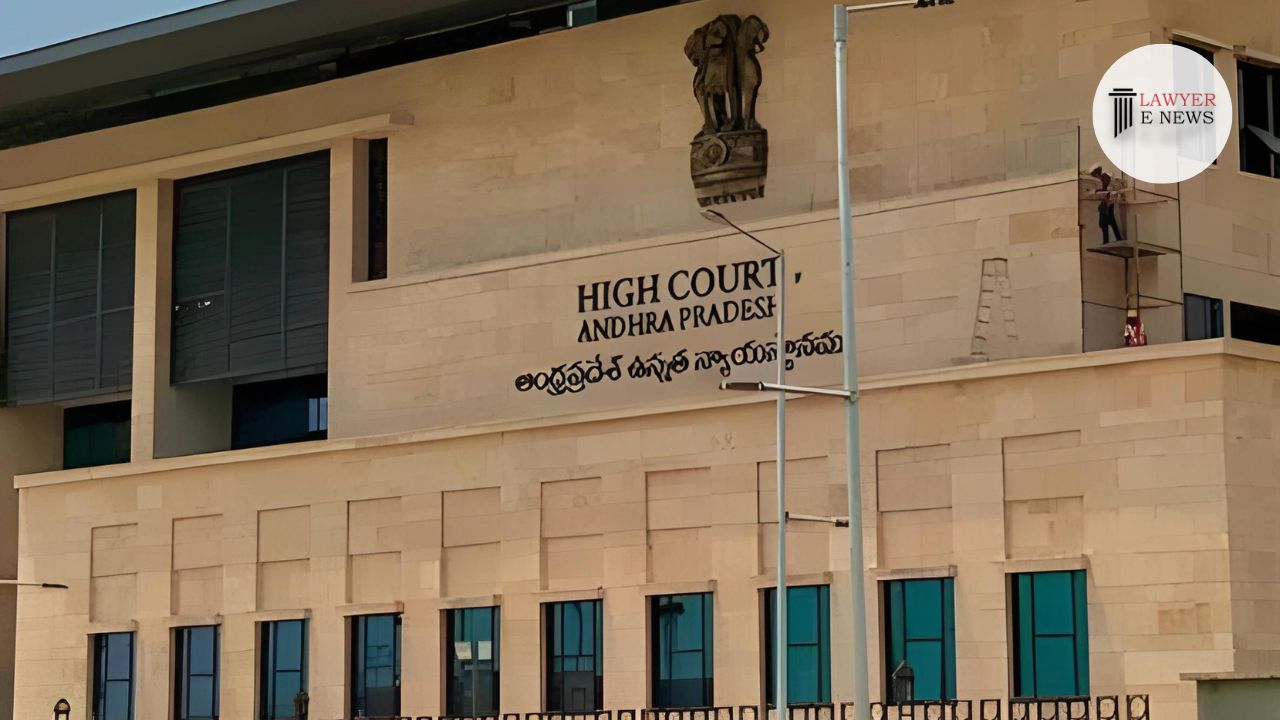
The Andhra Pradesh High Court has dismissed an appeal by N. Jayachandran seeking a full refund and damages in a property sale dispute, thereby upholding the partial decree awarded by the Family Court-cum-V Additional District Judge, Tirupati. Justice A.V. Ravindra Babu emphasized the legitimacy of mediated settlements and the appellant’s acceptance of the terms, despite subsequent challenges to the agreement.
The court found that the appellant, N. Jayachandran, entered into a sale agreement with a clear understanding of the property details and received partial payments as per a mediated settlement. The appellant’s claim of misrepresentation regarding the property title was not substantiated with conclusive evidence.
Justice Babu noted that the understanding letter (Ex.A.3) signed by both parties and mediators was a significant factor in the case. “The terms and conditions of the mediated settlement were voluntarily agreed upon by the appellant, who accepted payments under these terms,” the court observed. The appellant’s later contestation of these terms was dismissed as lacking merit.
The court emphasized the admissions made by the appellant in cross-examination, revealing that he was aware of the property details and had received partial payments as agreed. “The appellant’s acceptance of Rs. 3,00,000 from Srinivasulu and Rs. 1,30,000 from M. Subramanyam Reddy supports the conclusion that the settlement terms were acted upon,” the judgment stated.
The High Court reiterated the principles of contract law, emphasizing that agreements voluntarily entered into by parties are binding. The mediated settlement was upheld as a valid contract, with the court finding no grounds to interfere with the trial court’s judgment.
The appellant’s failure to prove misrepresentation and defective title, coupled with his acknowledgment of receiving partial payments, led to the dismissal of his claim for the full refund of Rs. 16,20,700 and damages of Rs. 10,00,000. The court maintained the decree of Rs. 2,14,000 with 6% interest per annum from the date of the plaint till realization.
Justice A.V. Ravindra Babu remarked, “The terms and conditions mentioned in Ex.A.3 were concluded voluntarily by the parties involved. The appellant’s subsequent challenge to these terms lacks merit and fails to undermine the validity of the mediated settlement.”
The dismissal of N. Jayachandran’s appeal underscores the judiciary’s commitment to upholding the sanctity of mediated settlements in contract disputes. By affirming the trial court’s findings, the judgment reinforces the legal framework for resolving property disputes and emphasizes the importance of adhering to agreed-upon terms. This decision is expected to impact future cases, highlighting the credibility and enforceability of mediated agreements.
Date of Decision: 19th June 2024
N. Jayachandran vs. E. Sambasiva Reddy





